A free Premium account on the FCL.055 website! Read here
Sign up to unlock all our services and 15164 corrected and explained questions.
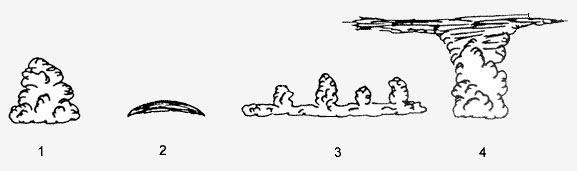
Question 172-1 : What type of clouds visible even at a long distance could indicate the presence of a tropical revolving storm ? [ Practice protocol ]
Dense cirrus ci
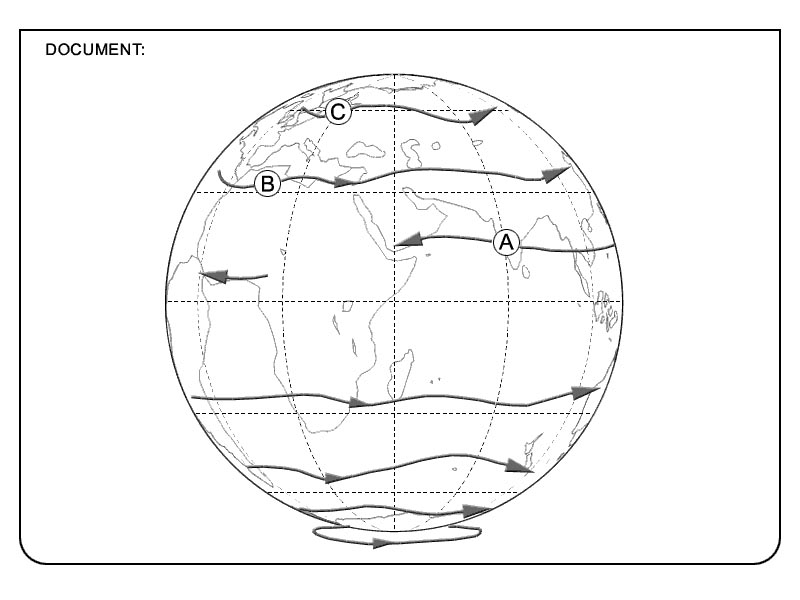
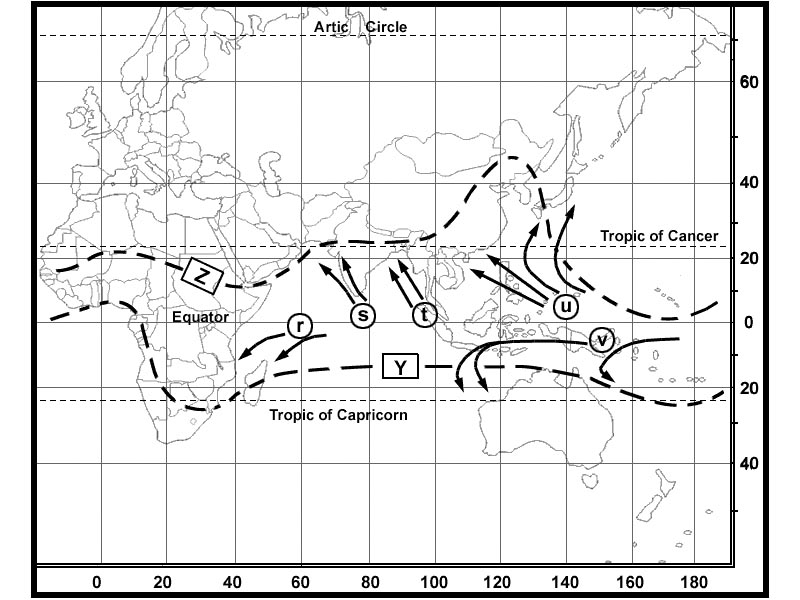
Question 172-2 : Assuming a generalised zonal system of world wind circulation the travelling low pressure systems are applicable to zone 399 ?
S and y.
Revised ecqb04 january 2018T and x. only t. u and w.
Question 172-3 : Troughs are extensions of ?
Low pressure areas and generally have large amounts of cloud.
Low pressure areas and generally have small amounts of cloud. high pressure areas and generally have small amounts of cloud. high pressure areas and generally have small amounts of cloud.
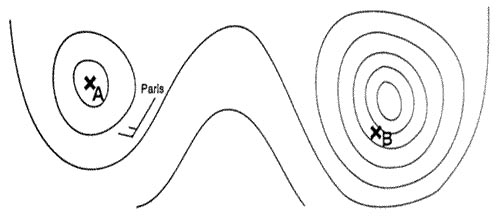
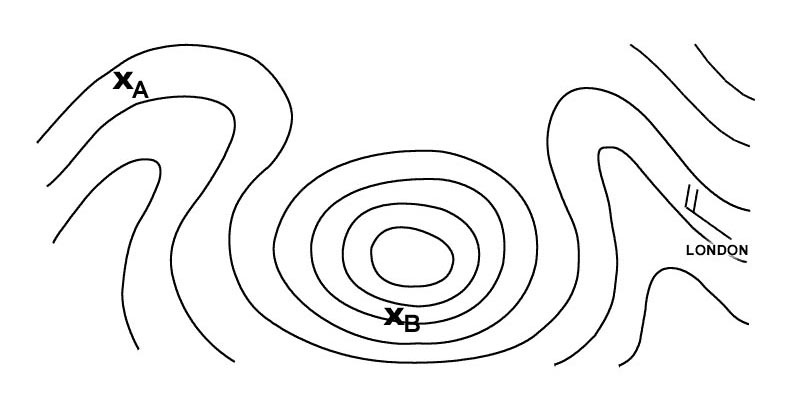
Question 172-4 : Refer to the chart 050 10850a the pressure system essentially located in square 2a is 413 ?
A ridge.
A col. a trough. a low.
Question 172-5 : An aircraft is flying from point a to point b at the flight level corresponding to the pressure surface of the constant pressure chart which of the following statements is correct 417 ?
The true altitude will be higher over b than over a.
485you are flying at a 'constant indicated altitude' since your altimeter setting is 10132 hpabut you are flying to an aera where pressure is stronger your true altitude will be higherThe true altitude will be higher over a than over b. wind speed over b is higher than over a. the wind speeds over a and b are equal.
Question 172-6 : Refer to annex 050 10720aassuming a generalised zonal system of world climatic and wind circulation zone 'x' is an area of 422 ?
Subtropical high pressure systems.
Ecqb04 january 2018 584Intertropical convergence zone (itcz) travelling low pressure systems. ne trade winds systems.
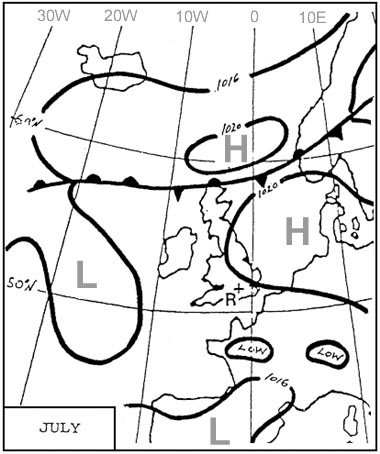
Question 172-7 : In temperate latitudes what weather conditions may be expected over land during the summer in the centre of a stationary high pressure zone ?
Calm winds haze.
During summer in the centre of a stationary high pressure zone = large flat pressure pattern we have light or no wind 492haze is an atmospheric phenomenon where dust smoke and other dry particles obscure the clarity of the skyTs, sh. cb, ts. ns.
Question 172-8 : Which weather phenomena are typical for the northern side of the alps with strong winds from the south foehn ?
Good visibility turbulence.
520the southerly wind will give a foehn 'from south' clouds on the southern side good visibility on the northern side but turbulence due to the orographic waves and rotors 610Continuous precipitation, severe turbulence. decrease in temperature, moderate to severe icing. icing, huge mass of clouds.
Question 172-9 : What weather is prevalent in easterly waves ?
Thunderstorms and rain.
Easterly waves are 'long waves' that occur within the trade wind belt start over north western africa and propagate toward the west in the lower tropospheric tradewind flow across the atlantic oceanapproximate location amplitude and wavelength of easterly waves 495at first an easterly wave has a small amplitude and produces mild rain showers powerful thunderstorms and the force of high altitude winds amplify the wave when atmospheric conditions are favourable several severe thunderstorms begin to form and eventually a tropical storm may developContinuous rain. clear skies. frontal weather.
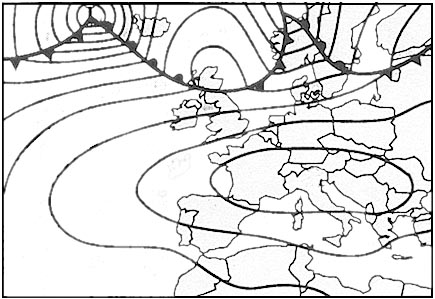
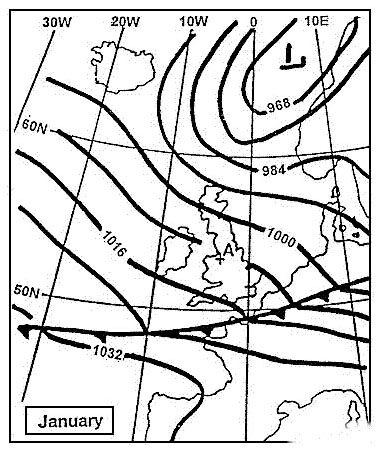
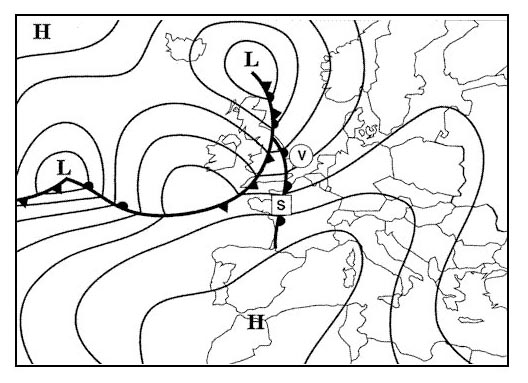
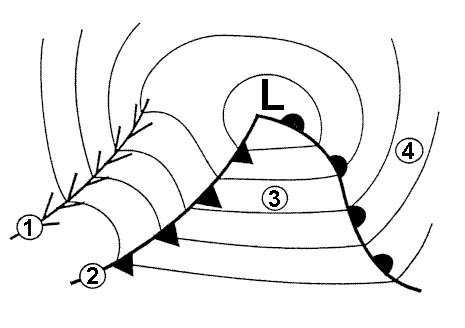
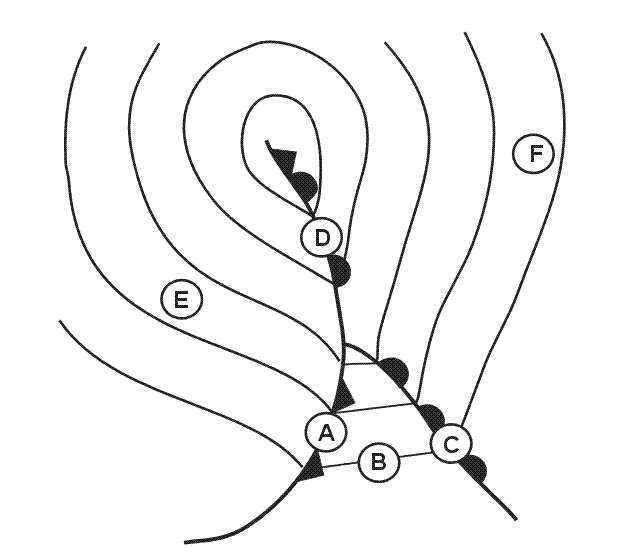
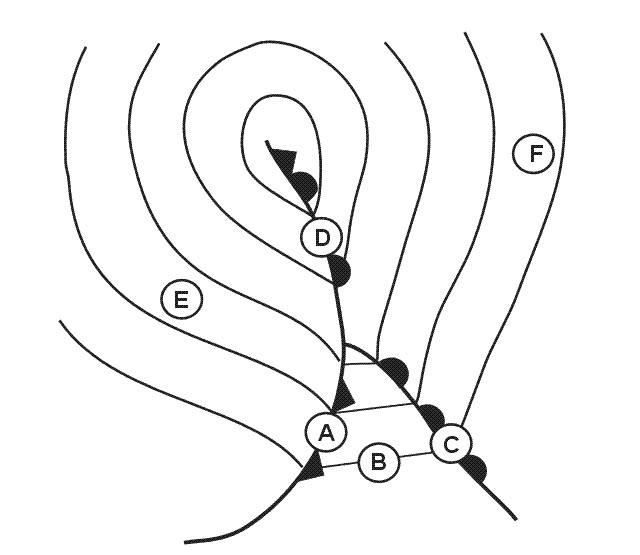
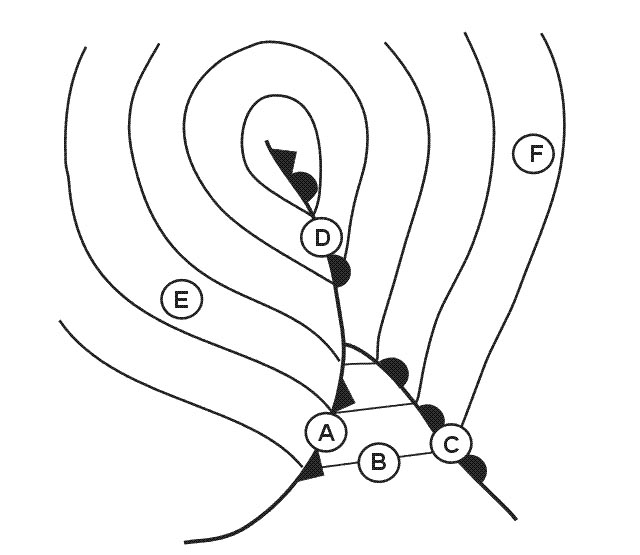
Question 172-10 : Assuming the usual direction of movement to which position will the polar frontal wave have moved 251 ?
Position 3.
496the isobars in the warm sector tend to be parallel and straight and give an indication in the direction of the system until it occludesPosition 4. position 2. position 1.
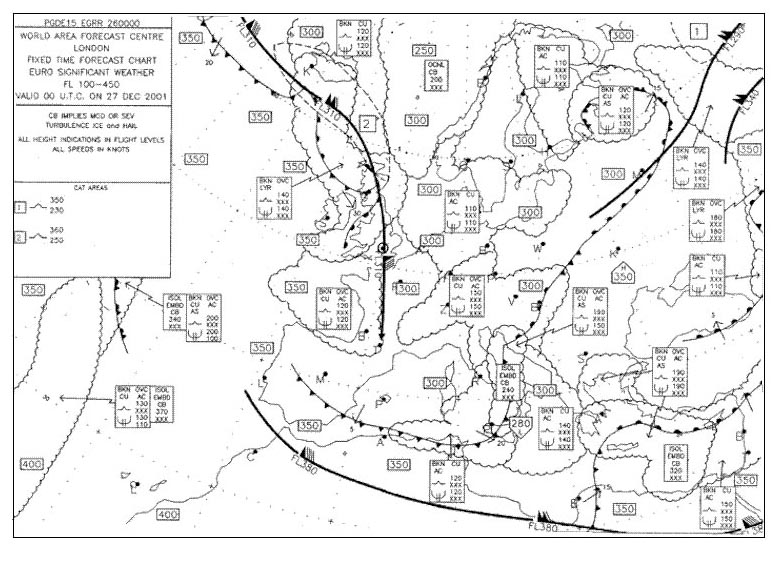
Question 172-11 : Under the weather conditions depicted which of the following statements is likely to apply 252 ?
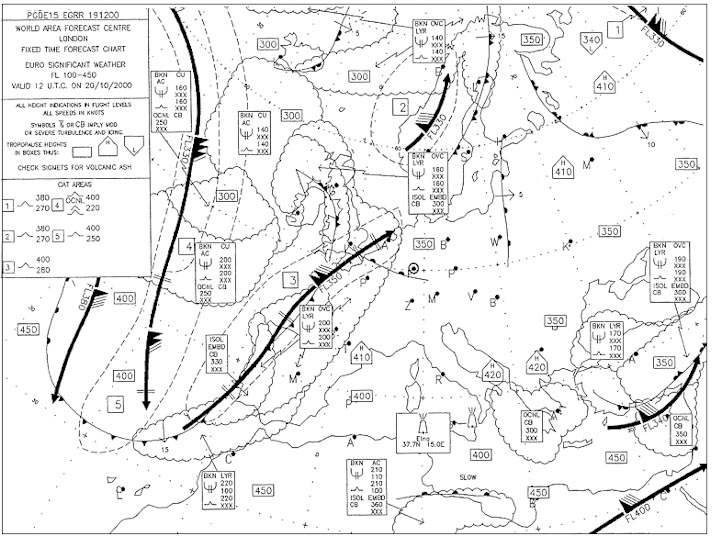
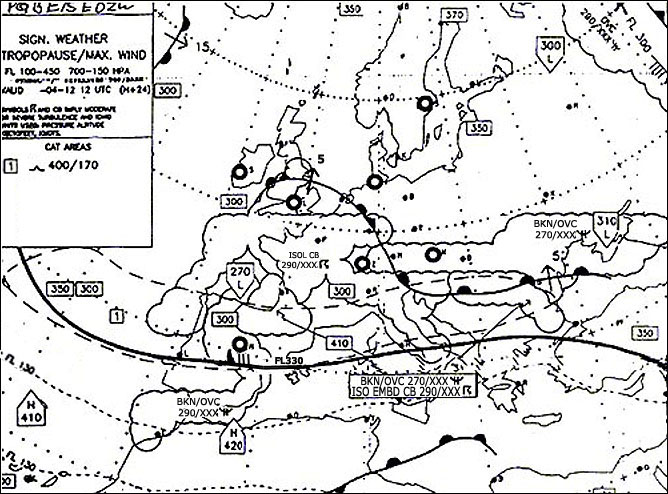
Thunderstorms may occur in the summer months over central europe.
Over central europe you will certainly experience thunderstorms in the summer months and radiation fog in the winter but we do not have enough informations to guess the foehn intensity over the alps and definitively as the isohypses are well spaced severe gradient wind is unlikely to be encounterSevere gradient wind likely over central europe. moderate to strong foehn in the alps. radiation fog is unlikely in central europe in the winter.
Question 172-12 : For an aircraft what are the meteorological dangers associated with a harmattan wind ?
Dust and poor visibility.
Thunderstorms. sand up to fl 150. hail.
Question 172-13 : What is the strong relatively cold katabatic wind blowing down the northern adriatic coast mainly during the winter and spring called ?
Bora.
The bora comes from the yugoslavian mountains to the adriatic sea it is a katabatic wind meaning 'going downhill' which means that it is cold dry and often strongthe air from the bora wind comes from the top of the mountains and it is set in motion because of the warmth below because the wind moves down the mountain it strengthensthe bora develops during the winter the word 'bora' means wind from the mountain in greek greece lies just below yugoslavia Ghibli. mistral. scirocco.
Question 172-14 : Which one of the following statements regarding the intertropical convergence zone itcz is correct ?
Frequent and widespread thunderstorms are to be expected within the area of the itcz.
Thunderstorms seldom occur within the area of the itcz. the itcz is always associated with a strong jet stream. the itcz does not change its position during the course of the year.
Question 172-15 : In which of the following bands of latitude is the intertropical convergence zone most likely to be encountered in january between dakar and rio de janeiro ?
0° 7°n.
In january the itcz between dakar and rio de janeiro is most likely to be encountered between 0° et 7°n 593red lines show the maximum extreme positions3° - 8°s. 8° - 12°s. 7° - 12°n.
Question 172-16 : When are the rainy seasons in equatorial africa ?
March to may and october to november.
The rain is associated with the itcz which follows the sun and the sun crosses the equator at the equinoxes end of march end of september December to february and july to october. march to may and august to october. april to july and december to february.
Question 172-17 : Which of the following best describes the intertropical convergence zone ?
The zone where the trade winds of the northern hemisphere meet those of the southern hemisphere.
596The zone where the harmattan meets the north-easterly trade winds over africa. the zone where cold fronts form in the tropics. the zone where the west winds meet the subtropical high pressure belt.
Question 172-18 : What is the likely track for a hurricane in the caribbean area ?
West in the earlier stages and later turning north east.
510map showing areas affected by hurricanes in the caribbean areaEast then south. west deep into the usa. west in the earlier stages and later turning south east.
Question 172-19 : During which seasons are hurricanes most likely to appear in the northern hemisphere ?
Summer and autumn.
The atlantic hurricane season runs from june 1st to november 30th the atlantic basin includes the atlantic ocean caribbean sea and gulf of mexicoWinter. all seasons. winter and spring.
Question 172-20 : At what time of the year are typhoons most likely to occur over the southern islands of japan ?
July to november.
588the season for typhoons tropical revolving storms in north western pacific ocean extends from summer to autumnSeptember to january. january to may. may to july.
Question 172-21 : On which coast of north america is the danger of tropical revolving storms the greatest ?
Se coast.
510tracks of atlantic tropical cyclones from 1851 to 2005 519the danger is the greatest along the south east coast including mexican gulf and new orleans louisiana mississippi floridatropical revolving storms are called 'hurricanes' in the northern atlantic ocean and the north eastern and south western pacific ocean east of 160e W coast. n coast. ne coast.
Question 172-22 : What is characteristic of the pamperos ?
A marked advance of cold air in south america.
Katabatic winds in the atlas mountains a marked advance of cold arctic air in north america foehn conditions in the spanish pyrenees
Question 172-23 : Where during a flight from marseille to dakar in july may the itcz be encountered ?
In the vicinity of dakar.
593in july when arriving from europe the itcz is most likely to be encountered in the vicinity of dakarAt the latitudes of gibraltar. at the latitudes of algeria. near the canary islands.
Question 172-24 : Which wind systems converge on the itcz when it lies at the equator ?
Se trade winds and ne trade winds.
596Sw monsoon and nw monsoon sw monsoon and nw trade winds nw monsoon and sw trade winds
Question 172-25 : From which direction do the trade winds blow in the southern hemisphere ?
Se.
596Ne sw n
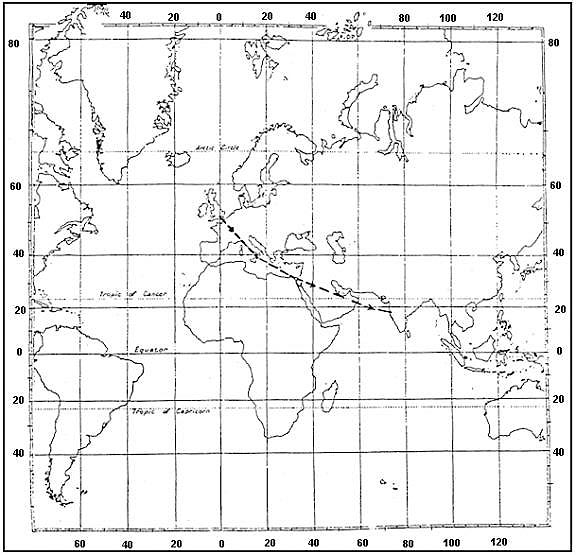
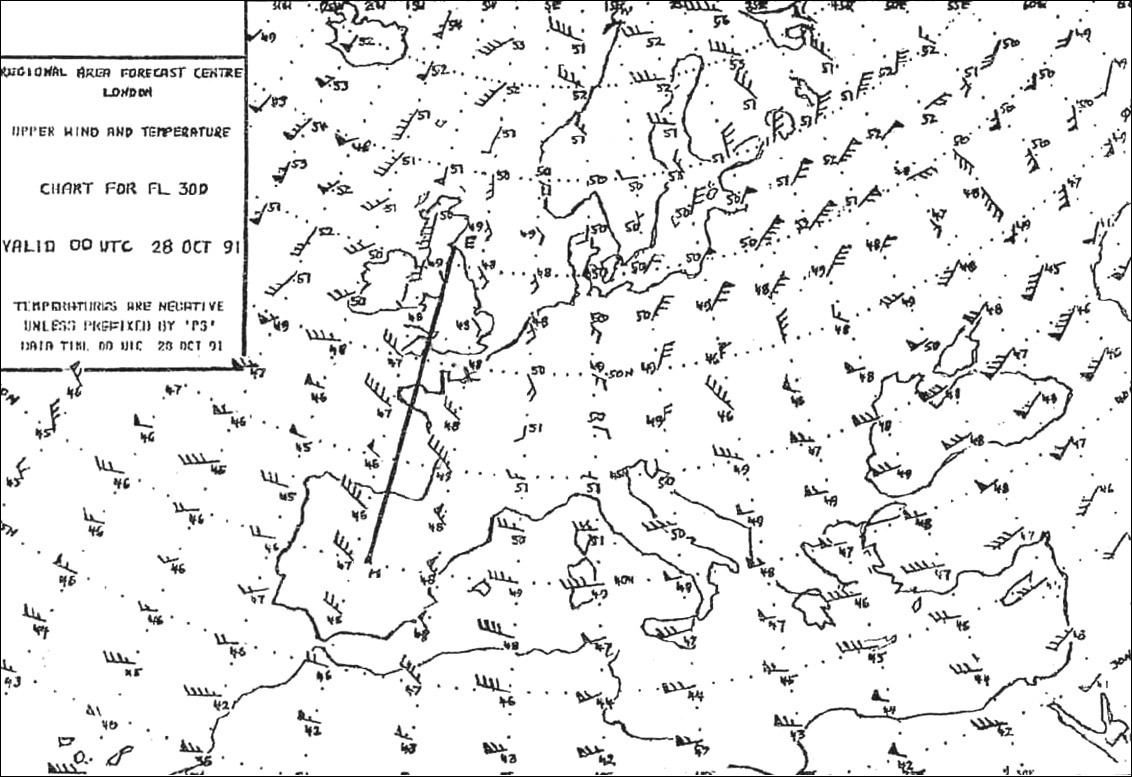
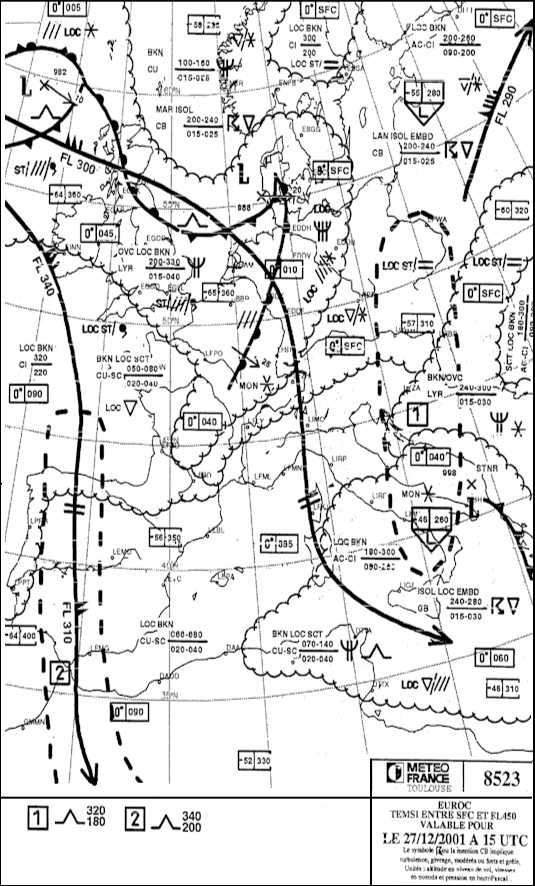
Question 172-26 : Considering the route indicates from lisbon to freetown the harmattan is a 290 ?
Ne wind affecting north west africa during november to april reducing visibility in rising dust.
Way to remember harmattan an backwards stands for november april and north africaSw monsoonal wind causing extensive areas of advection fog along the west african coast south of 15°n. warm southerly dust-bearing wind affecting the coast of north africa. localised depression giving squally winds.
Question 172-27 : In which month does the humid monsoon in india start ?
In june.
Humid monsoon begins in june in southern india to reach pakistan in julythe areas of the northern and central indian subcontinent heats up considerably during the hot summers which causes a low pressure area over the northern and central indian subcontinent to fill this void the moisture laden winds the se trade winds from the indian ocean rush in to the subcontinent the wind veers it will be the south west monsoon 592thunderstorms and showers of heavy rain can be expectedIn october. in december. in march.
Question 172-28 : The intertropical convergence zone itcz particularly affects ?
Western africa between 10°n and 20°n and the northern coasts of the arabian sea in july.
557Western africa, at a latitude of 25°n in july. the atlantic ocean, between latitudes 10°n and 30°n, depending on the time of year. western africa, where it is situated between the 10°n and 30°n parallels, depending on the time of the year.
Question 172-29 : The chinook is a ?
Warm and dry wind that forms as air descends on the leeward side of the rocky mountains.
596a foehn wind is a warm dry wind on the lee side of a mountain range when the humid air goes over a mountain it loses its moisture and cools down a bit but when it descends down the slope the temperature rises because of the compression result is a strong warm and dry wind it develops all over the world such as the chinook rocky mountains over southern alberta in canada Very cold wind with blowing snow. downslope wind that occurs particularly at night as air cools along mountain slopes. warm anabatic wind up the slopes of snowfields or glaciers.
Question 172-30 : A dry sand and dust laden north easterly wind that blows in winter over large parts of north west africa is known as a ?
Harmattan.
Scirocco pampero khamsin
Question 172-31 : The transition from sw to ne monsoon in india occurs in ?
September october november.
Transition occurs when the itcz intertropical convergence zone goes down to the southern hemispherethe itcz will reach its southernmost position in january at 10°s of latitude close to bombay 2537July, august, september. december, january, february. february, march, april.
Question 172-32 : Which of the following statements concerning the intertropical convergence zone is true ?
There are frequent occurrences of cb.
It lies totally in the northern hemisphere in july and totally in the southern hemisphere in january. it does not change its position over the oceans during the year. it is an area of low pressure and low relative humidity.
Question 172-33 : An easterly wave is a ?
Wave in a trade wind belt moving from east to west with severe convective activity in rear of its trough.
Easterly waves are 'long waves' that occur within the trade wind belt start over north western africa and propagate toward the west in the lower tropospheric tradewind flow across the atlantic oceanapproximate location amplitude and wavelength of easterly waves 495at first an easterly wave has a small amplitude and produces mild rain showers powerful thunderstorms and the force of high altitude winds amplify the wave when atmospheric conditions are favourable several severe thunderstorms begin to form and eventually a tropical storm may develop 638thunderstorms are most likely to develop on the east side of the waveWave-like disturbance in the monsoon regime of india, moving from east to west, with severe convective activity ahead of its trough. small scale wave disturbance in the tropics, moving from east to west, with severe convective activity ahead of its trough. disturbance in the higher levels associated with the equatorial easterly jet, moving from east to west, with severe convective activity in rear of its trough.
Question 172-34 : The prevailing surface wind in the area of the west coast of africa north of the equator gulf of guinea is a ?
Sw monsoon in summer and ne tradewind in winter.
Se trade winds and ne trade winds converge on the itcz 2537in july the itcz will be to the north of ethiopia the gulf of guinea will be under the influence the summer monsoon 592in january the itcz will be far south of the equator near the south of tanzania the gulf of guinea will be under the influence of the ne tradewindNe monsoon in winter and se tradewind in summer sw monsoon in winter and ne monsoon in summer. ne tradewind in summer and se tradewind in winter.
Question 172-35 : Which of the following statements concerning trade winds is correct ?
They occur only in the lower part of the troposphere and more pronounced over the oceans.
The trade winds are surface winds and are stronger over the oceans because there is less surface friction than over land above the surface friction layer the wind up to the tropopause will vary depending on the exact location and time of year as indicated on the upper wind chartsThey reach up to the tropopause and are more pronounced over the continents. they reach up to the tropopause and are more pronounced over the oceans. they occur only in the lower part of the troposphere and are more pronounced over the continents.
Question 172-36 : In the central part of the atlantic ocean between 10°n and 20°n the prevailing winds are ?
Ne trade winds.
Take care this question exists with 10°s and 20°s answer is 'se trade winds' 584the question asks for the prevailing winds only between 10°n and 20°n above the atlantic ocean 2537se trade winds may reach 5°n above the atlantic ocean this is the reason why they ask only between 10°n and 20°nNe monsoon in winter and sw monsoon in summer. se trade winds. sw winds throughout the whole year.
Question 172-37 : Along the west coast of india the prevailing winds are the ?
Sw monsoon in july and a ne monsoon in january.
Se trade winds and ne trade winds converge on the itcz 2537in july the itcz will be to the north of india this is the summer monsoonin january the itcz will be to the south of india this is the winter monsoon 576Ne monsoon in july and a sw monsoon in january. sw monsoon in july and a se monsoon in january. se monsoon in july and a sw monsoon in january.
Question 172-38 : The bora is a ?
Cold catabatic wind with the possibility of violent gusts.
The bora comes from the yugoslavian mountains to the adriatic sea it is a katabatic wind meaning 'going downhill' which means that it is cold dry and often strongthe air from the bora wind comes from the top of the mountains and it is set in motion because of the warmth below because the wind moves down the mountain it strengthensSqually warm catabatic wind which occurs mainly in summer. cold catabatic wind with gusts associated with a maritime air mass. cold catabatic wind always associated with clouds and heavy showers.
Question 172-39 : What is the name of the northerly cold and strong wind that sometimes blows over a certain part of europe ?
Mistral.
Mistral strong cold dry and squally northerly wind that blows offshore with great frequency along the mediterranean coast from northern spain to northern italy and that is particularly frequent in the lower rhone valley in south eastern france blowing way out into the golfe du lion the wind may persist for several days and is best developed when a depression is forming in the gulf of genoa to the east of a ridge of high pressure it might also be a purely katabatic wind the airstream that feeds the mistral is commonly derived from polar air of maritime origin it is most violent in winter and spring and its strenght is increased by the funneling effect of the rhone valley 579the mistral might easily reach a speed of 75 kt over the rhone delta compared with the typical 40 kt experienced along the coastFoehn. sirocco typhoon.
Question 172-40 : What are the characteristics of the bora ?
It is a cold and very strong wind that blows mainly in winter from a tableland downwards to the adriatic.
The bora comes from the yugoslavian mountains to the adriatic sea it is a katabatic wind meaning 'going downhill' which means that it is cold dry and often strongthe air from the bora wind comes from the top of the mountains and it is set in motion because of the warmth below because the wind moves down the mountain it strengthensIt is a very cold wind that blows mainly in winter from a north-westerly direction in the mediterranean it is a warm and moist, south-westerly wind experienced in the eastern mediterranean, that usually carries precipitation. it is a dry and hot southerly wind experienced in the sahara desert, that often carries dust.
Exclusive rights reserved. Reproduction prohibited under penalty of prosecution.