A free Premium account on the FCL.055 website! Read here
Sign up to unlock all our services and 15164 corrected and explained questions.
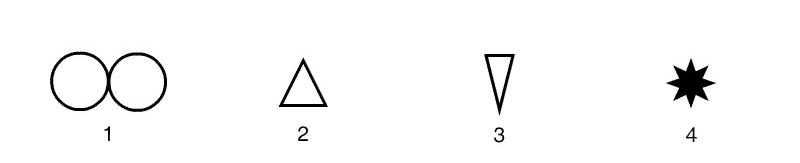
Question 245-1 : If a packet is marked with the label shown in the appendix it is 2644 ? [ Question security ]
A toxic material
Question 245-2 : The fire extinguisher types which may be used on class b fires are 1 h2o2 co23 dry chemical4 halef or equivalentwhich of the following combinations contains all of the correct statements ?
2 3 and 4.
A class b fire is in a flammable liquid such as oil or grease or anything that melts to create a flammable liquid or vapouryou could use either co2 dry chemical powder and halon bcf 1, 2, 3, 4. 2. 3 and 4.
Question 245-3 : H2o extinguishers are fit to fight ?
Class a fires.
A class a fire is an ordinary one that is of normal combustible material on which water is usually effective eg seating fabric wood and paper but not metal h2o extinguishers are fit to fight class a firesClass b fires. electrical source fires. special fires: metals, gas, chemical products.
Question 245-4 : Co2 type extinguishers are suitable to fight 1 class a fires2 class b fire3 fires with an electrical origin4 special fires metals gas chemical productswhich of the following combinations contains all the correct statements ?
1 2 and 3.
A class a fire is an ordinary one that is of normal combustible material on which co2 is effective eg seating fabric wood and paper but not metal co2 extinguishers are fit to fight class a firesa class b fire is in a flammable liquid such as oil or grease or anything that melts to create a flammable liquid or vapouryou could use either co2 dry chemical powder and halon bcf fires with an electrical origin are usually attached to a class b fire1, 2 and 4. 2, 3 and 4. 1, 3 and 4.
Question 245-5 : Fire and smokea class a fire is a fire of ?
Solid material generally of organic nature.
Liquid or liquefiable solid electrical origin metal or gas or chemical (special fires)
Question 245-6 : Fire and smokea class b fire is a fire of ?
Liquid or liquefiable solid.
Solid material usually of organic nature electrical source fire special fire: metal, gas, chemical product
Question 245-7 : Emergency and precautionary landingsthe correct definition of a safe forced landing is ?
An unavoidable landing or ditching with a reasonable expectancy of no injuries to persons in the aircraft or on the surface.
A landing on land or sea from which it is guaranteed no injuries will result to the occupants a voluntary landing on land or sea carried out by the crew in order to protect the aircraft and its occupants an inevitable landing on land or sea from which one may reasonably expect no injuries on board
Question 245-8 : Operations manualthe master minimum equipment list mmel if this exists is established by ?
The manufacturer of the aircraft and accepted by the authority.
The operator of the aircraft, and accepted by the authority the manufacturer of the aircraft, but need not to be accepted by the authority the operator of the aircraft, and accepted by the manufacturer
Question 245-9 : Operations manualthe minimum equipment list mel gives the equipment which can be inoperative when undertaking a flight and the additional procedures to be observed accordingly this list is prepared by ?
The operator and it is inserted in the operations manual.
The manufacturer, and it is inserted in the operations manual the operator, and it is appended to the flight manual the manufacturer, and it is appended to the flight manual
Question 245-10 : Contaminated runwaysthe tyre pressure of an aeroplane main landing gear is 108 bars there is a risk of hydroplaning as soon as the speed reaches ?
113 kt.
You need first to convert bars to psi bars x 145 = psi108 x 145 = psipsi = 1566for a rotating tyre dynamic hydroplaning 9 x sqrt pfor a non rotating tyre dynamic hydroplaning 77 x sqrt pp is the tyre pressure in psiunless states in the question we assume a rotating tyre so 9 x sqrt 1566 = 1126 kt sqrt = square root sqrt = square root milladavid or directly you can use for press in bars 34 sqrtpress in bars = speed34 sqrt 108 = 1117356 kt. 87 kt. 145 kt.
Question 245-11 : When a light aircraft is landing behind a medium aircraft the wake turbulence non radar minimum time approach separation according with doc 4444 icao shall be ?
3 min.
doc4444 58 time based wake turbulence longitudinal separation minima 582 arriving aircraft58211 the following minima shall be applied to aircraft landing behind a heavy or a medium aircraft a medium aircraft behind heavy aircraft 2 minutes b light aircraft behind a heavy or medium aircraft 3 minutes 2 min 4 min 1 min
Question 245-12 : Wake turbulenceaccording with doc 4444 icao a wake turbulence non radar separation minima of 3 minutes shall be applied to ?
Light aircraft landing behind a medium aircraft.
arrival distance separation 3 nm l following l m following m4 nm h following h5 nm l following m m following h6 nm l following htime separation are 2 minutes and 3 minutes 3 minutes for a l following a m or h2 minutes in all other caseslight aeroplane 7000 kg or lessmedium aeroplane less than 136000 kg but more than 7000 kgheavy aeroplane 136000 kg or greaterLight aircraft taking-off behind a medium aircraft from a parallel runway separated by less than 760 m. (using whole runway) light aircraft taking -off behind a medium aircraft when aircraft are using the same runway medium aircraft landing behind a heavy aircraft
Question 245-13 : According to icao annex 17 following an unlawful interference who shall take adequate measures for the safety of passengers and crew of an aircraft until their journey can be continued ?
Contracting state in which the unlawful interference occurs.
Easa. the commander of the aircraft. the aircraft's operator.
Question 245-14 : According to icao doc 8168 a noise abatement departure procedure is not to be initiated at less than ?
800 ft above aerodrome elevation.
Icao doc8168 323 departure climbaeroplane operating procedures for the departure climb shall ensure that the safety of flight operations is maintained while minimizing exposure to noise on the ground the following requirements need to be satisfied a noise abatement procedures shall not be executed below a height of 240 m 800 ft above aerodrome elevationb the noise abatement procedure specified by an operator for any one aeroplane type should be the same for all aerodromes1000 ft above aerodrome elevation. 1500 ft above aerodrome elevation. 2000 ft above aerodrome elevation.
Question 245-15 : For a given aeroplane the wake turbulence increases when the aeroplane has a ?
High mass and low airspeed.
High mass and high airspeed low mass and low airspeed low mass and high airspeed
Question 245-16 : If it exists the mmel master minimum equipment list is drawn up by ?
The manufacturer the type certificate holder.
The operator. the aircraft manufacturer's list. the aircraft state of registry.
Question 245-17 : Noise abatementin vmc a runway should not be chosen as preferential for noise abatement procedures when ?
It has no ils or visual approach slope guidance.
Ecqb03 september 2016icao doc8168 21 noise preferential runways211 preferred runway directions for take off and landing appropriate to the operation are nominated for noise abatement purposes the objective being to utilize whenever possible those runways that permit aeroplanes to avoid noise sensitive areas during the initial departure and final approach phases of flight212 runways should not normally be selected for preferential use for landing unless they are equipped with suitable glide path guidance eg ils or a visual approach slope indicator system for operations in visual meteorological conditions213 noise abatement should not be the determining factor in runway nomination under the following circumstances a if the runway surface conditions are adversely affected eg by snow slush ice or water mud rubber oil or other substances b for landing in conditions when the ceiling is lower than 150 m 500 ft above aerodrome elevation or for takeoff and landing when the horizontal visibility is less than 19 km 1 nm c when the crosswind component including gusts exceeds 28 kmh 15 kt d when the tailwind component including gusts exceeds 9 kmh 5 kt ande when wind shear has been reported or forecast or when adverse weather conditions eg thunderstorms are expected to affect the approach or departureCross-wind component, including gusts, is 10 kt or less. it has a tail wind regardless its magnitude. tail wind component, including gusts, is less than 4 kt.
Question 245-18 : Who initially is responsible for ensuring that cargo for air transportation as dangerous goods is not prohibited ?
The shipper when completing the shipper's declaration for dangerous goods.
The commander, always using the list of prohibited items. the operator. it is not specified.
Question 245-19 : The dangerous goods regulations icao annex 18 and air ops require that when delivering cargo for transport the responsibility for compliance with the regulations are to ?
Sender.
Commander. station manager. aerodrome manager.
Question 245-20 : Operations manualthe field of application of the minimum equipment list mel is defined by a phase of flight in the event of an aircraft serviceability problem the commander must use the limitations provided by the mel ?
At the parking area prior to the aircraft taxiing.
A minimum equipment list mel is a list which provides for the operation of aircraft subject to specified conditions with particular equipment inoperative prepared by an operator in conformity with or more restrictive than the mmel established for the aircraft typethe master minimum equipment list mmel is a list established for a particular aircraft type by the organisation responsible for the type design with the approval of the state of design which identifies items which individually may be unserviceable at the commencement of a flight the mmel may be associated with special operating conditions limitations or procedures icao annex 6 operation of aircraft Prior to take-off. at any time during the flight. until the aircraft has come to a complete stop at the end of the flight.
Question 245-21 : The operator shall include in the operations manual a minimum equipment list which shall be approved by the authority of ?
The country of the operator.
The country where the aircraft was manufactured. the countries where the aircraft is operated. no approval is required.
Question 245-22 : The regulations for transportation of dangerous goods are contained in ?
Icao annex 18.
Question 245-23 : The responsibility to provide flight operations personnel with the relevant parts of the operations manual and to ensure the issue of the amendments rests with ?
Aircraft operator.
Ops 1130 manuals to be carried a an operator shall ensure that 1 the current parts of the operations manual relevant to the duties of the crew are carried on each flight 2 those parts of the operations manual which are required for the conduct of a flight are easily accessible to the crew on board the aeroplane and 3 the current aeroplane flight manual is carried in the aeroplane unless the authority has accepted that the operations manual prescribed in eu ops 11045 appendix 1 part b contains relevant information for that aeroplaneAircraft producer. owner of the aircraft. the national authority.
Question 245-24 : The risk of dynamic hydroplaning depends primarily on the ?
Depth of the standing water on the runway.
Aircraft's weight. strength of the headwind. amount of the lift off speed.
Question 245-25 : When a commander of an aircraft notices after take off a flock of birds presenting a bird strike hazard heshe shall ?
Immediately inform the local ground stationats unit.
Question 245-26 : Which one of the following sets of conditions is most likely to attract birds to an aerodrome ?
A opened refuse tip in close vicinity.
2647 2648garbage heaps opened refuse tip attract birds and this is not recommended close to an airportMaintaining the grass on the airfield modern and close sewage treatment centre in close proximity the extraction of minerals such as sand and gravel
Question 245-27 : Which parameter will change first when penetrating an horizontal windshear ?
Indicated airspeed.
When penetrating an horizontal windshear the first initial effect is a loss or an increase of the indicated airspeedthen you will get a change on attitude vertical speed and groundspeedPitch angle. vertical speed. groundspeed.
Question 245-28 : According to icao noise abatement procedures during landing ?
Shall not prohibit the use of reverse thrust.
Icao doc8168 35 aeroplane operating procedures landingnoise abatement procedures shall not contain a prohibition of use of reverse thrust during landingProhibit the use of reverse thrust. apply in case of visual approaches only. apply in case of instrument approaches only.
Question 245-29 : For a given ambient temperature and type of de icing fluid in which of the following conditions will the holdover protection time be the shortest ?
Freezing rain.
Holdover time is the estimated time that an application of antide icing fluid is effective in preventing frost ice slush or snow from adhering to treated surfaces holdover time is calculated as the beginning with the final application of the antide icing fluid and as expiring when the fluid is no longer effective for light freezing rain holdover time is only 4 to 6 minutesFreezing fog. frost. steady snow.
Question 245-30 : A piece of equipment on your public transport aircraft fails while you are still parked the reference document you use to decide on the procedure to follow is ?
The minimum equipment list.
The operations manual under the heading 'abnormal and emergency procedures'. the air ops. the flight manual.
Question 245-31 : A flight is to depart from an airport with runways 09 and 27 surface wind is 27005 an inversion is reported at 300 feet with turbulence and wind shear the wind just above the inversion is 09030 what is the safest departure procedure ?
Depart runway 09 with a tailwind.
Depart runway 27 with maximum throttle during the passage through the inversion. depart runway 27 with as steep an ascent as possible. take-off is not possible under these conditions.
Question 245-32 : According with doc 4444 icao a wake turbulence radar separation minima of 93 km 50 nm shall be applied when a ?
Light aircraft is crossing behind a medium aircraft at the same altitude or less than 300 m 1 000 ft.
Icao doc 4444 8734 the following distance based wake turbulence separation minima shall be applied to aircraft being provided with an ats surveillance service in the approach and departure phases of flight in the circumstances given in 87341 com encom070 458png87341 the minima set out in 8734 shall be applied when a an aircraft is operating directly behind another aircraft at the same altitude or less than 300 m 1 000 ft below orb both aircraft are using the same runway or parallel runways separated by less than 760 m 2 500 ft orc an aircraft is crossing behind another aircraft at the same altitude or less than 300 m 1 000 ft belowLight aircraft is crossing behind a heavy aircraft, at the same altitude or less than 300 m (1 000 ft) heavy aircraft is crossing behind a heavy aircraft, at the same altitude or less than 300 m (1 000 ft) medium aircraft is crossing behind a medium aircraft, at the same altitude or less than 300 m (1 000 ft)
Question 245-33 : According with doc 4444 icao a wake turbulence non radar separation minima of 3 minutes shall be applied ?
To light aircraft taking off behind a medium aircraft from an intermediate part of a parallel runway separated by less than 760 m.
Doc4444 pans atm 583 departing aircraft5831 a minimum separation of 2 minutes shall be applied between a light or medium aircraft taking off behind a heavy aircraft or a light aircraft taking off behind a medium aircraft when the aircraft are using a the same runway b parallel runways separated by less than 760 m 2 500 ft c crossing runways if the projected flight path of the second aircraft will cross the projected flight path of the first aircraft at the same altitude or less than 300 m 1 000 ft below d parallel runways separated by 760 m 2 500 ft or more if the projected flight path of the second aircraft will cross the projected flight path of the first aircraft at the same altitude or less than 300 m 1 000 ft below 744 two minute separation for following aircraft 745 two minute wake turbulence separation for crossing aircraft 5832 a separation minimum of 3 minutes shall be applied between a light or medium aircraft when taking off behind a heavy aircraft or a light aircraft when taking off behind a medium aircraft from a an intermediate part of the same runway orb an intermediate part of a parallel runway separated by less than 760 m 2 500 ft To a departing medium aircraft following a heavy aircraft arrival when operating on a runway with a displaced landing threshold. to an arriving light aircraft following a medium aircraft departure when operating on a runway with a displaced landing threshold, if the projected flight paths are expected to cross. between a light aircraft and a medium aircraft making a missed approach and the light aircraft utilizing an opposite-direction runway for take-off.
Question 245-34 : Icing conditionsduring the winter an aircraft is parked overnight prior to an early morning departure the crew notice a slight glistening ice deposit on top of the wings or blades which appears translucent under these conditions ?
The aircraft should be sprayed with de icing fluid of the correct type.
Pdf676There is no risk of ice accretion. the take off performance of the aircraft will not be affected. a longer starting procedure will be necessary to warm up the aircraft.
Question 245-35 : Assuming that the operator is approved by his national authority carriage of dangerous goods is allowed provided that ?
The operator complies with the technical instructions icao doc 9284 .
technical instructions for the safe transport of dangerous goods by air doc 9284 the broad principles governing the international transport of dangerous goods by air are contained in annex 18 to the convention on international civil aviation the safe transport of dangerous goods by air the technical instructions amplify the basic provisions of annex 18 and contain all the detailed instructions necessary for the safe international transport of dangerous goods by airdangerous goods can be carried safely by air transport providing certain principles are adopted these principles have been used in developing the technical instructions they are intended to facilitate transport while providing a level of safety such that dangerous goods can be carried without placing an aircraft or its occupants at risk providing all the requirements are fulfilled they try to ensure that should an incident occur it cannot lead to an accidentThe dangerous goods transport document is approved by the national authority prior to each flight. the operator has certified the dangerous goods. no passengers and dangerous goods are carried on the same flight.
Question 245-36 : After anti icing has been completed a pre departure inspection reveals presence of frost ice or snow the correct action is to ?
Carry out a new de icinganti icing procedure.
Pdf676Complete departure as soon as possible to reduce the possibility of further contamination. switch on all the aircraft anti-icing and de-icing systems and leave on until clear of icing conditions when airborne. complete departure provided that the recommended anti-icing holdover (protection) time for the prevailing conditions and type of fluid used has not been exceeded.
Question 245-37 : The general information instructions and recommendations on the transport of dangerous goods are specified in the ?
Operations manual.
Flight manual. aip (aeronautical information publication). air operator certificate.
Question 245-38 : In calm wind conditions an aircraft at take off creates tip vortices that ?
Separate outwards on each side of the runway.
Lift is generated by the creation of a pressure differential over the wing surfaces the lowest pressure occurs over the upper surface and the highest pressure under the wing air will want to move towards the area of lower pressure this causes the air to move outwards under the wing and c up and over the upper surface of the wing this starts the wake vortex 2649during takeoff and landing the vortices sink toward the ground and move laterally away from the runway when the wind is calmStagnate on the runway. separate outwards to the right side only. separate outwards to the left side only.
Question 245-39 : When taking off behind a heavy aircraft with the wind coming from the right side you adopt whenever possible ?
A different flight path from the preceding aircraft by remaining to the right of and above its path.
A different flight path from the preceding aircraft, by remaining to the left of and under its path. an identical flight path to the one of the preceding aircraft. a different flight path from the preceding aircraft, by remaining behind it and under its path.
Question 245-40 : Wind shear is ?
A large variation in vertical or horizontal wind velocity and or wind direction over a short distance.
A variation only in horizontal wind velocity over a short distance. a variation only in vertical wind velocity over a short distance. a variation in vertical or horizontal wind velocity and / or wind direction over a large distance.
Exclusive rights reserved. Reproduction prohibited under penalty of prosecution.