A free Premium account on the FCL.055 website! Read here
Sign up to unlock all our services and 15164 corrected and explained questions.
Question 246-1 : Contaminated runwayswhen there is a risk of hydroplaning the pilot of an aeroplane ? [ Question security ]
Should make a positive landing and apply maximum reverse thrust and brakes as quickly as possible
Question 246-2 : When taking off behind a heavy aircraft with the wind coming from the left side you adopt whenever possible ?
A different flight path from the preceding aircraft by remaining to the left of and above its path.
A different flight path from the preceding aircraft, by remaining to the right of and under its path. an identical flight path to the one of the preceding aircraft. a different flight path form the preceding aircraft, by remaining behind it and under its path.
Question 246-3 : How is the uncleared part of a contaminated runway reported in a snowtam ?
In plain language at item t the final paragraph of a snowtam.
A snowtam is a special series notam notifying the presence or removal of hazardous conditions due to snow ice slush orstanding water associated with snow slush and ice on the movement area by means of a specific formatannex 15 ais chpater 5 appendix 2 2650item t describe in plain language any operationally significant information but always report on length of uncleared runway item d and extent of runway contamination item f for each third of the runway if appropriate in accordance with the following scale runway contamination 10% if less than 10% of runway contaminatedrunway contamination 25% if 11 25% of runway contaminatedrunway contamination 50% if 26 50% of runway contaminatedrunway contamination 100% if 51 100% of runway contaminatedIt is not reported. by a four figure group added to item d, which gives the length in metres. as a percentage of the total length of the runway available as the final item of a snowtam.
Question 246-4 : Contaminated runwaysfor an aeroplane with a tyre pressure of 16 bars there is a risk of dynamic hydroplaning as soon as ?
Speed is greater than 138 kt.
You first need to convert bars to psi bars x 145 = psi16 x 145 = psipsi = 232for a rotating tyre dynamic hydroplaning = 9 sqrt pfor a non rotating tyre dynamic hydroplaning = 77 sqrt p p is the tyre pressure in psiunless states in the question we assume a rotating tyre so 9 sqrt 232 = 137 kt sqrt = square root Speed is greater than 117 kt. water depth is equal to the depth of the tyre grooves. cross wind is greater than 15 kt.
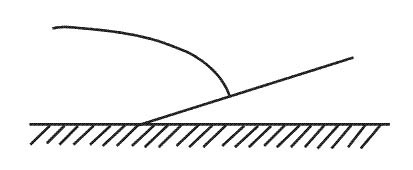
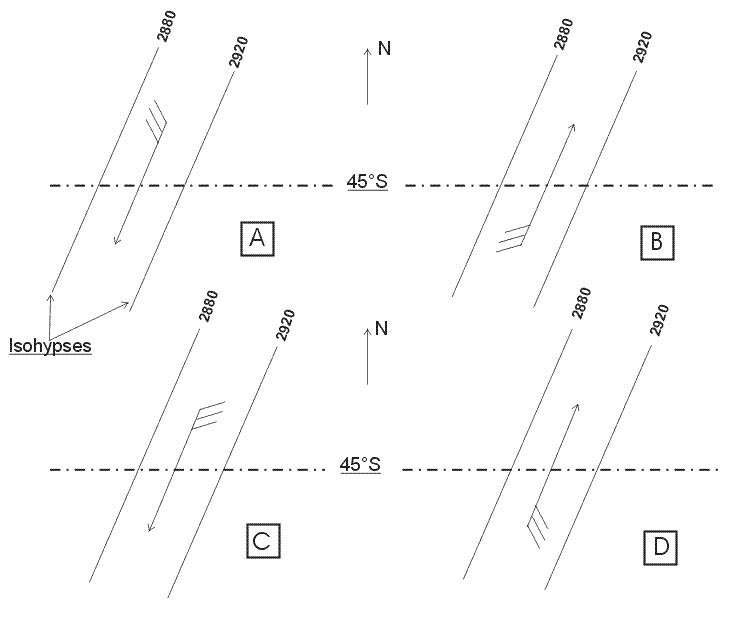
Question 246-5 : During a landing approach the aircraft is subjected to windshear with a decreasing head wind in the absence of a pilot action the aircraft 1 flies above the glide path2 flies below the glide path3 has an increasing true airspeed4 has a decreasing true airspeedthe combination of correct ?
2 4.
26512, 3. 1, 3. 1, 4.
Question 246-6 : Wind shear and microburstduring a landing approach the aircraft is subjected to windshear with an increasing tail wind in the absence of a pilot action the aircraft 1 flies above the glide path2 flies below the glide path3 has an increasing true airspeed4 has a decreasing true airspeedthe ?
2 4.
com encom070h 9jpg gderoq111 this image doesn't explain increasing tailwind during approach landingguess what a decreasing headwind is similar to an increasing tailwindthe increase in tailwind will cause a decrease in iastas hence if you do nothing about it you will go below the glide path2, 3. 1, 3. 1, 4.
Question 246-7 : Transport of dangerous goodswhich of the following items required to be on board an aircraft for operating reasons in accordance with the relevant requirements are classified as dangerous goods 1 fire extinguishers2 self inflating life jackets3 portable oxygen supplies4 first aid kitsthe ?
1 2 3 4.
1, 3, 4. 1, 3. 2, 4.
Question 246-8 : During the certification flight tests regarding fuel jettisoning it must be shown that 1 fuel jettisoning system and its operation are free from fire hazard2 the fuel discharges clear of any part of the aeroplane3 fuel fumes do not enter any part othe aeroplane4 the jettisoning operation does ?
1 2 3 and 4.
1, 3 and 4. 1 and 4. 2 and 3.
Question 246-9 : In accordance with doc 4444 icao when a medium and a light aircraft are using the same runway or parallel runways separated by less than 760 m in approach or departure phases of flight shall be applied a wake turbulence radar separation minima of ?
5 nm.
Icao doc 4444 8734 the following distance based wake turbulence separation minima shall be applied to aircraft being provided with an ats surveillance service in the approach and departure phases of flight in the circumstances given in 87341 265287341 the minima set out in 8734 shall be applied when a an aircraft is operating directly behind another aircraft at the same altitude or less than 300 m 1 000 ft below orb both aircraft are using the same runway or parallel runways separated by less than 760 m 2 500 ft orc an aircraft is crossing behind another aircraft at the same altitude or less than 300 m 1 000 ft below4 nm. 3 nm. 2 nm.
Question 246-10 : In accordance with icao doc 8168 noise preferential routes are established to ensure that departing and arriving aeroplanes avoid overflying noise sensitive areas in the vicinity of the aerodrome as far as practicablein establishing noise preferential routes ?
No turns should be required coincident with a reduction of power associated with a noise abatement procedure.
22 noise preferential routes221 noise preferential routes are established to ensure that departing and arriving aeroplanes avoid over flying noise sensitive areas in the vicinity of the aerodrome as far as practicable222 in establishing noise preferential routes a turns during take off and climb should not be required unless 1 the aeroplane has reached and can maintain throughout the turn a height of not less than 150 m 500 ft above terrain and the highest obstacles under the flight path note pans ops volume ii permits turns after take off at 120 m 400 ft and obstacle clearance of at least 90 m 300 ft during the aeroplane's turn these are minimum requirements for noise abatement purposes 2 the bank angle for turns after take off is limited to 15° except where adequate provision is made for an acceleration phase permitting attainment of safe speeds for bank angles greater than 15° b no turns should be required coincident with a reduction of power associated with a noise abatement procedure andc sufficient navigation guidance should be provided to permit aeroplanes to adhere to the designated routeTurns during take-off and climb should not be required unless the aeroplane has reached and can maintain throughout the turn a height of no less than 100 m above terrain and the highest obstacle. turns during take-off and climb should not be required unless the bank angle for turns is limited to 20° (climbing at v2 + 10 to 20 kt). turns during take-off and climb should not be required unless the bank angle for turns is limited to 28° (climbing at v2 + 10 to 20 kt).
Question 246-11 : In icing conditions and after the application of an anti icing fluid on an aeroplane the commander should 1 avoid positioning the aeroplane in the engine jet blast of the preceding aeroplane2 avoid positioning the aeroplane in the turbo prop wash of the preceding aircraft3 positioning yourself in ?
1 2.
You must avoid positioning the aeroplane in the engine jet blast or in the turbo prop wash of the preceding aircraft because air flow will remove the anti icing fluid spread on your wings3, 4. 2, 3. 1, 4.
Question 246-12 : A runway is referred to as contaminated when more than 25% of the required runway surface is covered with the one of the following elements 1 a water film sufficiently thick to give a shiny appearance to the runway2 a water film or loose or slushy snow equivalent to more than 3 mm of water3 ?
2 3 4.
Contaminated runway a runway is considered to be contaminated when more than 25% of the runway surface area whether in isolated areas or not within the required length and width being used is covered by the following i surface water more than 3 mm 0125 in deep or by slush or loose snow equivalent to more than 3 mm 0125 in of water ii snow which has been compressed into a solid mass which resists further compression and will hold together or break into lumps if picked up compacted snow or iii ice including wet ice1, 2, 3, 4. 1, 3, 4. 1, 3, 4, 5.
Question 246-13 : The wake turbulence caused by an aircraft is mainly the result of 1 an aerodynamic effect wing tip vortices 2 the engines action propellers rotation or engine gas exhausts 3 the importance of the drag devices size of the landing gear of the flaps etc the combination regrouping all the correct ?
1.
3. 2 and 3. 1, 2 and 3.
Question 246-14 : In a light crosswind approximately 5 kt from the right behind an aeroplane taking off ?
The right wake vortex remains approximately on the runway.
The runway will be clear of any wake turbulence. the right and left wake vortices remain approximately on the runway. the left wake vortex remains approximately on the runway.
Question 246-15 : Wake turbulenceto avoid wake turbulence when flying behind and close to a large aeroplane the pilot should manoeuvre whenever possible ?
Above and upwind from the large aeroplane.
Below and downwind from the large aeroplane. above and downwind from the large aeroplane. below and upwind from the large aeroplane.
Question 246-16 : An operator shall not operate an aircraft in expected or actual icing conditions unless ?
The aircraft is certificated and equipped to operate in icing conditions.
The flight is planned so that a change of cruising level can be initiated rapidly. the aircraft is sprayed with anti-icing fluid before flight. the aircraft is sprayed with de-icing fluid before flight.
Question 246-17 : The complete information regarding the types of goods which the passengers are forbidden from transporting aboard an aircraft is listed in the ?
Icao document 'technical instructions for the safe transport of dangerous goods by air'.
Icao annex 18. easa air ops documentation. aircraft's flight manual.
Question 246-18 : In regards to icao annex 18 when offering dangerous goods for transportation by air who initially is responsible for compliance with the regulations ?
The shipper.
The pilot in command. the station manager. the aerodrome manager.
Question 246-19 : Wake turbulenceregarding wake turbulence what are the icao minimum radar separation distance and the minimum non radar separation time for a medium aircraft behind a heavy aeroplane on approach to the same runway ?
93 km 5 nm and 2 minutes.
755separation distance 5 nm58 time based wake turbulence longitudinal separation minima582 arriving aircraft58211 the following minima shall be applied to aircraft landing behind a heavy or a medium aircraft a medium aircraft behind heavy aircraft 2 minutes b light aircraft behind a heavy or medium aircraft 3 minutes9.3 km (5 nm) and 3 minutes. 11.1 km (6 nm) and 3 minutes. 7.4 km (4 nm) and 2 minutes.
Question 246-20 : Regarding wake turbulence minimum non radar separation time for a light aircraft behind a medium or heavy aeroplane on approach to the same runway ?
3 minutes.
58 time based wake turbulence longitudinal separation minima582 arriving aircraft58211 the following minima shall be applied to aircraft landing behind a heavy or a medium aircraft a medium aircraft behind heavy aircraft 2 minutes b light aircraft behind a heavy or medium aircraft 3 minutes 4 minutes. 5 minutes. 2 minutes.
Question 246-21 : According to icao doc 4444 a wake turbulence non radar separation minima of 2 minutes shall be applied to ?
Medium aircraft landing behind a heavy aircraft.
doc4444 58 time based wake turbulence longitudinal separation minima582 arriving aircraft58211 the following minima shall be applied to aircraft landing behind a heavy or a medium aircraft a medium aircraft behind heavy aircraft 2 minutes b light aircraft behind a heavy or medium aircraft 3 minutesLight aircraft landing behind a medium aircraft. light aircraft taking-off behind a medium aircraft from an intermediate part of the same runway. medium aircraft taking-off behind a heavy aircraft from an intermediate part of a parallel runway separated by less than 760 m.
Question 246-22 : As a commander if you are notified that a package of dangerous goods appears to be damaged you ?
Ensure that arrangements are made for its removal.
Mention it on the shipper's declaration. mention it on the notification to captain. accept it after a visual inspection.
Question 246-23 : Noise abatementaccording to the recommended 'noise abatement take off and climb procedure' nadp2 established in icao doc 8168 acceleration and flapsslats retraction is initiated ?
Not below 800 ft.
Ecqb03 september 2016icao doc8168 noise abatement climb nadp 2 1 this procedure involves initiation of flapslat retraction on reaching the minimum prescribed altitude the flapsslats are to be retracted on schedule while maintaining a positive rate of climb the power reduction is to be performed with the initiation of the first flapslat retraction or when the zero flapslat configuration is attained at the prescribed altitude complete the transition to normal en route climb procedures2 the noise abatement procedure is not to be initiated at less than 240 m 800 ft above aerodrome elevation3 the initial climbing speed to the noise abatement initiation point is v2 + 20 to 40 kmh 10 to 20 kt 4 on reaching an altitude equivalent to at least 240 m 800 ft above aerodrome elevation decrease aircraft body angleangle of pitch while maintaining a positive rate of climb accelerate towards vzf and either a reduce power with the initiation of the first flapslat retraction or b reduce power after flapslat retraction5 maintain a positive rate of climb and accelerate to and maintain a climb speed of vzf + 20 to 40 kmh 10 to 20 kt to 900 m 3 000 ft above aerodrome elevation6 on reaching 900 m 3 000 ft above aerodrome elevation transition to normal en route climb speed7 an aeroplane should not be diverted from its assigned route unless a in the case of a departing aeroplane it has attained the altitude or height which represents the upper limit for noise abatement procedures or b it is necessary for the safety of the aeroplane eg for avoidance of severe weather or to resolve a traffic conflict note vzf is 'minimum zero flaps speed'Not below 1000 ft. at 3000 ft. at 1500 ft.
Question 246-24 : Fire and smoketo fight a fire in an air conditioned cargo hold ?
You turn off the cargo hold ventilation and extinguish fire.
Extinguish fire and reduce air conditioning. extinguish fire only. fire-fighting is not necessary, since the transport of combustible goods in an air-conditioned cargo hold is forbidden.
Question 246-25 : The noise abatement procedures specified by the operator should be ?
For an aeroplane type the same for all aerodromes.
Easa air ops noise abatement procedures a an operator shall establish operating procedures for noise abatement during flight operations in compliance with icao pans ops volume 1 doc 8168 ops611 b take off climb procedures for noise abatement specified by an operator for any one aeroplane type should be the same for all aerodromesFor all aeroplane types, the same for a specific aerodrome. for all aeroplane types, the same for all aerodromes. different according to aerodromes and aeroplane types.
Question 246-26 : In a ditching situation the passengers shall be instructed to inflate their life jackets ?
When exiting the aircraft.
Immediately on the opening of the exits. immediately on ditching. as soon as ditching is prepared.
Question 246-27 : Viscous hydroplaning occurs primarily if the runway is covered with a thin film of water and ?
The runway is very smooth and dirty.
As a tire rolls along a wet runway it is constantly squeezing the water from the tread this squeezing action generates water pressures which can lift portions of the tire off the runway and reduce the amount of friction the tire can develop this action is called hydroplaning so technically whenever a tire is moving on a wet surface it is hydroplaning this results in tire to ground friction which can be low at high speeds and improve as speed reducesthere are three types of hydroplaning viscous dynamic and reverted rubber viscous hydroplaning viscous hydroplaning occurs on all wet runways and is a technical term used to describe the normal slipperiness or lubricating action of the the watera thin film of water acts like a lubricant the microtexture of the runway surface sandpaper like roughness breaks up the water film and greatly improves traction viscous hydroplaning is the most commonly encountered cause of low friction on wet runways and occurrences are often mistaken for dynamic hydroplaning 2653 dynamic hydroplaning dynamic hydroplaning is the technical term for what is commonly calledhydroplaning during total dynamic hydroplaning the tire lifts off the pavement and rides on a wedge of water like a water ski 2654 reverted rubber hydroplaning reverted rubber hydroplaning can occur whenever a locked tire is skidded along a very wet or icy runway for a time long enough to generate frictional heat in the footprint area reverted rubber hydroplaning can be initiated at any speed above about 20 knots and results in tire friction levels comparable to that of icy runwaysreverted rubber hydroplaning when a tire locks up on a smooth wet or icy surface the friction heat generates steam the steam pressure then lifts the tire off the runway and the steam heat reverts the rubber to a black gummy deposit 2655The runway is very smooth and clean. the runway has a rough surface. the tyre treads show minor cuts.
Question 246-28 : Wake turbulenceaeroplane wake turbulence during take off starts when ?
The nose wheel lifts off the runway.
The take off roll commences. slats and flaps are extended only. out of ground effect.
Question 246-29 : A hafex fire extinguisher should be used on a fire of 1 paper fabric plastic2 flammable liquids 3 flammable gases4 metalsthe combination regrouping all the correct statements is ?
1 2 3.
Class a fire flammable solids any object that might catch ignition and be set on fire requiring the cooling effect of water eg material wood paper cushions etc it is safe to use any type of extinguishers against such fire whenever water is not available class a extinguishers = water class b fire liquid fire liquid fire involves flammable substances that are usually lighter than water eg oil fuel paint kerosene water and water glycol fire extinguishers should not be used to fight such fire as water will only help it spread and expand concentration should be on the exclusion of oxy class b extinguishers = foam class c fire electrical fire fire involving electrical equipment is usually the result of a short circuit it is essential to cut the electrical source of ignition and exclude the oxy beware of using water against such fire to prevent electric shocks if there is no other alternative water glycol extinguishers could be used in short shots class c extinguishers = dry chemicals hafex gas class d fire metal fire metal fire involves certain combustible metals eg magnesium titanium potassium sodium these metals burn at high temperatures and give off sufficient oxygen to support combustion they may react violently with water or other chemicals and must be handled with care class d extinguishers = sand dry chemical powder a hafex fire extinguisher can be used for paper fabric plastic fire electric fire wood fire flammable liquids flammable gases hydrocarbon fire class a b and c fires 1, 2, 3, 4. 2, 3, 4. 1, 2, 4.
Question 246-30 : The safety precautions to be taken when using 100% medical oxygen are 1 refrain from smoking2 avoid sparks3 avoid operation of radio communication equipment4 operate oxygen system shut off valves slowlythe combination regrouping all the correct statements is ?
1 2 4.
1, 2, 3. 2, 3, 4. 1, 3, 4.
Question 246-31 : The wake turbulence is the most severe when the generating aeroplane is 1 flying slowly2 heavy3 in a clean configuration4 flying with high thrustthe combination regrouping all of the correct statements is ?
1 2 3.
Wake turbulence is formed whilst you are creating lift it is the flow of air from the high pressure surface of the wing underneath to the low pressure surface top at the wing tipthese vortices then sink slowly downwards and outwards so heavy clean slow produces the greatest pressure differential between the two surfaces of the wing1, 4. 1, 2, 3, 4. 2, 3, 4.
Question 246-32 : Wake turbulence category heavy refers to aircraft which have a maximum certificated take off mass of ?
136 000 kg or more.
Question 246-33 : Wind shear and microburstafter take off an aeroplane is subjected to windshear with a decreasing head wind in the absence of a pilot action the aeroplane 1 flies above the climb out path2 flies below the climb out path3 has an increasing true airspeed4 has a decreasing true airspeed ?
2 4.
com encom070h 9jpg2, 3. 1, 3. 1, 4.
Question 246-34 : Transport of dangerous goodsthe content of the dangerous goods transport document is specified in the ?
Technical instructions.
The broad principles governing the international transport of dangerous goods by air are contained in annex 18 to the convention on international civil aviation the safe transport of dangerous goods by air the technical instructions doc 9284 amplify the basic provisions of annex 18 and contain all the detailed instructions necessary for the safe international transport of dangerous goods by airdangerous goods can be carried safely by air transport providing certain principles are adopted these principles have been used in developing the technical instructions they are intended to facilitate transport while providing a level of safety such that dangerous goods can be carried without placing an aircraft or its occupants at risk providing all the requirements are fulfilled they try to ensure that should an incident occur it cannot lead to an accidentAir transport permit. flight manual. easa air ops documentation.
Question 246-35 : The permanent approval for the transport of dangerous goods is specified in the ?
Air operator certificate.
Certificate of aircraft registration. airworthiness certificate. insurance certificate.
Question 246-36 : The type of hydroplaning that is most likely to occur at the touch down area located at both ends of the runway is called ?
Viscous.
As a tire rolls along a wet runway it is constantly squeezing the water from the tread this squeezing action generates water pressures which can lift portions of the tire off the runway and reduce the amount of friction the tire can develop this action is called hydroplaning so technically whenever a tire is moving on a wet surface it is hydroplaning this results in tire to ground friction which can be low at high speeds and improve as speed reducesthere are three types of hydroplaning viscous dynamic and reverted rubber viscous hydroplaning viscous hydroplaning occurs on all wet runways and is a technical term used to describe the normal slipperiness or lubricating action of the the watera thin film of water acts like a lubricant the microtexture of the runway surface sandpaper like roughness breaks up the water film and greatly improves traction viscous hydroplaning is the most commonly encountered cause of low friction on wet runways and occurrences are often mistaken for dynamic hydroplaning 2653 dynamic hydroplaning dynamic hydroplaning is the technical term for what is commonly calledhydroplaning during total dynamic hydroplaning the tire lifts off the pavement and rides on a wedge of water like a water ski 2654 reverted rubber hydroplaning reverted rubber hydroplaning can occur whenever a locked tire is skidded along a very wet or icy runway for a time long enough to generate frictional heat in the footprint area reverted rubber hydroplaning can be initiated at any speed above about 20 knots and results in tire friction levels comparable to that of icy runwaysreverted rubber hydroplaning when a tire locks up on a smooth wet or icy surface the friction heat generates steam the steam pressure then lifts the tire off the runway and the steam heat reverts the rubber to a black gummy deposit 2655Dynamic. rubber reversion. rubber steaming.
Question 246-37 : A hand water fire extinguisher should be used on a fire of ?
Paper fabric carpet.
Class a fire flammable solids any object that might catch ignition and be set on fire requiring the cooling effect of water eg material wood paper cushions etc it is safe to use any type of extinguishers against such fire whenever water is not available class a extinguishers = water class b fire liquid fire liquid fire involves flammable substances that are usually lighter than water eg oil fuel paint kerosene water and water glycol fire extinguishers should not be used to fight such fire as water will only help it spread and expand concentration should be on the exclusion of oxy class b extinguishers = foam class c fire electrical fire fire involving electrical equipment is usually the result of a short circuit it is essential to cut the electrical source of ignition and exclude the oxy beware of using water against such fire to prevent electric shocks if there is no other alternative water glycol extinguishers could be used in short shots class c extinguishers = dry chemicals hafex gas class d fire metal fire metal fire involves certain combustible metals eg magnesium titanium potassium sodium these metals burn at high temperatures and give off sufficient oxygen to support combustion they may react violently with water or other chemicals and must be handled with care class d extinguishers = sand dry chemical powder a water h2o fire extinguisher can be used for a class a fireFlammable liquids. flammable gases. metals.
Question 246-38 : Following a landing with overweight and overspeed conditions the tyres and brakes are extremely hot for safety reasons the landing gear wheels should be approached ?
From front or rear side.
From left or right side. from any side. under no circumstances.
Question 246-39 : The icao procedure designed to collect and disseminate information on bird strikes to aircraft is called ?
Ibis icao bird strike information system .
Icao began to monitor bird strikes in 1965 through the collection of bird strike reports which led to the creation of the icao bird strike information system ibis in 1980since that time increases in bird strike reporting which have come about through a greater awareness of the problem and the efforts of those states actively involved in the field of airport wildlife control have provided a better perspective of the present bird strike situationthe number of bird strikes occurring world wide appears to be increasing this increase is the result of many factors including increased numbers of aircraft movements new quieter aircraft and in many parts of the world highly successful wildlife bird conservation effortswhile estimates vary it is now believed that more than 50000 bird strikes occur to civil aviation aircraft each year bird strikes are truly a worldwide phenomenon as demonstrated by the fact that bird strikes have occurred in more than 190 states and territories from every icao regionibis data reveals that ninety percent of bird strikes with known locations occur on or near airports birds are attracted to airports and to the airport vicinity for a variety of reasons all basic and tied directly to their survival however their basic needs put birds in direct conflict with the aircraft using airports and unless an effective airport bird control programme is in place it is inevitable that collisions between aircraft and birds will occurwhile the vast majority of bird strikes have no effect on the flight approximately eleven per cent of all bird strikes do affect the flight in some tangible way while rare fatal accidents resulting from bird strikes have accounted for the loss of 400 lives and the destruction of 420 aircraftIbha (icao bird hazard annex). ibsa (icao bird safety alert). ibsr (icao bird strike report).
Question 246-40 : A runway is considered damp when the runway surface is ?
Not dry but when the moisture on it does not give it a shiny appearance.
Not dry, and the surface appears reflective. covered with water up to 1 mm deep. covered with water up to 3 mm deep.
Exclusive rights reserved. Reproduction prohibited under penalty of prosecution.