A free Premium account on the FCL.055 website! Read here
Sign up to unlock all our services and 15164 corrected and explained questions.
Question 247-1 : In case of a cargo compartment fire the system which should be switched off is generally the ? [ Question security ]
Ventilation of the cargo compartment
Question 247-2 : Reference shall be made to the minimum equipment list mel for equipment found unserviceable at any time ?
Prior to the flight time stage.
If an equipment becomes inoperable while parked you consult the 'mel' and while taxying for take off or after landing you must refer to the 'abnormal and emergency procedures' in the qrh quick reference handbook flight time stage = the time an airplane first moves for the purpose of taking off until it finally stops at the end of the flightPrior to the aircraft take-off. during the flight. from engine start-up until the aircraft has come to a complete stop at the end of the flight.
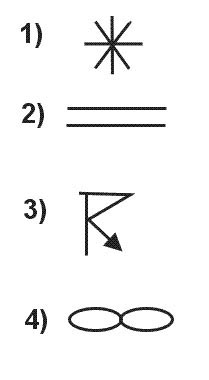
Question 247-3 : If a packet is marked with the label shown in the appendix it is 2656 ?
Question 247-4 : Noise abatementwhen using icao noise abatement departure procedure 1 nadp 1 the flap retraction is commenced at ?
3000 ft.
Ecqb03 september 2016icao doc8168 noise abatement climb nadp 1 1 this procedure involves a power reduction at or above the prescribed minimum altitude and the delay of flapslat retraction until the prescribed maximum altitude is attained at the prescribed maximum altitude accelerate and retract flapsslats on schedule while maintaining a positive rate of climb and complete the transition to normal enroute climb speed2 the noise abatement procedure is not to be initiated at less than 240 m 800 ft above aerodrome elevation3 the initial climbing speed to the noise abatement initiation point shall not be less than v2 + 20 kmh 10 kt 4 on reaching an altitude at or above 240 m 800 ft above aerodrome elevation adjust and maintain engine powerthrust in accordance with the noise abatement powerthrust schedule provided in the aircraft operating manual maintain a climb speed of v2 + 20 to 40 kmh 10 to 20 kt with flaps and slats in the take off configuration5 at no more than an altitude equivalent to 900 m 3 000 ft above aerodrome elevation while maintaining a positive rate of climb accelerate and retract flapsslats on schedule6 at 900 m 3 000 ft above aerodrome elevation accelerate to en route climb speed1500 ft. 1000 ft. 2000 ft.
Question 247-5 : What is the meaning of digit '4' on label shown in the appendix 2657 ?
Hazard class.
The hazard class number must be shown in the bottom corner 1 explosive2 gas3 liquid4 solid5 substance which in contact with water emits flammable gas51 oxidizing substance52 organic peroxide6 toxic infectious substance7 radioactive material8 corrosive9 miscellaneous dangerous goodsplease download icao doc 9284 chapter 3 pdf2646Un number. id number. packing instruction.
Question 247-6 : If a packet is marked with the label shown in the appendix it is 2658 ?
A toxic material.
A skull and crossbones = toxicthree crescents superimposed on a circle = infectiousthe hazard class number must be shown in the bottom corner 1 explosive2 gas3 liquid4 solid5 substance which in contact with water emits flammable gas51 oxidizing substance52 organic peroxide6 toxic infectious substance7 radioactive material8 corrosive9 miscellaneous dangerous goodsplease download icao doc 9284 chapter 3 pdf2646A corpse. an infectious substance. an explosive substance.
Question 247-7 : Noise abatementwhen can the required noise abatement procedure be disregarded ?
At pilot's discretion where safety is an issue.
Ecqb03 september 2016icao doc8168 32 operational limitations321 general3213 the pilot in command has the authority to decide not to execute a noise abatement departure procedure if conditions preclude the safe execution of the procedureIf there is work in progress on the aerodrome. if the rvr is less than 1500 m. never, it must always be complied with.
Question 247-8 : Noise abatementnoise abatement procedure type 1 nadp 1 is used for noise reduction ?
Near the airfield.
Ecqb03 september 2016the first procedure nadp 1 is intended to provide noise reduction for noise sensitive areas in close proximity to the departure end of the runwaythe second procedure nadp 2 provides noise reduction to areas more distant from the runway endDepends on the prevailing wind. during approach and landing. away from the airfield.
Question 247-9 : A package containing lithium ion batteries is to be transported by aircraft in the technical instructions icao doc 9284 you see a number '3480' listed in column 2what does the number 3480 represent 2659 ?
The item's un number.
The item's dangerous goods classification. the item's packing instruction reference number. the item's transport index.
Question 247-10 : The most efficient bird scaring technique generally available is ?
Broadcasting of recorded distress calls.
Pdf921The use of model predators, scarecrows, etc. firing shell crackers. various visual methods.
Question 247-11 : After an accident or serious incident in flight the state where the aircraft lands shall report to ?
State of registrystate of the operatoricao.
State of registry/state of the operator. state of registry/easa. state of registry/icao.
Question 247-12 : Noise abatementaccording to the recommended 'noise abatement take off and climb procedure nadp 1' established in icao doc 8168 acceleration to en route climb speed has to be done as soon as the aircraft reaches ?
3000 ft.
Ecqb03 september 2016icao doc8168 noise abatement climb nadp 1 1 this procedure involves a power reduction at or above the prescribed minimum altitude and the delay of flapslat retraction until the prescribed maximum altitude is attained at the prescribed maximum altitude accelerate and retract flapsslats on schedule while maintaining a positive rate of climb and complete the transition to normal enroute climb speed2 the noise abatement procedure is not to be initiated at less than 240 m 800 ft above aerodrome elevation3 the initial climbing speed to the noise abatement initiation point shall not be less than v2 + 20 kmh 10 kt 4 on reaching an altitude at or above 240 m 800 ft above aerodrome elevation adjust and maintain engine powerthrust in accordance with the noise abatement powerthrust schedule provided in the aircraft operating manual maintain a climb speed of v2 + 20 to 40 kmh 10 to 20 kt with flaps and slats in the take off configuration5 at no more than an altitude equivalent to 900 m 3 000 ft above aerodrome elevation while maintaining a positive rate of climb accelerate and retract flapsslats on schedule6 at 900 m 3 000 ft above aerodrome elevation accelerate to en route climb speed2000 ft. 10000 ft. 5000 ft.
Question 247-13 : According with the 'noise abatement take off and climb procedure nadp 2' as established in doc 8168 aircraft must climb at v2 + 10 to 20 kt until reaching ?
800 ft.
Ecqb03 september 2016icao doc8168 noise abatement climb nadp 2 1 this procedure involves initiation of flapslat retraction on reaching the minimum prescribed altitude the flapsslats are to be retracted on schedule while maintaining a positive rate of climb the power reduction is to be performed with the initiation of the first flapslat retraction or when the zero flapslat configuration is attained at the prescribed altitude complete the transition to normal en route climb procedures2 the noise abatement procedure is not to be initiated at less than 240 m 800 ft above aerodrome elevation3 the initial climbing speed to the noise abatement initiation point is v2 + 20 to 40 kmh 10 to 20 kt 4 on reaching an altitude equivalent to at least 240 m 800 ft above aerodrome elevation decrease aircraft body angleangle of pitch while maintaining a positive rate of climb accelerate towards vzf and either a reduce power with the initiation of the first flapslat retraction or b reduce power after flapslat retraction5 maintain a positive rate of climb and accelerate to and maintain a climb speed of vzf + 20 to 40 kmh 10 to 20 kt to 900 m 3 000 ft above aerodrome elevation6 on reaching 900 m 3 000 ft above aerodrome elevation transition to normal en route climb speed7 an aeroplane should not be diverted from its assigned route unless a in the case of a departing aeroplane it has attained the altitude or height which represents the upper limit for noise abatement procedures or b it is necessary for the safety of the aeroplane eg for avoidance of severe weather or to resolve a traffic conflict note vzf is 'minimum zero flaps speed'3000 ft. 1200 ft. 2000 ft.
Question 247-14 : Noise abatementaccording to the recommended noise abatement procedures contained in the icao doc 8168 data available indicates that the procedure which results in noise relief during the part of the procedure close to the airport is ?
Nadp 1.
Ecqb03 september 2016the first procedure nadp 1 is intended to provide noise reduction for noise sensitive areas in close proximity to the departure end of the runwaythe second procedure nadp 2 provides noise reduction to areas more distant from the runway endNadp 2. depends on the wind component. either nadp 1 or 2, because there is no difference in noise distribution.
Question 247-15 : For aeroplane having a seating capacity of more than 44 passengers it must be shown by actual demonstration that the maximum seating capacity including the required number of crew members can be evacuated from the aeroplane to the ground in ?
90 seconds.
The aircraft must be stopped and the engine shut down before launching an emergency evacuationabnormal and emergency procedures configuration deviation list minimum equipment list and emergency evacuation procedures are included into part b of the operations manualcs 25803 emergency evacuation a each crew and passenger area must have emergency means to allow rapid evacuation in crash landings with the landing gear extended as well as with the landing gear retracted considering the possibility of the airplane being on fire b reserved c for airplanes having a seating capacity of more than 44 passengers it must be shown that the maximum seating capacity including the number of crewmembers required by the operating rules for which certification is requested can be evacuated from the airplane to the ground under simulated emergency conditions within 90 seconds compliance with this requirement must be shown by actual demonstration using the test criteria outlined in appendix j of this part unless the istrator finds that a combination of analysis and testing will provide data equivalent to that which would be obtained by actual demonstration132 seconds. 120 seconds. 60 seconds.
Question 247-16 : In which part of the operations manual would you find information on general operational policies and procedures ?
Part a.
Ecqb03 september 2016all non type related operational policies instructions and procedures needed for a safe operation are included in part a of the operations manualthe following items are included into part a de icing and anti icing on the ground adverse and potentially hazardous atmospheric conditions wake turbulence incapacitation of crew members use of the minimum equipment and configuration deviation list s security handling of accidents and occurrences altitude alerting system procedures ground proximity warning system procedures policy and procedures for the use of tcasacas all type related instructions and procedures needed for a safe operation are included in part b of the operations manual they will take account of any differences between types variants or individual aircraft used by the operatorthe following items are included into part b abnormal and emergency procedures configuration deviation list minimum equipment list emergency evacuation proceduresPart b. part b and c. part d.
Question 247-17 : Fuel jettisoningan aircraft operating within controlled airspace needs to dump fuel the level used should be not less than ?
1800 m 6000 ft .
Ecqb03 september 2016when an aircraft operating within controlled airspace needs to jettison fuel the flight crew shall coordinate with atc the following route to be flown which if possible should be clear of cities and towns preferably over water and away from areas where thunderstorms have been reported or are expected the level to be used which should be not less than 1800 m 6000 ft and the duration of the fuel dumping if obliged to jettison part of the fuel in flight it would be better to do so in a straight line and at a relatively high flight level but if unavoidable fuel may be jettisoned anywhere3000 m (10000 ft). 1500 m (5000 ft). 6000m (20000 ft).
Question 247-18 : Fuel jettisoningif any which parameters may adversely affect fuel jettisoning ?
Flaps slots and slats.
Ecqb03 september 2016cs 251001 unless it is shown that using any means including flaps slots and slats for changing the airflow across or around the wings does not adversely affect fuel jettisoning there must be a placard adjacent to the jettisoning control to warn flight crew members against jettisoning fuel while the means that change the airflow are being usedFlaps only. wind and altitude. undercarriage extended.
Question 247-19 : If a packet is marked with the label shown in the appendix it contains 2660 ?
Explosives.
The hazard class number must be shown in the bottom corner 1 explosive2 gas3 liquid4 solid5 substance which in contact with water emits flammable gas51 oxidizing substance52 organic peroxide6 toxic infectious substance7 radioactive material8 corrosive9 miscellaneous dangerous goodsplease download icao doc 9284 chapter 3 pdf2646Toxic or infectious material. radioactive material. oxides and peroxides.
Question 247-20 : If a packet is marked with the label shown in the appendix it contains 2661 ?
Infectious material.
A skull and crossbones = toxicthree crescents superimposed on a circle = infectiousthe hazard class number must be shown in the bottom corner 1 explosive2 gas3 liquid4 solid5 substance which in contact with water emits flammable gas51 oxidizing substance52 organic peroxide6 toxic infectious substance7 radioactive material8 corrosive9 miscellaneous dangerous goodsplease download icao doc 9284 chapter 3 pdf2646Explosives. radioactive material. miscellaneous dangerous goods.
Question 247-21 : If a packet is marked with the label shown in the appendix it contains 2662 ?
Flammable liquids.
Symbol flamebackground white with seven vertical red stripes = solidbackground red = liquidthe hazard class number must be shown in the bottom corner 1 explosive2 gas3 liquid4 solid5 substance which in contact with water emits flammable gas51 oxidizing substance52 organic peroxide6 toxic infectious substance7 radioactive material8 corrosive9 miscellaneous dangerous goodsplease download icao doc 9284 chapter 3 pdf2646Flammable solids. gazes. oxides and peroxides.
Question 247-22 : If a packet is marked with the label shown in the appendix it contains 2663 ?
Flammable solids.
Symbol flamebackground white with seven vertical red stripes = solidbackground red = liquidthe hazard class number must be shown in the bottom corner 1 explosive2 gas3 liquid4 solid5 substance which in contact with water emits flammable gas51 oxidizing substance52 organic peroxide6 toxic infectious substance7 radioactive material8 corrosive9 miscellaneous dangerous goodsplease download icao doc 9284 chapter 3 pdf2646Flammable liquids. gazes. oxides and peroxides.
Question 247-23 : According to ops the characteristics of de icing and anti icing fluids to be used for your aircraft can be found in ?
The operations manual.
Pdf676The flight manual. checklists. the aircraft maintenance manual.
Question 247-24 : The highest risk of bird strikes occurs ?
Under 2500 ft.
Pdf921Above 5000 ft. between 3500 ft and 5000 ft. between 2500 ft and 3500 ft.
Question 247-25 : In which part of the operations manual would you find type specific information regarding contaminated runways ?
Part b.
Part oro amc3 oromlr101 operations manual structure for commercial air transportPart a. part d. part c.
Question 247-26 : Dangerous goods that may react in case of contact with other dangerous goods should ?
Not be stowed next to each other.
Ecqb04 january 2019Stored in separate containers. stored in separate packages. carried on different aircraft.
Question 247-27 : Transport of dangerous goodsrefer to the transportation of radioactive goods attention should be paid to the following ?
Regulated separation distances from packages of radioactive material to passengers on board.
Transportation is not allowed in passenger aircraft, only in cargo aircraft. transportation by air only allowed in specialized aircraft. limited exposure to passengers on board if stowed in the cabin.
Question 247-28 : Which dangerous goods except authorization of the receiving state is forbidden to transport by aircraft ?
Question 247-29 : When does an engine fire warning light go out ?
When the fire has been extinguished.
When the fire extinguisher bottle for that engine has been discharged. when all fire extinguisher bottles to that engine are discharged. when fire-handle is pulled.
Question 247-30 : In which part of the operations manual would you find information regarding the companies fuel policy ?
Part a.
Part b. part c. part d.
Question 247-31 : What do you use for a security search procedure during flight ?
A checklist.
Iaco annex 17 133 aeroplane search procedure checklistA metal detector. fire detecting systems. a dog.
Question 247-32 : In which part of the operations manual would you find information about incident reports ?
Part a.
Part b. part c. part d.
Question 247-33 : In which part of the operations manual would you find information about de icing procedures about the company ?
Part a.
Question 247-34 : In which part of the operations manual would you find information about procedures for the use of tcasacas ?
Part a.
All non type related operational policies instructions and procedures needed for a safe operation are included in part a of the operations manualthe following items are included into part a de icing and anti icing on the ground adverse and potentially hazardous atmospheric conditions wake turbulence incapacitation of crew members use of the minimum equipment and configuration deviation list s security handling of accidents and occurrences altitude alerting system procedures ground proximity warning system procedures policy and procedures for the use of tcasacas all type related instructions and procedures needed for a safe operation are included in part b of the operations manual they will take account of any differences between types variants or individual aircraft used by the operatorthe following items are included into part b abnormal and emergency procedures configuration deviation list minimum equipment list emergency evacuation procedureseasa air opspart oro oromlr101 operations manual structure for commercial air transportpart a generalbasic comprising all non type related operational policies instructions and procedures part b aircraft operating matters comprising all type related instructions and procedures taking into account differences between typesclasses variants or individual aircraft used by the operator part c commercial air transport operations comprising routerolearea and aerodromeoperating site instructions and information part d training comprising all training instructions for personnel required for a safe operationPart d. part b. part c.
Question 247-35 : Operations manualin which part of the operations manual would you find information on general operational policies and procedures ?
Part a.
Ecqb05 january 2019all non type related operational policies instructions and procedures needed for a safe operation are included in part a of the operations manualthe following items are included into part a de icing and anti icing on the ground adverse and potentially hazardous atmospheric conditions wake turbulence incapacitation of crew members use of the minimum equipment and configuration deviation list s security handling of accidents and occurrences altitude alerting system procedures ground proximity warning system procedures policy and procedures for the use of tcasacas all type related instructions and procedures needed for a safe operation are included in part b of the operations manual they will take account of any differences between types variants or individual aircraft used by the operatorthe following items are included into part b abnormal and emergency procedures configuration deviation list minimum equipment list emergency evacuation procedureseasa air opspart oro oromlr101 operations manual structure for commercial air transportpart a generalbasic comprising all non type related operational policies instructions and procedures part b aircraft operating matters comprising all type related instructions and procedures taking into account differences between typesclasses variants or individual aircraft used by the operator part c commercial air transport operations comprising routerolearea and aerodromeoperating site instructions and information part d training comprising all training instructions for personnel required for a safe operationPart b. part c. part d.
Question 247-36 : Which are the best conditions for wake turbulence to move to a nearby runway ?
Calm wind calm crosswind and light tailwind.
Strong wind, strong crosswind and strong tailwind. strong wind, calm crosswind and strong tailwind. calm wind, strong crosswind and strong tailwind.
Question 247-37 : An aircraft which experiences a headwind of 30 kt while making its way towards the centre of a microburst may expect directly underneath the microburst an horizontal wind speed of ?
0 kt.
15 kt headwind. 30 kt tailwind. 60 kt tailwind.
Question 247-38 : You have to perform an emergency ditching ?
In strong wind you will try to land into wind even if it puts you in a position slightly perpendicular to the waves.
You should always land into wind. you should always land parallel to the waves. you should always land perpendicular to the waves.
Question 247-39 : On a twin engine aeroplane you will consider a precautionary landing under the following conditions ?
Low fuel warning light came on.
Precautionary landings are made with power in anticipation of a real emergency other conditions are real emergencyOne engine unserviceable. main aerodynamic control failure. unidentified smoke in the cockpit.
Question 247-40 : In which part of the operations manual would you find information about 'abnormal and emergency procedures' ?
Part b.
All non type related operational policies instructions and procedures needed for a safe operation are included in part a of the operations manualthe following items are included into part a de icing and anti icing on the ground adverse and potentially hazardous atmospheric conditions wake turbulence incapacitation of crew members use of the minimum equipment and configuration deviation list s security handling of accidents and occurrences altitude alerting system procedures ground proximity warning system procedures policy and procedures for the use of tcasacas all type related instructions and procedures needed for a safe operation are included in part b of the operations manual they will take account of any differences between types variants or individual aircraft used by the operatorthe following items are included into part b abnormal and emergency procedures configuration deviation list minimum equipment list emergency evacuation procedureseasa air opspart oro oromlr101 operations manual structure for commercial air transportpart a generalbasic comprising all non type related operational policies instructions and procedures part b aircraft operating matters comprising all type related instructions and procedures taking into account differences between typesclasses variants or individual aircraft used by the operator part c commercial air transport operations comprising routerolearea and aerodromeoperating site instructions and information part d training comprising all training instructions for personnel required for a safe operationPart a. part c. part d.
Exclusive rights reserved. Reproduction prohibited under penalty of prosecution.