Question 33-2 : Hydraulic fluids used in systems of large modern airliners are ?
Phosphate ester base fluids.
Water base fluids. vegetable base fluids. mineral base fluids.
Question 33-3 : Hydraulic power is a function of ?
System pressure and volume flow.
Pump rpm only. system pressure and tank capacity. pump size and volume flow.
Question 33-4 : Large transport aeroplane hydraulic systems usually operate with a system pressure of approximately ?
3000 psi.
Hydraulic system of the a380 is 5000 psi instead of 3000 psi but usually hydraulic systems operate with a system pressure of 3000 psi4000 psi. 2000 psi. 1000 psi.
Question 33-5 : In hydraulic systems of large modern transport category aircraft the fluids used are ?
Synthetic oil.
Mineral oil. water and glycol. vegetable oil.
Question 33-6 : The type of hydraulic oil used in modern hydraulic systems is ?
Synthetic oil.
Vegetable oil mixture of mineral oil and alcohol mineral oil
Question 33-7 : In a modern hydraulic system 'hydraulic fuses' can be found their function is ?
To prevent total system loss in case of a leaking hydraulic line.
In hydraulic systems a fuse is a component which prevents the sudden loss of hydraulic fluid pressure it is a safety feature designed to allow systems to continue operating or at least to not fail catastrophically in the event of a system breach it does this by stopping the flow of hydraulic fluid through itself if the flow exceeds a threshold 819boeing 737 hydraulic fusesthe term 'fuse' is used here in analogy with electrical fuses which perform a similar functionTo switch to the secondary system in case of a leak in the primary brake system. to isolate a part of the system and protect it against accidental pollution. to allow by-passing of a hydraulic pump in case it is subject to excessive pressure, without further damage to the system.
Question 33-8 : In a hydraulic system the reservoir is pressurized in order to ?
Prevent pump cavitation.
Cavitation occurs when a liquid moves within tubing or pipes at very fast speeds causing the absolute pressure of the liquid to drop drastically this process occurs with little loss of heat if the absolute pressure drops below the vapour pressure of the liquid cavitation will form this phenomenon is more serious in viscous liquids than in thin liquidscavitation causes separation of gases that are within the liquid such as air or water vapour from the liquid itself bubbles would form then collapsein the case of a liquid entering the suction side of a pump the pressure would be low for the liquid to move from one place to another it would have to expend energy thus causing a further decrease in pressureif you pressurize the hydraulic fluid entering in the hydraulic pump you will avoid cavitation in the pumpReduce fluid combustibility. seal the system. keep the hydraulic fluid at optimum temperature.
Question 33-9 : Shuttle valves will automatically ?
Switch hydraulically operated units to the most appropriate pressure supply.
The shuttle valve sometimes fluid must come from more than one source to meet the demands of a complex system at other times an emergency system might be needed to provide pressure if the normal system fails the emergency system will usually only actuate essential components the shuttle valve can isolate the normal system from an alternate or emergency one a typical shuttle valve contains three ports normal system inlet alternate system inlet an outletinside the shuttle valve there is a sliding part predictably called the shuttle whose purpose is to seal off an inlet port which itself will contain a shuttle seat 820when a shuttle valve is in its normal position fluid can flow freely from the normal system inlet port to the actuating unit the shuttle is seated against the alternate system inlet port and held there by normal system pressure where it remains until the alternate system is activated fluid under pressure is then directed from the alternate system to the shuttle valve forcing the shuttle to seal off the normal inlet port fluid from the alternate system then has a free flow to the outlet portGuard systems against overpressure. reduce pump loads. shut down systems which are overloaded.
Question 33-10 : The colour of a fresh synthetic hydraulic fluids is ?
Purple.
Pink. blue. red.
Question 33-11 : The function of a hydraulic selector valve is to ?
Direct system pressure to either side of the piston of an actuator.
A selector or control valve enabling the operator to select the direction of the flow of fluid to the required service and providing a return path for the oil to the reservoir 821Select the system to which the hydraulic pump should supply pressure. automatically activate the hydraulic system. discharge some hydraulic fluid if the system pressure is too high.
Question 33-12 : The component that converts hydraulic pressure into linear motion is called ?
An actuator or jack.
The purpose if to convert fluid flow into linear or rotary motion they vary in size and construction depending on the operating loads but all consist of an outer cylinder in which slides a piston and seal assembly attached to the piston is a piston rod which passes through a gland seal fitted into the end of the cylinderA hydraulic pump. a pressure regulator. an accumulator.
Question 33-13 : The hydraulic device which functionality is comparable to an electronic diode is a ?
Check valve.
A diode is a one way electricity gate actually a diode means a device that has two electrodes but the word has come to mean a one way electricity valve 822the most common function of a diode is to allow an electric current to pass in one direction and to block it in the opposite direction thus the diode can be thought of as an electronic version of a check valveFlow control valve. distribution valve. shutoff valve.
Question 33-14 : Hydraulic fluid entering the hydraulic pump is slightly pressurised to ?
Prevent cavitation in the pump.
Cavitation occurs when a liquid moves within tubing or pipes at very fast speeds causing the absolute pressure of the liquid to drop drastically this process occurs with little loss of heat if the absolute pressure drops below the vapour pressure of the liquid cavitation will form this phenomenon is more serious in viscous liquids than in thin liquidscavitation causes separation of gases that are within the liquid such as air or water vapour from the liquid itself bubbles would form then collapsein the case of a liquid entering the suction side of a pump the pressure would be low for the liquid to move from one place to another it would have to expend energy thus causing a further decrease in pressureif you pressurize the hydraulic fluid entering in the hydraulic pump you will avoid cavitation in the pumpPrevent overheating of the pump. prevent vapour locking. ensure sufficient pump output.
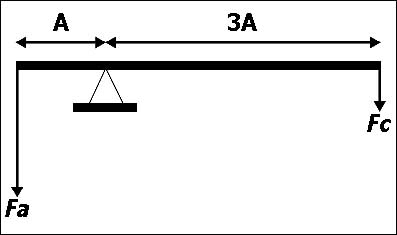
Question 33-15 : In the hydraulic press schematically shown what balancing force would be acting on the right hand side the diagram is not to scale 824 ?
100 n.
Img8231000 n. 20 n. 1 n.
Question 33-16 : Assuming an accumulator is pre charged with air to 1000 psi and the hydraulic system is pressurised to 1500 psi the accumulator gauge will read ?
1500 psi.
Part of an accumulator's job is to store energy in the form of hydraulic fluid under pressure that can be used for short time if the main system fails or needs help at peak timespressure gauges installed in hydraulic and pneumatic systems are used to indicate existing hydraulic and pneumatic pressures the accumulator gauge will read 1500 psi and if the main system fails it will read 1000 psi2500 psi. 1000 psi. 500 psi.
Question 33-17 : Internal leakage in a hydraulic system will cause ?
An increased fluid temperature.
As there is internal leakage the hyd pump will cycle on and off depending on pump type to maintain system pressure increasing friction with the pump and fluid thus increasing the fluid tempA decreased fluid temperature. an increased fluid pressure. fluid loss.
Question 33-18 : On large aeroplanes equipped with power brakes the main source of power is derived from ?
The aeroplane's hydraulic system.
The master cylinders. the brake actuators. pressure to the rudder pedals.
Question 33-19 : When powering up a hydraulic system the level in the reservoir will ?
Decrease slightly.
The air occupies space that would otherwise be occupied by hydraulic fluid thus when the hydraulic system becomes pressurized some fluids flows into the different pipesAlways remain the same. initially increase with system pressurisation. increase as ambient temperature decreases.
Question 33-20 : An accumulator in a hydraulic system will ?
Store fluid under pressure.
Increase pressure surges within the system. reduce fluid temperature and pressure. reduce fluid temperature only.
Question 33-21 : In the typical hydraulic system represented in the graphic assuming hydraulic pressure throughout and no internal leakage 825 ?
A condition of hydraulic lock exists and no movement of the piston will take place.
Img826a condition of hydraulic lock exists and no movement of the piston will take placeThe piston is free to move in response to external forces since pressures are equal. the piston moves to the left due to pressure acting on differential areas. the piston moves to the right due to equal pressure acting on differential areas.
Question 33-22 : A hydraulic shuttle valve ?
Enables an alternate supply to operate an actuator.
The shuttle valve sometimes fluid must come from more than one source to meet the demands of a complex system at other times an emergency system might be needed to provide pressure if the normal system fails the emergency system will usually only actuate essential components the shuttle valve can isolate the normal system from an alternate or emergency one a typical shuttle valve contains three ports normal system inlet alternate system inlet an outletinside the shuttle valve there is a sliding part predictably called the shuttle whose purpose is to seal off an inlet port which itself will contain a shuttle seat 820when a shuttle valve is in its normal position fluid can flow freely from the normal system inlet port to the actuating unit the shuttle is seated against the alternate system inlet port and held there by normal system pressure where it remains until the alternate system is activated fluid under pressure is then directed from the alternate system to the shuttle valve forcing the shuttle to seal off the normal inlet port fluid from the alternate system then has a free flow to the outlet portIs a non-return valve. allows two units to be operated by one pressure source. regulates pump delivery pressure.
Question 33-23 : To protect against excessive system pressure a hydraulic system usually incorporates ?
A high pressure relief valve.
The pressure relief valve is there to dump fluid back to the reservoir when pressure in the system gets too high as it will do when the system is not being used and the engine driven pump is working all the time 827A standby hydraulic pump. an accumulator. auxiliary hydraulic motors.
Question 33-24 : The ram air turbine rat provides emergency hydraulic power for ?
Flight controls in the event of loss of engine driven hydraulic power.
Img828a ram air turbine rat is a small turbine that is connected to a hydraulic pump or electrical generator installed in an aircraft and used as a power source the rat generates power from the airstream due to the speed of the aircraftNose wheel steering after the aeroplane has landed. undercarriage selection and automatic brake system. flap extension only.
Question 33-25 : A hydraulic low pressure alert is the first indication of ?
The pump output pressure being insufficient.
The pressure transmitter is located at the pump outputThe reservoir level being at a minimum acceptable level. a leak in the reservoir return line. the hydraulic system accumulator becoming deflated.
Question 33-26 : For an aeroplane hydraulic supply circuit the correct statement is ?
The accumulators constitute a reserve of hydraulic fluid maintained under pressure by a pneumatic back pressure air or nitrogen .
The pumps are always electric due to the high pressures which they must deliver (140 to 210 kg/cm²). the regulation system deals only with emergency operation and is not applied to all hydraulic services but only those considered as essential. the security components comprise the filters, the pressure relief valves, the by-passes, and the fire shut-off valve.
Question 33-27 : The reservoirs of a hydraulic system can be pressurized ?
By bleed air from the engine.
In flight only. by the air conditioning system. by an auxiliary system.
Question 33-28 : A pressure regulator is used in a hydraulic system ?
In conjunction with a constant delivery type pump.
A constant delivery pump forces a fixed or unvarying quantity of fluid through the outlet port during each revolution of the pumpthe pressure regulator unloads or relieves the power driven pump when the desired pressure in the system is reached thus it is often referred to as an unloading valvewhen a constant delivery type pump is being operated and pressure in the line between the pump and selector valve builds up to a desired point a valve in the pressure regulator automatically opens and fluid is bypassed back to the reservoirIn conjunction with a variable delivery type pump. to ensure that an equal pressure flow is delivered to critical components such as servo actuators. as an interface between the system and the cockpit indicators.
Question 33-29 : Filters in hydraulic systems often incorporate pop out indicators to ?
Warn of an impending by pass situation.
Filters are necessary in hydraulic systems for filtering out contamination and debris 829a filter may include a filter bypass provision a filter bypass allows fluid to flow around bypass the filter when the pressure across the filter is high ie filter is clogged 830a bypass functions similar to a priority valve where the pressure overcomes a spring when the pressure is sufficiently highIndicate that the filter is clogged and unfiltered oil is passing around the system. warn of a hydraulic system overheat. indicate that the filter is due maintenance.
Question 33-30 : Maximum power output and low mass of aeroplane hydraulic systems can be achieved with ?
High system pressure and low volume flow.
Question 33-31 : Parameters to monitor a hydraulic system in the cockpit can be ?
Pressure fluid temperature and quantity.
Pressure and hydraulic pump output. pressure and fluid viscosity. pressure and rpm of the hydraulic pump.
Question 33-32 : The purpose of an accumulator in a hydraulic system is ?
To damp the fluid pressure variations.
To eliminate the fluid flow variations. to bypass the pumps in the hydraulic system. to enable the starting of some devices.
Question 33-33 : The viscosity of a hydraulic fluid should be ?
The lowest to minimize power consumption and resistance to flow.
The viscosity must be as low as possible to limit the power required for the operation of the system reducing the resistance of the flowThe lowest to provide excellent lubrication properties. the highest to minimize power consumption and resistance to flow. the highest to provide excellent lubrication properties.
Question 33-34 : The hydraulic systems which works correctly is shown in the figure 831 ?
N°2.
The non return valve the directional arrow after the pumps are unidirectional flow devices used primarily in hydraulic systems to eliminate potential damage caused by fluid back pressurediagram n°2 is the only one correctN°4. n°3. n°1.
Question 33-35 : One of the functions of an accumulator in a hydraulic system is ?
To damp pressure surges in the system.
The function of accumulator in hydraulic system is to receive and store excess oil pumped through the system which is used to compensate sudden increase in loadsTo store fluid. to increase the flow. to act as a pressure relief valve.
Question 33-36 : In a hydraulic system overheat detectors are mostly installed ?
At the pumps.
The overheat detector is fitted at the pump to give indication of possible pump failure 832 t for the temperature probe location q for quantity p for pressurethe electric motor driven pumps do a large part of the work to produce flow for the hydraulic system the harder they work the hotter they getthe engine driven pumps are not fitted with an overheat detector since the engines already have overheat and fire detection systemsIn the reservoirs. at the actuators. at the coolers.
Question 33-37 : Which of these statements about an aeroplane's hydraulic system is correct ?
The filters the pressure relief valve s the by pass valve s and the fire shut off valve are safety features installed in the system.
The pumps are always electrically driven because they need to deliver a high pressure of 3000 psi. a hydraulic leak in a return line does not affect the functioning of the hydraulic system. the hydraulic reservoir contains a membrane and is pressurised by nitrogen on one side of this membrane.
Question 33-38 : The level in a hydraulic reservoir will ?
Fluctuate with accumulator pressure.
Always remain the same. initially increase with system pressurisation. increase as ambient temperature decreases.
Question 33-39 : Purposes of an accumulator in an hydraulic system are 1 to damp pressure fluctuations2 to cool the hydraulic fluid3 to serve as a limited alternate source of pressure4 to serve as a main pressure source for normal operation the combination that regroups all of the correct statements is ?
1 3.
2, 4. 1, 4. 2, 3.
Question 33-40 : The purpose of an accumulator in an hydraulic system is to ?
Store energy.
Store fluid. cool the fluid. store pressure.
Exclusive rights reserved. Reproduction prohibited under penalty of prosecution.