A free Premium account on the FCL.055 website! Read here
Sign up to unlock all our services and 15164 corrected and explained questions.
Question 84-1 : The term maximum zero fuel mass mzfm consists of… ? [ Questionnaire LAPL ]
The maximum permissible mass of an aeroplane with no usable fuel
Question 84-2 : The actual zero fuel mass zfm is equal to the… ?
Dry operating mass plus the traffic load.
Zero fuel mass zfm of an aircraft is the total mass of the airplane and all its contents minus the total mass of the usable fuel on boardzero fuel mass include 1 dry operating mass2 traffic loadOperating mass plus all the traffic load. basic empty mass plus the fuel loaded. actual landing mass plus trip fuel.
Question 84-3 : The maximum zero fuel mass is a mass limitation for the… ?
Strength of the wing root.
Maximum zero fuel mass mzfm is the maximum mass allowed before usable fuel and other specified usable agents engine injection fluid and other consumable propulsion agents are loaded in defined sections of the aircraft as limited by strength and airworthiness requirementsthe mzfm is a structural limit based on the bending moments and strength of the wing rootStrength of the fuselage. total load of the fuel imposed upon the wing. allowable load exerted upon the wing considering a margin for fuel tanking.
Question 84-4 : The regulated take off mass… ?
Is the lower of maximum structural take off mass and the performance limited take off mass.
Cap 696 definitions regulated take off mass rtom is the lowest of the performance limited tom and structural limited tomThe maximum structural take-off mass subject to any last minute mass changes. is the higher of the maximum structural zero fuel mass and the performance limited take-off mass. the maximum performance limited take-off mass subject to any last minute mass changes.
Question 84-5 : What is the definition of regulated landing mass it is the… ?
Lower of the performance limited landing mass and the maximum structural landing mass.
With regards to the landing mass there are 2 possible limits the maximum structural limit any performance limit for the ambient conditions on this flightthe maximum structural limit is a fixed number as given by the manufacturer this value is determined by the strength of the landing gear etc the performance limit will vary depending on various factors including runway length go around climb requirements temperature headwind tailwind runway slope elevation etcyou the pilot must compare these 2 limits the lower of the 2 becomes the regulated landing mass and this is the limit which must be respected for the flightLower of the performance-limited landing mass and the maximum structural landing mass, plus trip fuel. higher of the performance-limited landing mass and the maximum structural landing mass. regulated take-off mass minus the actual fuel consumed during the flight.
Question 84-6 : Based on actual conditions an aeroplane has the following performance take off mass limitations flaps0°10°15°runway4100 kg4400 kg4600 kgclimb4700 kg4500 kg4200 kgstructural limits take offlandingzero fuel 4300 kgthe maximum take off mass is… ?
4300 kg.
The structual limits mtom = mlm = mzfm are all 4300 kg thus we can disregard any take off mass which is above this limit 4300 kg pltom flaps 0 4100 kg lowest of the two values flaps 10 4400 kg lowest of the two values flaps 15 4200 kg lowest of the two values highest performance limited tom is 4400 kg with flaps 10 but we are unable to take off with a mass of 4400 kg as this exceed mtom limitation of 4300 kgtherefore the highest allowable take off mass is 4300 kgalternative explanation 1 find the lowest limit for each flap setting 2 choose the highest one from those you selectedflaps0°10°15°runway4100 kg4400 kg4600 kgclimb4700 kg4500 kg4200 kgstep 1 the lowest from each flap setting 0° 4100 10° 4400 15° 4200 step 2 the highest of those 3 selected is 4400 kg from 10° flapsso this your limit => 4400 kgnow find the highest possible tom among the given options that equal or are the closest to your limit remember it should not exceed structural limit of 4300 kg4200 kg 4700 kg 4100 kg
Question 84-7 : According to the flight manual the maximum structural mass of your aircraft is 3200 lb which may be increased by 25 lb for taxiing it is a hot day and the performance charts restrict the maximum all up mass maum to 3100 lb what is the value of the regulated take off mass rtom ?
3100 lb.
The regulated take off mass rtom is the lowest of the performance limited take off mass pltom and maximum structural take off mass mstom and it is the maximum mass at which the aircraft is able to depart from an airport in the given ambient conditionstherefore the rtom is 3100 lbnote ignore the taxi fuel of 25 lbs it is not a factor when considering take off masses as it is already burnt at that stage3200 lb 3125 lb 3225 lb
Question 84-8 : According to the flight manual the maximum structural mass of your aircraft is 3200 lb for take off or landing which can be increased by 50 lb when taxiing it is a hot day and the performance charts restrict the maximum all up mass maum to 3100 lb what is the value of the regulated landing mass ?
3100 lb.
Maximum structural mass for landing and take off 3200 lbperformance limited maximum all up mass 3100 lbregulated landing mass is the lowest of the performance limited and structural limited lm=> therefore regulated lm = 3100 lb3250 lb 3200 lb 3150 lb
Question 84-9 : Prior to departure the aircraft is loaded with maximum fuel of 20 100 litres at a fuel density specific gravity of 078 using the following data performance limited take off mass 67 200kgperformance limited landing mass 54 200kgdry operating mass 34 930kg taxi fuel 250kgtrip fuel 9250kgcontingency ?
13 090 kg.
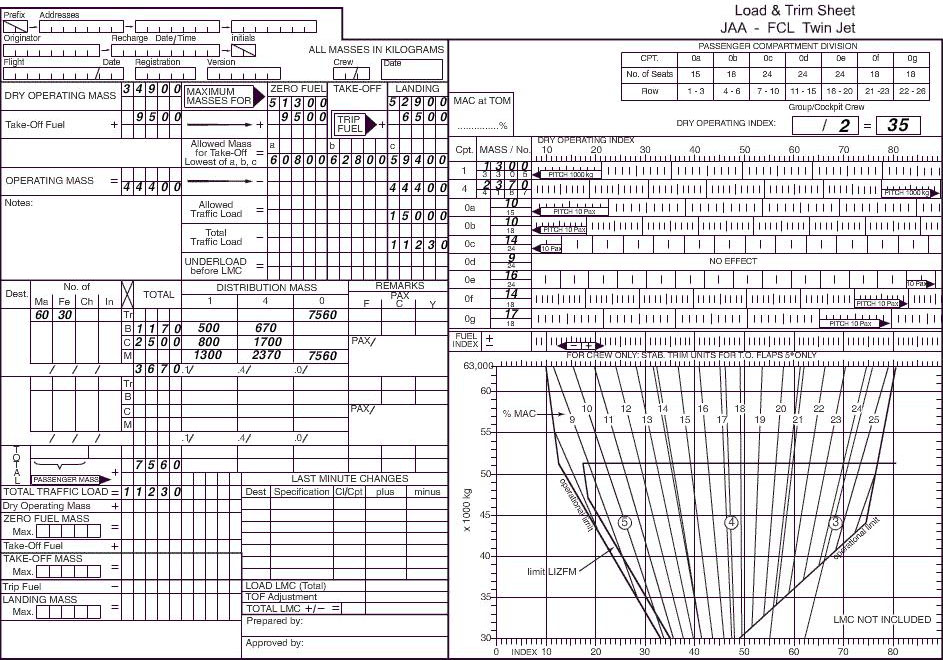
Traffic load tl is the difference between the actual take off mass and the operating mass om operating mass om = dom + fuel but without the traffic load 1 let's start by determining the block fuel the conversion between fuel volume and mass is very simple fuel volume in litres specific gravity density = fuel mass in kg 20 100 l 078 => 15 678 kg 2 the actual take off mass is the lowest of performance limited take off mass = 67 200 kg performance limited landing mass + trip fuel = 54 200 kg + 9 250 kg = 63 450 kg 3 allowed traffic load = tom om om = dom + block fuel taxi fuel om = 34 930 kg + 15 678 kg 250 kg = 50 358 kg allowed traffic load = tom om allowed traffic load = 63 450 kg 50 358 kg = 13 092 kg12 840 kg 16 470 kg 18 040 kg
Question 84-10 : A flight has been made from london to valencia carrying minimum fuel and maximum traffic load on the return flight the fuel tanks in the aeroplane are to be filled to capacity with a total fuel load of 20 100 litres at a fuel density of 079 kgl the following are the aeroplane structural limits ?
14 331 kg.
1 first we must calculate the block fuel mass in valencia = fuel volume x fuel density = 20 100 x 079 = 15 879 kg 2 determine take off fuel = block fuel taxi fuel = 15 879 250 = 15 629 kg 3 calculate the operating mass = dom + take off fuel = 34 930 kg + 15 629 kg = 50 559 kg 4 the maximum allowable takeoff mass will be smallest of 1 pltom 67 330 kg2 mlm + trip fuel 58 900 + 5990 = 64 890 kg smallest number 3 mzfm + takeoff fuel = 52 740 + 15 629 = 68 369 kg 5 the maximum traffic load = maximum allowable tom — operating mass maximum traffic load = 64 890 — 50 559 = 14 331 kg9830 kg 16 770 kg 13 240 kg
Question 84-11 : A revenue flight is to be made by a jet transport the following are the aeroplane structural limits masses and fuel load maximum ramp mass 69 900kgmaximum take off mass 69 300kgmaximum landing mass 58 900kgmaximum zero fuel mass 52 740kgperformance limited take off mass 67 450kgperformance limited ?
17 840 kg.
To get the takeoff mass will be smallest of 1mstom 69 300 kg 2pltom 67 450 kg 3mlm + trip fuel 58 900 + 6200 = 65 100 kg 4pllm + trip fuel 55 470 + 6200 = 61 670 kg 5mzfm + takeoff fuel = 52 740 + 6200 + 1300 + 1100 = 61 340 kg smallest number maximum traffic load = takeoff mass — dry operating mass + take off fuel maximum traffic load = 61 340 — 34 900 + 6200 + 1300 + 1100 = 17 840 kg18 170 kg 25 800 kg 13 950 kg
Question 84-12 : The maximum quantity of fuel that can be loaded into an aircraft's tanks is given as 400 us gallons if the fuel density specific gravity is given as 079 the mass of fuel which may be loaded is… ?
1196 kg.
The conversion between fuel volume and mass is very simple fuel volume in litres × specific gravity density = fuel mass in kg1 us gallon = 37854 litres400 × 37854 = 1514 litresfuel in litres × density = fuel mass in kg1514 × 079 => 1196 kg2302 kg 1916 kg 1437 kg
Question 84-13 : The dry operating mass dom of an aircraft is the sum of the basic empty mass bem + … ?
Operating items.
Dry operating mass dom it is the total mass of the aeroplane ready for a specific type of operation excluding usable fuel and traffic loadthe mass includes items such as 1 crew and crew baggage2 catering and removable passenger service equipment3 potable water and lavatory chemicals4 food and beveragesdom = basic mass + operating itemsdom = bem + the mass of the special operational equipment + the mass of the crew#neither traffic load nor taxi fuel is part of domTaxi fuel traffic load (tl) traffic load (tl) + usable fuel
Question 84-14 : If an aeroplane lands below its max structural landing mass but above its performance limited landing mass for the arrival airfield 1 it might not have sufficient runway length to stop safely2 tyre temperature limits could be exceeded3 it will increase structural fatigue4 physical damage might be ?
1 2 4 5.
Maximum structural landing mass is determined by the manufactural maximum performance landing mass is determined by crew or aerodrome based on the conditions like runway length and weather conditionlets analyse the options 1 it might have not enough runway length to stop safely correct runway can be too short2 tyre temperature limits could be exceeded correct pilots may push breaks to the limit to stop the airplane that can lead to overheating3 it may cause structural fatigue wrong fatigue is not failure it is based on weakening of structure over repetitive times not one landing4 physical damage might be suffered as a result of extra mass correct as what may happen with extra brake which cause over heating5 a go around might not be achievable correct obstacle clearance might not be achieved1, 2, 3 1, 2, 4 1, 2, 3, 5
Question 84-15 : 5600 usg is equivalent to… ?
4663 imp gal.
First method using the crp5 => align 5600 usg on the inner ring with the us gal scale look for the imp gal scale and read off the value of 4660 imp gal also on the inner scale second method us gallons to imp gal = us gal 08327 5600 us gal x 08327 = 4663 imp gal4366 imp gal 466 imp gal 633 imp gal
Question 84-16 : What is correct about conversion of fuel volume to mass ?
It may be done by using standard fuel density values as specified in the operations manual if the actual fuel density is not known.
Easa air ops gm1 catpolmab100 g mass and balance loading fuel density a if the actual fuel density is not known the operator may use standard fuel density values for determining the mass of the fuel load such standard values should be based on current fuel density measurements for the airports or areas concerned b typical fuel density values are 1 gasoline piston engine fuel – 071 2 jet a1 jet fuel jp 1 – 079 3 jet b jet fuel jp 4 – 076 4 oil – 088It must be done using fuel density values of 0.79 for jp 1 and 0.76 for jp 4 as specified in jar - ops, iem - ops 1.605e. it may be done by using standard fuel density values as specified in jar - ops 1. it must be done by using actual measured fuel density values.
Question 84-17 : Determine the weight of 867 us gallons of fuel sg 078 ?
5635 lbs.
Convert usg into litres litres into kilograms and finally kilograms into pounds us gallons to litres l => litres = us gal × 3785867 usg x 3785 = 32816 lconversion between fuel volume and mass fuel volume in litres x specific gravity density = fuel mass in kg32819 l x 078 = 25596 kgkilograms kg to pounds lbs => lbs = kilograms x 22052 5599 kg x 2205 = 5645 lbalternatively on your flight computer align 867 on the inner scale with the us gal index on the outer scale look up to 078 on the sp g lbs index on the outer scale read 5650 lb on the inner scaleclosest option 5635 lb2560 lbs 5361 lbs 8122 lbs
Question 84-18 : What is maximum running load ?
The maximum load per unit of fuselage length.
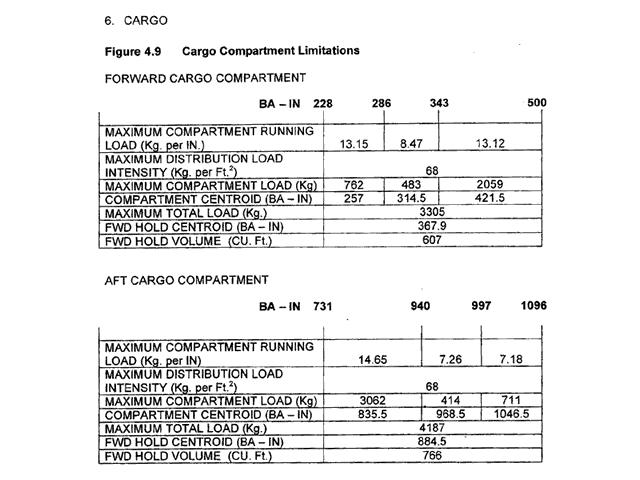
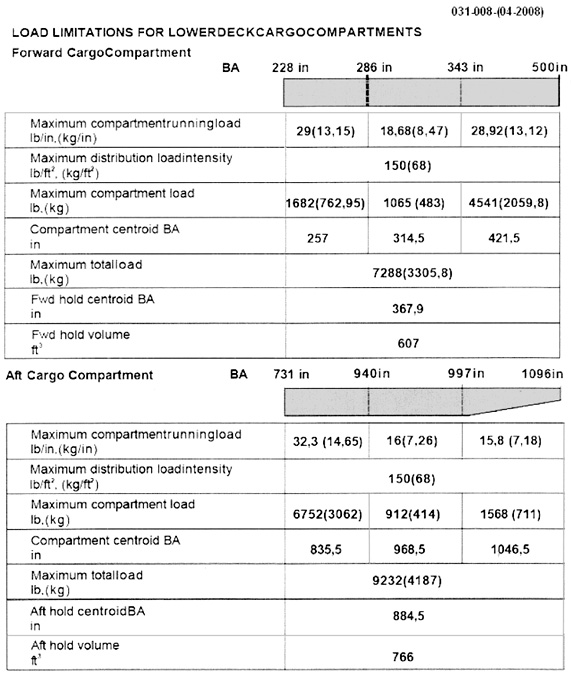
Running load the load or mass distributed over a defined length of a cargo compartment irrespective of load width maximum running load = the maximum load per unit of fuselage lengthThe maximum load per unit of fuselage width. the maximum traffic load that can be carried. the maximum load per unit of area.
Question 84-19 : Determine the maximum permissible traffic load given take off mass 8600 kg take off fuel 1840 kg reserve fuel 920 kg basic empty mass 4940 kg total mass of crew and special operating equipment 440 kg ?
1380 kg.
Another question which is testing your knowledge of the various mass definitions and their relationships with each other here we need to isolate the traffic loadtom = 8600 kg no information is given about a maximum tom so we just work with what we have dom = bem + variable load crew operating equipment etc = 4940 kg + 440 kg = 5380 kgto fuel = 1840 kgtom dom to fuel = traffic load8600 5380 1840 = 1380 kg of traffic loadnote reserve fuel is included in the take off fuel920 kg 1820 kg 2740 kg
Question 84-20 : What is the difference between the take off mass and the block ramp fuel ?
Dom + traffic load.
A strangely written question it appears to be asking what is take off mass fuel which is zero fuel massthe problem is the use of block fuel which is all the fuel including start & taxi fuel the take off mass tom does not include this as it is already burnt in this question however it is simply ignored by the examiner take off mass fuel = zero fuel mass zfm zfm = dom + traffic loadlooking at the answer options dom + traffic load > correct zero fuel mass = dom plus traffic loaddom + useful load > incorrect useful load is traffic load and usable fuel we don't want any fuel included bem + useful load > incorrect useful load is traffic load and usable fuel we don't want any fuel included bem + traffic load > incorrect this is missing the variable load crew catering etcDom + useful load bem + useful load bem + traffic load
Question 84-21 : Determine the allowed mass for take off for a medium range jet transport aeroplane mrjt given maximum zero fuel mass mzfm 61 688 kg maximum take off mass mtom 66 990 kg maximum landing mass mlm 65 317 kg performance limited take off mass tom 64 900 kg performance limited landing mass lm 67 300 ?
64 900 kg.
To determine the allowed take off mass we will consider mtom mzfm mzfm + take off fuel and mlm mlm + trip fuel and choose the most limiting figureperformance limited take off mass 64 900 kgmaximum zero fuel mass mzfm + take off fuel the take off fuel is not provided and we also don't know the taxi fuel to determine the tof from block fuel therefore we will have to use the block fuel figure 61 688 kg + 6000 kg = 67 688 kgmaximum landing mass mlm + trip fuel we must use the lowest of the two landing masses given 65 317 kg + 3800 kg = 69 117 kgthe most limiting figure is 64 900 kg66 990 kg 67 688 kg 69 117 kg
Question 84-22 : During dispatch calculations you want to calculate the maximum possible traffic load and carry as minimum 13 800 kg of block fueldetermine the allowed traffic load for your flight given allowed take off mass 71 402 kg maximum zero fuel mass 56 850 kg dry operating mass 40 763 kg actual traffic load ?
16 087 kg.
Traffic load tl is the difference between the actual take off mass and the operating mass om operating mass om = dom + fuel but without the traffic load 1 the actual take off mass is the lowest of allowed take off mass = 71 402 kg mzfm + block fuel taxi fuel = 56 850 kg + 13 800 kg 179 kg = 70 471 kg 2 allowed traffic load = tom om om = dom + block fuel taxi fuel om = 40 763 kg + 13 800 kg 179 kg = 54 384 kg allowed traffic load = tom om allowed traffic load = 70 471 kg 54 384 kg = 16 087 kg1193 kg 17 018 kg 2124 kg
Question 84-23 : Determine the maximum traffic load that can be carried given maximum structural take off mass 5200 kg dry operating mass 2840 kg crew and operational equipment 360 kg take off fuel 950 kg ?
1410 kg.
Traffic load tl is the difference between the actual take off mass and the operating mass om operating mass om = dom + fuel but without the traffic load allowed traffic load = tom om om = dom + take off fuel om = 2840 + 950 kg = 3790 kgallowed traffic load = tom om allowed traffic load = 5200 kg 3790 kg = 1410 kg1160 kg 800 kg 1050 kg
Question 84-24 : Just before closing the doors of the aircraft you are asked if it is possible to accept a group of passengers re booked from another flight knowing that your departure is take off limited determine the underload so that you can decide how many passengers to accept allowed take off mass 24 220 kg ?
6865 kg.
Underload the difference between allowable load and current load under load = allowable traffic load actual traffic load this load can be added due to last minute changes underload = allowed take off mass operating mass om traffic load tl operating mass om it is the dom plus takeoff fuel but without traffic load om = dom + tofunderload = 24 220 kg 14 792 kg 2563 kg = 6865 kg12 964 kg 9428 kg 766 kg
Question 84-25 : During dispatch calculations you want to calculate the maximum possible traffic load and carry as a minimum 13 800 kg of block fueldetermine the allowed traffic load for your flight given allowed take off mass 71 240 kg maximum zero fuel mass 56 380 kg dry operating mass 40 561 kg actual traffic ?
15 819 kg.
To tidy up the information given in the question allowed tom 71 240 kg let's assume this is the regulated tom take off fuel = block fuel taxi = 13 800 kg 274 kg = 13 526 kg landing mass has no restrictionsusing the regular table rtom rlm mzfm + trip fuel + take off fuel 71 240 no restrictions 56 380 + 13 526 = 69 906 69 906 is our limiting take off mass take off mass dry operating mass dom take off fuel = traffic load 69 906 kg 40 561 kg 13 526 kg = 15 819 kg available for traffic load1452 kg 2786 kg 17 153 kg
Question 84-26 : Determine the mass that must be entered into the loading chart for a fuel load of 170 litres given fuel density 078 kgl ?
133 kg.
The conversion between fuel volume and mass is very simple fuel volume in litres specific gravity density = fuel mass in kg170 l 078 kgl = 1326 kg133 dan 170 kg 218 kg
Question 84-27 : A flight crew of a turbojet aeroplane prepares a commercial air transport flight using the information below the flight is operated as planned what is correct regarding the landing mass lm maximum certificated landing mass 53 900 kg performance limited landing mass 51 950 kg dry operating mass 35 ?
Lm = 51 820 and it does not exceed the regulated lm.
Landing mass is the zero fuel mass + fuel on landingfor this question there are 3 steps zero fuel mass = dom 35 500 kg + traffic load 11 800 kg = 47 300 kg fuel on landing = block fuel 9720 kg taxi fuel 120 kg trip fuel 5080 kg = 4520 kg landing mass = zfm 47 300 kg + landing fuel 4520 kg = 51 820 kgthe limits are given as maximum certificated landing mass 53 900 kg performance limited landing mass 51 950 kgthe lower of the two becomes the regulated landing mass which here is 51 950 kg our landing mass of 51 820 kg is within limitsLm = 51 940 and it does not exceed the regulated lm. lm = 52 380 and it exceeds the regulated lm. lm = 47 300 and it exceeds the regulated lm.
Question 84-28 : The following planning data are given for a commercial air transport flight determine the underload of this flight maximum take off mass 62 800 kg performance limited take off mass at departure 61 600 kg dry operating mass 34 550 kg block fuel 10 970 kg taxi fuel 130 kg trip fuel 6150 kg reserve ?
3510 kg.
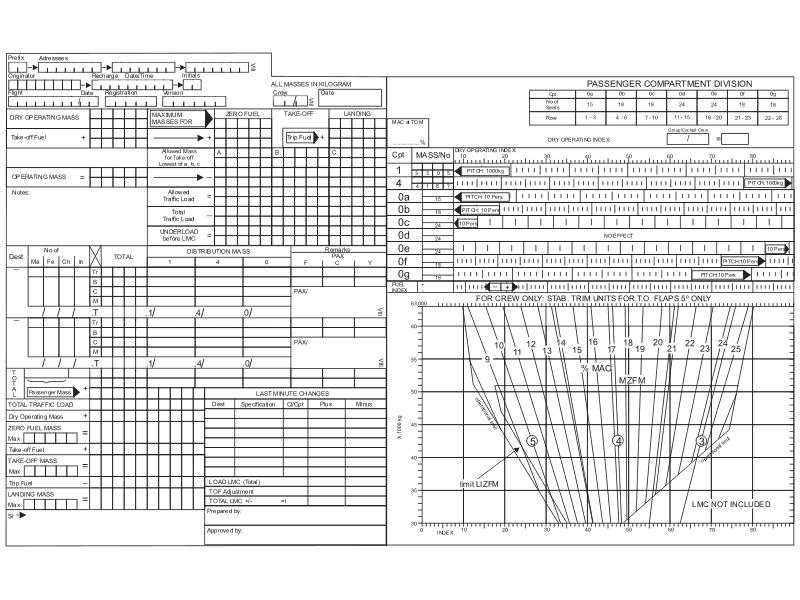
Underload the difference between allowable load and current load under load = allowable traffic load actual traffic load this load can be added due to last minute changes underload = allowed take off mass operating mass om traffic load tl operating mass om it is the dom plus take off fuel but without traffic load om = dom + tof om = 34 550 kg + 10 970 kg 130 kg = 45 390 kgtraffic load tl it is the total mass of passengers their baggage cargo and any non revenue load tl = 10 220 kg + 2480 kg = 12 700 kgunderload = 61 600 kg 45 390 kg 12 700 kg = 3510 kg4710 kg 5770 kg 5990 kg
Question 84-29 : A flight crew of a turbojet aeroplane prepares a commercial air transport flight using the following information determine the allowed take off mass for this flight maximum take off mass 62 800 kg maximum landing mass 54 900 kg maximum zero fuel mass 50 300 kg take off mass is not performance ?
59 900 kg.
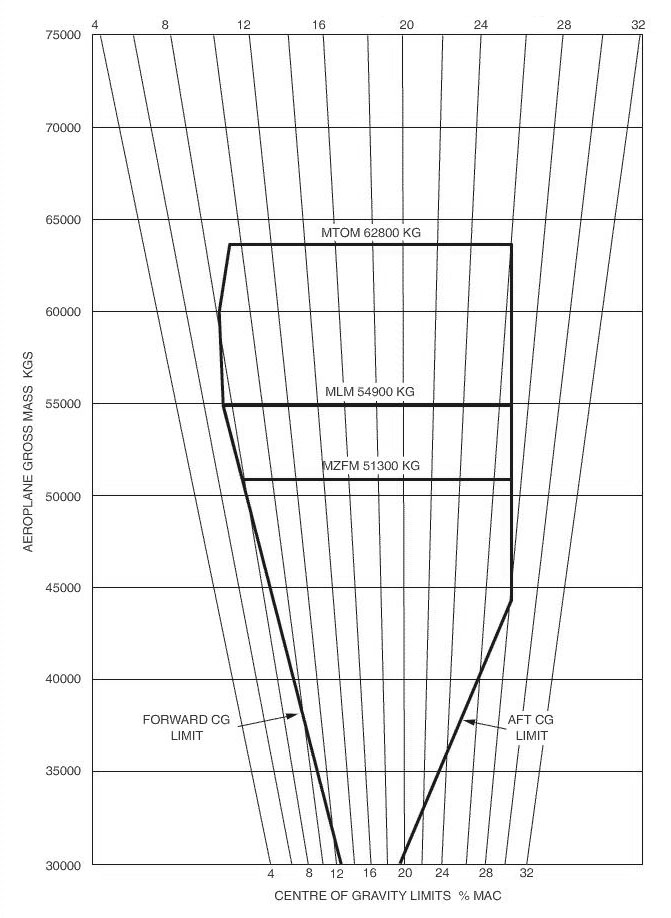
This question asks us for the allowed take off mass for a given flight this is determined by the fuel figures and needs to be checked by comparing the 3 limits in general zfm limited a small fuel load short range flight = little fuel in the wings = little wing bending relief = little weight can be carried in the fuselagetom limited large fuel load on take off typically with a large fuel burn long range flight lm limited large fuel load on take off typically with a small fuel burn tankering fuel for the next sector to tidy up the information given in the question we are only given a structural take off mass limitthe regulated landing mass is the lowest of the structural and performance limitsblock fuel is 9720 kg taxi is 120kg so take off fuel is 9720 120 = 9600 kgusing the regular table tomrlm 53 950 kgmzfm 50 300 kg + trip fuel 6160 kg+ take off fuel 9600 kg62 800 kg60 110 kg59 900 kg 59 900 kg is our limiting take off massnote this question is not asking about carrying more fuelextra fuelthe maximum fuel etcif it did we could ignore the mzfm and look at the limits imposed by the regulated take off and landing masses only in this case we would be limited by the performance landing mass 53950kg + trip fuel 6160 kg = 60110 kgin this question however we are asked for the maximum take off mass with the fuel figures as given and are limited by the mzfm to 59 900 kg the current fuel load only allows the traffic load to take the mass up to 59 900kgthis calculation is really to let us know the allowed traffic load for the flight 59 900kg take off limit 9600kg take off fuel dry operating mass = allowed traffic load59 120 kg 60 020 kg 62 800 kg
Question 84-30 : According to the flight manual the maximum structural mass of your aircraft is 3420 lb which may be increased by 30 lb for taxiing it is a hot day and the performance charts restrict the maximum all up mass maum to 3280 lb the regulated take off mass rtom is… ?
3280 lb.
The regulated take off mass rtom is the lowest of the performance limited take off mass pltom andmaximum structural take off mass mstom and it is the maximum mass at which the aircraft is able to depart from an airport in the given ambient conditionstherefore the rtom is 3280 lbnote ignore the taxi fuel of 30 lbs it is not a factor when considering take off masses as it is already burnt at that stage3310 lb 3450 lb 3420 lb
Question 84-31 : A pilot is taking off from an airport with a light aircraft which has a maximum structural take off mass of 3250 lb and 25 lb of taxi fuel can be added it is a hot summer day and the maximum all up mass maum is 3100 lb what is the maximum ramp mass in these conditions ?
3100 lb.
Maximum all up mass maum maximum mass that an aircraft can be loaded tomaum and maximum ramp mass describe the same massin this question the actual maum equals 3100 lb the maximum ramp mass will also equal 3100 lb and will include the 25 lbs taxi fuel3125 lb 3275 lb 3250 lb
Question 84-32 : Given the following information what is the underloadoverload allowed take off mass 4300 kg operating mass 3253 kg total fuel mass 650 kg mass of the crew and their baggage 185 kg traffic load 1015 kg ?
An underload of 32 kg.
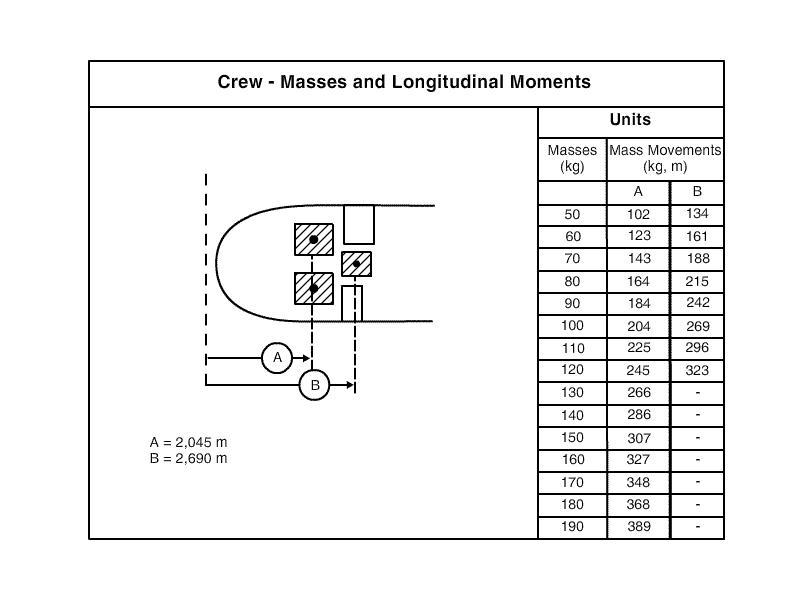
Traffic load tl is is the total mass of passengers baggage and cargo including any 'non revenue' loaddry operating mass dom is the total mass of the aeroplane ready for a specific type of operation excluding usable fuel and traffic load the mass includes items such as crew and crew baggage catering and removable passenger service equipment potable water and lavatory chemicals food and beveragesoperating mass om is the dom plus fuel but without traffic loadfor this question we will only consider the take off situation ignoring the landing and the zero fuel situation since the given data do not permit so subtracting from the allowed take off mass structural limit the om and the traffic load to figure out if the aircraft is overloaded or underloaded allowed tom om traffic load = 4300 3253 1015 = + 32 kgthe + sign indicates that it is underloaded by 32 kgnote be careful to avoid any double mass calculations due to the fact that some masses are already included in other masses eg fuel mass is included in om crew and crew baggage mass is included in dom dom is included in om and so onAn underload of 397 kg. an overload of 153 kg. an overload of 618 kg.
Question 84-33 : The flight manual states that the maximum structural landing mass of your aircraft is 5300 kg for a flight terminating in a hot desert area the density altitude for the day concerned restricts the landing mass to 4900 kg if the contingency fuel of 30 kg has not been used what is the regulated ?
4900 kg.
The maximum landing mass mlm 5300 kg is a structural limit whilst the performance limited landing mass pllm 4 900 kg is a limit derived from performance calculationsthe regulated landing mass rlm is the lower between the maximum structural landing mass of 5300 kg and the performance limited landing mass 4900note the contingency fuel consumption is irrelevant to the question5330 kg 4930 kg 5300 kg
Question 84-34 : Before departure for a flight the load controller presents to you cargo documents for boxes containing spare parts these boxes have a total mass of 4500 kg if you accept all the boxes given the following information what will be the underloadoverload allowed take off mass 76 720 kg maximum zero fuel ?
An underload of 858 kg.
Of the information given we only need in bold allowed take off mass 76 720 kgmaximum zero fuel mass 62 731 kgoperating mass 58 799 kgactual zero fuel mass 55 063 kgactual traffic load without the boxes 12 563 kgtake off fuel 16 299 kgallowed take off mass 76 720 kg zfm 55 063 kg to fuel 16 299 kg = 5358 kg initial underload5358 kg 4500 kg of extra boxes = 858 kg underload remainingbe careful once again the examiner is giving more information than is required 'the allowed tom is the lower of regulated take off mass rtom maximum zero fuel mass mzfm + take off fuelregulated landing mass rlm + trip fuelAn overload of 3168 kg. an overload of 858 kg. an underload of 3168 kg.
Question 84-35 : Following the acceptance of the load sheet and the operational flight plan the commander decides to refuel hisher aircraft with 1618 us gallons at a specific gravity of 08 the fuel mass loaded on board is ?
10 801 lb.
Specific gravity sg is a measurement of the relative density mass of a given volume of fluid mass of an equal volume of watera relationship exists between litres and kilograms one litre of water weighs one kilograma similar relationship exists between pounds or libres and imperial gallons one ig of water weighs ten pounds or libresbased on the first relationship convert us gallons into litres 1618 usg x 3785 = 612413 litresapplying the sg 08 find the mass in kilos 612413 kg x 08 = 48993 kgconvert kilos into libres 48993 kg x 2205 = 10 802 lb2222 lb 16 877 lb 754 lb
Question 84-36 : The dispatcher has informed you that the actual traffic load for your flight is 1459 kg given the following conditions what is the maximum block fuel you can carry without exceeding the allowed take off massdry operating mass 4737 kg maximum zero fuel mass 6428 kg allowed take off mass 8100 kg ?
1939 kg.
The allowed tom is the lower of regulated take off mass rtom maximum zero fuel mass mzfm + take off fuel regulated landing mass rlm + trip fuelallowed tom dom traffic load = max take off fuel8100 kg 4737 kg 1459 kg = 1904 kgtake off fuel 1904 kg + taxi fuel 35kg = block fuel 1939 kgnote in this question the information maximum zero fuel mass 6428 kg is not required to complete the answer1904 kg 1672 kg 1707 kg
Question 84-37 : A flight log excerpt gives the following planning data for a commercial air transport flight what is the maximum allowed traffic load for this flight maximum take off mass 62 800 kg maximum landing mass 54 900 kg maximum zero fuel mass 50 300 kg performance limited take off mass at departure 59 ?
14 190 kg.
Traffic load tl is the difference between the actual take off mass and the operating mass om operating mass om = dom + fuel but without the traffic load 1 maximum allowed take off mass must be calculated it is the lowest of performance limited take off mass at departure = 59 600 kg mzfm + block fuel taxi fuel = 50 300 kg + 10 810 kg 150 kg = 60 960 kg performance limited landing mass + trip fuel as trip fuel will be consumed during the flight = 54 500 kg + 5800 kg = 60 300 kg 2 maximum allowed traffic load = mtom om om = dom + block fuel taxi fuel om = 34 750 kg + 10 810 kg 150 kg = 45 410 kgallowed traffic load = tom om allowed traffic load = 59 600 kg 45 410 kg = 14 190 kg15 550 kg 14 340 kg 16 830 kg
Question 84-38 : Given the following data what is the additional traffic load that the crew could accept for take off dry operating mass 12 445 lb traffic load 241 lb fuel loaded 5000 lb trip fuel 3000 lb taxi fuel 100 lb mtom 18 386 lb ?
800 lb.
The question gives us the following information dry operating mass 12 445 lb traffic load 241 lb fuel loaded 5000 lb trip fuel 3000 lb not required taxi fuel 100 lb take off fuel is therefore 5000 100 = 4900 lb mtom 18 386 lbmax tom dom useful load traffic load & take off fuel = underload18 386 lb 12 445 lb 241 lb 4900 lb = 800 lb underload941 lb 700 lb 1041 lb
Question 84-39 : During dispatch calculations you want to calculate the maximum possible traffic load and carry as a minimum 13 800 kg of block fuelgiven the following information what is the allowed traffic load for your flight maximum take off mass 71 204 kg maximum zero fuel mass 56 490 kg dry operating mass 40 ?
16 295 kg.
Dry operating mass dom is the sum of the basic empty mass bem and the variable load crew crew baggage food beverages water etc excluding both usable fuel and payloadtraffic load tl is the total mass of passengers baggage cargo or freight including any non revenue load traffic load plus dry operating mass dom is equal to the aircraft's zero fuel mass zfm take off mass tom is the mass of the aeroplane at the start of the take off run it is equal to the zfm plus the take off fueltake off fuel is the remaining fuel at the brake release point after having consumed the taxi fuelfor this question we will only consider the take off and zero fuel situation subtracting from all the structural limits the dry operating mass dom and the fuel mass where applicable to find the maximum allowed traffic load that can be loaded and we will keep the lowest one take off situation maximum take off mass dom take off fuel = 71 204 kg 40 195 kg 13 800 kg 215 kg = 17 424 kgzero fuel situation maximum zero fuel mass dom = 56 490 kg 40 195 kg = 16 295 kgtherefore the maximum allowed traffic load that can be loaded for this flight is 16 295 kg17 424 kg 2839 kg 1710 kg
Question 84-40 : According to the flight manual the maximum structural mass of your aircraft is 3720 lb which may be increased by 20 lb for taxiingit is a hot day and the performance charts restrict the maximum all up mass maum to 3640 lb what is the value of the regulated take off mass rtom ?
3640 lb.
The regulated take off mass rtom is the lowest of the performance limited take off mass pltom and maximum structural take off mass mstom and it is the maximum mass at which the aircraft is able to depart from an airport in the given ambient conditionstherefore the rtom is 3640 lbnote ignore the taxi fuel of 20 lbs it is not a factor when considering take off masses as it is already burnt at that stage3660 lb 3740 lb 3720 lb
Exclusive rights reserved. Reproduction prohibited under penalty of prosecution.