A free Premium account on the FCL.055 website! Read here
Sign up to unlock all our services and 15164 corrected and explained questions.
Question 125-1 : At reference or see flight planning manual mrjt 1 figure 4531the aeroplane gross mass at top of climb is 61500 kgthe distance to be flown is 385 nm at fl 350 and oat 543 °cthe wind component is 40 kt tailwindusing long range cruise procedure what fuel is required err a 033 499 ? [ Preparation civilian ]
2150 kg
Question 125-2 : Planned and actual data as shown in the flight log excerptactual ground speed gs on the leg beta to gamma will be 110 ktif all other flight parameters remain unchanged what fuel remaining should be expected at waypoint gamma err a 033 502 ?
2625 kg.
Between alpha to beta actual flight time was 12 minutes and fuel consumption was 3000 2900 = 100 kg100 kg 12 min = 833 kgminfrom beta to gamma distance is 60 nm 60 nm at 110 kt = 60110 = 05454 hour of flight 833 x 60 x 05454 = 273 kg2900 273 = 2627 kg2820 kg. 2900 kg. 2723 kg.
Question 125-3 : An aircraft is in cruising flight at fl 095 ias 155 kt the pilot intends to descend at 500 ftmin to arrive overhead the man vor at 2 000 ft qnh 1 030hpa the tas remains constant in the descent wind is negligeable temperature standardat which distance from man should the pilot commence the descent ?
48 nm.
Tas remains constant in the descent and wind is negligeable tas = ground speedfor every 1000 ft of pressure altitude add 2% to the ias to calculate tas 2% of 155 kt = 155 x 002 = 31 kt31 x 95 = 2945 kttas at fl95 = 155 kt + 29 kt = 184 ktfl 95 is for 1013 hpa if we change our subscale settig we increase indicated altitue by 17 hpa x 27 ft = 459 ft9500 + 459 2000 = 7959 ft to loose7959 500 = 16 minutes 184 60 x 16 = 49 nm40 nm. 45 nm. 42 nm.
Question 125-4 : Given planned and actual data as shown in the flight log excerpt arriving overhead gamma you are cleared for direct routing to mikethe flight time for direct flight gamma to mike will be 1h06 min assuming other flight data remains constant what fuel will be expected on arrival overhead mike err a ?
1706 kg.
Flight time from alpha to gamma = 20 minutes + 35 minutes = 55 minutesfuel used from alpha to gamma = 3400 2630 = 770 kgfuel flow = 77055 x 60 = 840 kghgamma to mike 1 h 06 min 84060 x 66 = 924 kgon arrival overhead mike fuel on board will be 2630 kg 924 kg = 1706 kg2644 kg. 1720 kg. 1036 kg.
Question 125-5 : At reference or see flight planning manual mrjt 1 figure 472 using the above table in isa conditions and at a speed of m70280kias in an elapsed time of 90 minutes an aircraft with mass at point of diversion 48000 kg could divert a distance of err a 033 514 ?
584 nm.
Question 125-6 : Flight planning manual mrjt 1 figure 472an aircraft on an extended range operation is required never to be more than 120 minutes from an alternate based on 1 engine inoperative lrc conditions in isa using the above table and a given mass of 40000 kg at the most critical point the maximum air ?
735 nm.
com encom033 518jpg794 nm. 810 nm. 875 nm.
Question 125-7 : At reference or see flight planning manual mrjt 1 figure 4531 given long range cruise temp 63° c at fl 330initial gross mass enroute 54 100 kg leg flight time 29 minfind fuel consumption for this leg err a 033 529 ?
1 100 kg.
54100 kg corresponds to 3929 namisa 12°c433 1 kt per degree c below isa = 421 kt29 minutes at speed 421 kt = 203 nm 3929 203 = 3726 corresponds to 53000 kg54100 53000 = 1100 kgcorrection isa 12°c = 07% ==> 07 x 1100 kg = 8 kgexact answer is 1100 8 = 1092 kg1 020 kg 1 200 kg 1 680 kg
Question 125-8 : After flying for 16 min at 100 kt tas with a 20 kt tail wind component you have to return to the airfield of departurewith a rate turn of 3°s you will arrive after ?
25 min.
180°3 = 60 secondes for turn backgs out 100 + 20 = 120 ktgs home 100 20 = 80 kt16 x 12080 = 24 minutes24 minutes + 1 minute = 25 minutes21 min. 11 min 40 sec. 16 min.
Question 125-9 : At reference or see flight planning manual mrjt 1 figure 44given twin jet aeroplane estimated mass on arrival at the alternate 50000 kgestimated mass on arrival at the destination 52525 kgalternate elevation msldestination elevation 1500 ftfind final reserve fuel and corresponding time err a 033 ?
1180 kg 30 minutes.
Final reserve fuel is simple calculations based on 30 minutes jetturbo prop aeroplane hold at endurance speed calculated with the estimated mass on arrival at the alternate aerodrome or the destination aerodrome when no destination alternate aerodrome is required eu ops subpart d appendix 1 to 1255 com encom033 560jpg2360 2 = 1180 kg 2360 kg, 30 minutes. 2360 kg, 01h00. 1180 kg, 45 minutes.
Question 125-10 : In the cruise at fl 155 at 260 kt tas the pilot plans for a 500 ftmin descent in order to fly overhead man vor at 2 000 feet qnh 1030 tas will remain constant during descent wind is negligible temperature is standardthe pilot must start the descent at a distance from man of ?
120 nm.
As we are descending for reaching an altitude we have to change our subscale from 1013 to 1030 before descent 1013 hpa to 1030 hpa = 17 hpawe start our descent at an altitude of 15500 + 17 hpa x 27 ft = 15959 ft15959 ft 2000 ft = 13959 ft to loose13959 ft 500 ftmin = 28 minutes28 min at 260 kt = 28 x 26060 = 121 nm140 nm. 110 nm. 130 nm.
Question 125-11 : For this question use annex 033 11704a true air speed 170 ktwind in the area 270°40 ktaccording to the attached the navigation log an aircraft performs a turn overhead bulen to re route to ard via tgj the given wind conditions remaining constantthe fuel consumption during the turn is 20 litresthe ?
1 545 litres.
Proceed as if there is only one leg ard to bulen 243 nm track 123°fuel consumption from ard to bulen = 869 432 = 437 litreson nav computer we find a 202 kt gso groundspeed out and 135 kt gsh groundspeed home time on the leg = 243 202 = 12 hconsumption = 437 12 = 364 lhcalculate fuel for the leg bulen ard time on this leg = 243 135 = 18 hconsumption = 364 x 18 = 655 ltotal consumption = 869 + 20 + 655 = 1544 l1 600 litres. 1 326 litres. 1 182 litres.
Question 125-12 : At reference 033 345 a twin jet aeroplane gross mass 200000 kg begin his cruise leg at the optimum level of mach 084 isa cg=37% total anti ice devices on head wind component 30 ktafter 500 nm to avoid a severe icing area an immediate descent must be initiated the airplane mass at the beginning of ?
192 500 kg.
On the reference for 200000 kg we have 6778 nm and 844 mintas = 484 kt headwind = 30 ktgs = 454 kttime = 500454 = 110h = 66 min66 min + 7% = 71 min844 min 71 min = 773 minon the reference 773 minutes is corresponding to a value of 192 500 kg ninorr where did you take 7% from on the reference total anti ice on fuel= +7%193 400 kg. 193 800 kg. 193 000 kg.
Question 125-13 : Planned and actual data as shown in the flight log excerpt 033 145 actual ground speed gs on the leg beta to gamma is 110 ktif all other flight parameters remain unchanged what fuel remaining should be expected over gamma err a 033 578 ?
2000 kg.
Cqb15 january 2012 between alpha to beta actual consumption was 2470 2330 = 140 kg140 kg for 20 minutes column 'ate' so 140x3 = 420 kgheuredistance between beta and gamma is 85 nm column 'leg dist' at a ground speed of 110 ktit will take 85 110 = 0773 h0773 x 420 = 325 kg of fuel burnedthe fuel remaining over gamma should be 2330 325 = 2005 kgclosest answer 2000 kg2062 kg. 2310 kg. 2160 kg.
Question 125-14 : The trip fuel for a jet aeroplane to fly from the departure aerodrome to the destination aerodrome is 8350 kgfuel consumption in holding mode is 2800 kghthe quantity of fuel which is needed to carry out one go around and land on the alternate airfield is 4380 kgthe destination aerodrome has a single ?
14548 kg.
Minimum quantity of fuel at take off = trip fuel + alternate + contingency + 30 min final reserve jet aircraft trip fuel = 8350 kgalternate = 4380 kgcontingency = the greater of 5% of trip or 5 min holding at 1500 ft 5% of trip = 5% x 8350 = 418 kg5 min holding at 1500 ft = 2800 x 560 = 233 kg30 min final reserve = 2800 2 = 1400 kgminimum quantity of fuel at take off = 8350 + 418 + 4380 + 1400 = 14548 kg 14363 kg. 14130 kg. 15948 kg.
Question 125-15 : Use reference 033 046 a turbojet aeroplane flies using the following data optimum flight level mach 080mass 190000 kgtemperature isatailwind component 100 ktfuel mileage and ho y fuel consumption are err a 033 580 ?
105 nm1000 kg5330 kgh.
From reference for 190000 kg we get 6515 nam and tas 459 kt6515 459 = 6056 nam > 184 600 kg190 000 184 600 = 5400 kghdistance accomplished in one hour with the wind is 559 nm 459 + 100 thus fuel consumption for 1000kg is 55954 = 1035 nm1000kg105 nm/1000 kgxsx6515 kg/h. 86 nm/1000 kgxsx6515 kg/h. 71 nm/1000 kgxsx5330 kg/h.
Question 125-16 : See reference 033 068 given distance between c to d 540 nmcruise speed 300 kt ias at fl210temperature deviation from isa +20°cheadwind component 50 ktgross mass at c 60 000 kgthe fuel required from c to d is err a 033 581 ?
4240 kg.
Cqb15 january 2012 nam = ground distance x tasgs nam = 540 x 406356 = 616 nmfrom reference 033 068 at line 60000 the cruise distance nautical air miles is 3898 nautique air miles substract 616 you find 3282 namback to reference 033 068 what is the mass for 3282 nm we get 55800 kg60000 55800=4200kglast step we have to increase fuel required by 05 percent per 10 degrees above isa we are in isa+20°c so 1 percent more 4200x1%= 4242 kgsee section 542 method page 24 on caa cap697 flight planning manual for that kind of questionsnotice you must use the tas given for cruise 406 kt as state in the pdf document4620 kg. 3680 kg. 3350 kg.
Question 125-17 : Use route manual chart e hi 2what is the meaning of the chart information for the beacon s at position 55°59'n 014°06'e err a 033 582 ?
Ndb only ident oe.
com frcom033 340jpgNdb, ident oe and vor, ident vey. vor only, ident vey. vor/dme, ident sup and ndb, ident oe.
Question 125-18 : Given planned and actual data as shown in the flight log excerpt provided that flight conditions on the leg gamma to delta remain unchanged and fuel consumption remains unchanged what fuel remaining should be expected at waypoint delta err a 033 587 ?
4940 kg.
Buhoraptor hellomy answer is 4990 kgplease can you tell me why there are difference thank you and congratulations for your websitethank you beta to gamma 10 minutesfuel used 5440 5340 = 100 kgfuel flow from beta to gamma 100 10 = 10 kgminplanned time from gamma to delta 1 53 to 2 33 = 40 minutesplanned fuel from gamma to delta 40 min x 10 kg = 400 kgon arrival overhead delta fuel on board will be 5340 400 = 4940 kg5090 kg. 4690 kg. 5010 kg.
Question 125-19 : Given planning data as shown in the flight log excerpt fuel planning section after a balked landing at the destination airport you have to divert to the alternate airport with the gear extended the re calculated flight time to the alternate due to the reduced speed is 1h 20min and the fuel flow will ?
5669 kg.
1h20 = 133 h720 x 133 = 960 kgestimated mass at destination est ldg mass at dest 6629 kg6629 960 = 5669 kg5320 kg. 6175 kg. 6749 kg.
Question 125-20 : Given planned and actual data as shown in the flight log excerptprovided that flight conditions on the leg gamma to delta remain unchanged and fuel consumption remains unchangedwhat fuel remaining should be expected at waypoint delta err a 033 589 ?
4550 kg.
Beta to gamma 10 minutesfuel used 5270 5150 = 120 kgfuel flow from beta to gamma 120 10 = 12 kgminfuel used from gamma to delta 50 min x 12 kg = 600 kgon arrival overhead delta fuel on board will be 5150 600 = 4550 kg4740 kg. 4140 kg. 4640 kg.
Question 125-21 : Given planned and actual data as shown in the flight log excerptprovided that flight conditions on the leg gamma to delta remain unchanged and fuel consumption remains unchanged what fuel remaining should be expected at waypoint delta err a 033 590 ?
4690 kg.
Beta to gamma 65 minutesfuel used 5490 4970 = 520 kgfuel flow from beta to gamma 520 65 = 8 kgminfuel used from gamma to delta 35 min x 8 kg = 280 kgon arrival overhead delta fuel on board will be 4970 280 = 4690 kg4440 kg. 4160 kg. 4510 kg.
Question 125-22 : Vtoss is the take off safety speed for ?
Category a helicopters.
Class 2 helicopters. single-engine and multi-engine helicopters. single-engine helicopters.
Question 125-23 : Using attached graphic according to the flight manual diagram the never exceed speed vne at pressure altitude 10 000 ft with an outside air temperature oat of +10°c and an inflight mass of 2050 kg is 687 ?
115 kt.
Vne at 10000 ft oat +10°c and 2300 kg is 115 kt iasthe graphic states at any gross mass above 2300 kg decrease vne by 10 kiassince the inflight mass is below 2300 kg we do not change the value110 kt. 120 kt. 105 kt.
Question 125-24 : According to the flight manual diagram the never exceed speed vne at pressure altitude 10 000 ft with an outside air temperature oat of +10° c and an inflight mass of 2400 kg is 662 ?
105 kt.
You must removed 10 kias at any gross mass above 2300 kg110 kt. 115 kt. 125 kt.
Question 125-25 : Using attached graphic which letter indicates the speed for maximum endurance 688 ?
B.
Power required curve power versus airspeed chart 690a power required to hover outside ground effectb power required to hover inside ground effectc translational lift aread adjustment of power required to counteract sinkinge minimum power for level flightmaximum rate of climb speed speed for maximum endurance C d a
Question 125-26 : Using attached graphic which letter indicates the speed for the best rate of climb 688 ?
B.
Power required curve power versus airspeed chart 690a power required to hover outside ground effectb power required to hover inside ground effectc translational lift aread adjustment of power required to counteract sinkinge minimum power for level flight maximum rate of climb speed speed for maximum enduranceA c d
Question 125-27 : Using attached graphic which letter indicates the speed for best range 688 ?
C.
The best range will be reach at the minimum total drag speedpower required curve power versus airspeed chart 690a power required to hover outside ground effectb power required to hover inside ground effectc translational lift aread adjustment of power required to counteract sinkinge minimum power for level flightmaximum rate of climb speed speed for maximum enduranceA b d
Question 125-28 : A head wind will ?
Increase the climb flight path angle.
Increase the angle of climb. increase the rate of climb. shorten the time to a given altitude.
Question 125-29 : A helicopter which has no guaranteed 'stay up' ability in the event of an engine failure is certified in ?
Category b.
No guaranteed stay up ability means that the helicopter cannot maintain level flight in case of an engine failurecategory b helicopters single engine or a multi engine helicopter that does not meet category a standards have no guaranteed ability to continue safe flight in the event of an engine failure and a forced landing is assumedCategory a. category c. category d.
Question 125-30 : A helicopter will obtain a maximum flight distance at the speed ?
For maximum range.
For minimum hourly fuel flow. for maximum endurance. the speed for minimum power required.
Question 125-31 : A hostile sea area is defined as being ?
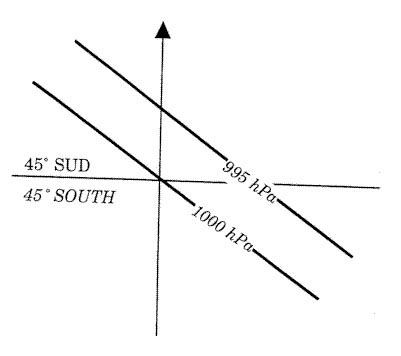
South of 45°s.
South of 45°n. where search and rescue response is too quick. where there are few shipping lanes.
Question 125-32 : A platform is a heliport situated ?
At least 3 m above the surrounding surface.
Air operationsdef'elevated final approach and take off area elevated fato ' means a fato that is at least 3 m above the surrounding surfaceAt least 35 ft above the surrounding surface 3 m above the surface on a fixed structure at sea on a floating or fixed structure at sea
Question 125-33 : A safe forced landing is a landing ?
Unavoidable landing or ditching with a reasonable expectancy of no injuries to persons in the aircraft or on the surface.
Unavoidable landing on ground with a reasonable expectancy of no injuries to persons in the aircraft or on the surface. a forced landing in which it can be reasonably hoped that there will be no injuries. a landing or ditching which is unavoidable and in which it can be reasonably hoped that there will be no injuries to the occupants of the helicopter.
Question 125-34 : Aeo means ?
All engines operating.
All engines inoperative. all exits open. aft electrical bay overcharged.
Question 125-35 : An elevated heliport or helideck is defined as one which is above the surrounding level by ?
3 m.
Air operationsdef'elevated final approach and take off area elevated fato ' means a fato that is at least 3 m above the surrounding surface10 m. 3 ft. 13 m.
Question 125-36 : An increase in ambient temperature ?
Generally reduces performance in performance class 1 and especially the take off weight.
Increases performance in performance class 1 and especially the take-off weight. does not influence performance in performance class 1 and especially the take-off weight. increases or does not influence take-off weight depending on the aircraft type.
Question 125-37 : An increase in density altitude ?
Generally reduces performance in performance class 1 and decreases especially the take off weight.
Increases performance in performance class 1 and especially the take-off weight. does not influence performance in performance class 1 and especially the take-off weight. increases or does not influence take-off weight dependingon the aircraft type.
Question 125-38 : An increase in pressure altitude ?
Generally reduces performance in class 1 and especially the take off weight.
Increases performance in class 1 and especially the take-off weight. does not influence performance in class 1 and especially not on the take-off weight. increases or does not influence take-off weight depending to aircraft type.
Question 125-39 : Assuming an engine failure has occurred during take off a performance class 1 helicopter which plans a turn in the climb of more than 15° must be capable of clearing vertical obstructions by an extra ?
There is no additional margin to apply.
Catpolh205 take offb the take off mass shall be such that 1 it is possible to reject the take off and land on the fato in case of the critical engine failure being recognised at or before the take off decision point tdp 2 the rejected take off distance required rtodrh does not exceed the rejected take off distance available rtodah and3 the todrh does not exceed the take off distance available todah 4 notwithstanding b 3 the todrh may exceed the todah if the helicopter with the critical engine failure recognised at tdp can when continuing the take off clear all obstacles to the end of the todrh by a vertical margin of not less than 107 m 35 ft catpolh210 take off flight patha from the end of the todrh with the critical engine failure recognised at the tdp 1 the take off mass shall be such that the take off flight path provides a vertical clearance above all obstacles located in the climb path of not less than 107 m 35 ft for operations under vfr and 107 m 35 ft + 001 x distance dr for operations under ifr only obstacles as specified in catpolh110 have to be considered2 where a change of direction of more than 15° is made adequate allowance shall be made for the effect of bank angle on the ability to comply with the obstacle clearance requirements this turn is not to be initiated before reaching a height of 61 m 200 ft above the take off surface unless it is part of an approved procedure in the afm35 ft. 7r. 3 m.
Question 125-40 : Assuming one engine inoperative in a helicopter with performance class 1 during an approach to land the following minimum rate of climb must be achievable ?
100 ftmin at 61 m.
Cs 2967 climb one engine inoperative oei a for category a rotorcraft in the critical take off configuration existing along the take off path the following apply 1 the steady rate of climb without ground effect 61 m 200 ft above the take off surface must be at least 30 m 100 ft per minute for each weight altitude and temperature for which take off data are to be scheduled with300 ft/min at 150 ft. 60 m/sec at 200 ft. 1000 ft/min at 150 ft.
Exclusive rights reserved. Reproduction prohibited under penalty of prosecution.