A free Premium account on the FCL.055 website! Read here
Sign up to unlock all our services and 15164 corrected and explained questions.
Question 150-1 : According to wicken's theory the human brain has ? [ Learning aircraft ]
Different reservoirs of resources depending on whether one is in the information gathering information processing or action phase
Question 150-2 : What are typical consequences of conflicts between crew members 1 the quality of work performance decreases as a result of the impoverishment of communications2 a decrease in the quality of communications3 in the case of a crew made up of experts conflicts only result in a deterioration in relations ?
1 2 and 4 are correct.
2, 3 and 4 are correct. 1, 3 and 4 are correct. 1, 2 and 3 are correct.
Question 150-3 : Which of the following statements best characterise a self centered cockpit ?
Without taking note of what the other members are doing each one does his own thing while at the same time assuming that everyone is aware of what is being done or what is going on.
The communication between crew members always increases when the captain takes charge of a situation. the egocentric personality of the captain often leads to a synergetic cockpit. while decreasing communication, the independence of each member bolsters the crew's synergy.
Question 150-4 : How does motivation affect an individual completing a task ?
Motivation reflects the difference between what an individual can do and what the individual will do.
Ecqb03 july 2016Xxxxx xxxxx xxxxx
Question 150-5 : What is a skill ?
The capacity to accomplish successfully something requiring special knowledge or ability.
Ecqb03 july 2016Xxxxx xxxxx xxxxx
Question 150-6 : What is a motor program with respect to completing a task ?
A behavioural sub routine which once running does not require conscious thought.
Xxxxx xxxxx xxxxx
Question 150-7 : Regarding forms of learning what is understood by modeling ?
Completing a task by imitation.
Ecqb03 july 2016Making an association between a previously neutral stimulus and a stimulus that naturally evokes a response. increasing or decreasing the probability of a response due to reinforcement or punishment. xxxxx
Question 150-8 : What is learning ?
Gaining knowledge through study and past experience.
Ecqb03 july 2016Gaining knowledge through study. gaining knowledge by making mistakes. gaining skills by copying and making mistakes.
Question 150-9 : With which risk is skill based behaviour associated ?
Action slip.
Ecqb03 july 2016action slip habit can be a major cause or error in skill based behaviourexample checking gears on finals and calling 'three greens' can become a habit because it is done so many timesthis can be dangerous if the pilot calls 'three greens' as a habit without actually having monitored the indicationsInability to recall information. wrong decision-making. incorrect recall.
Question 150-10 : One of the main positive capabilities in an individual's decision making process is ?
Creativity.
Ecqb03 july 2016Destructiveness. hesitation. consensus.
Question 150-11 : One of the ways human error in aviation currently being addressed is by 'error tolerance' what is error tolerance ?
The understanding of human limitations by determining how to live with errors.
Ecqb03 july 2016Xxxxx xxxxx xxxxx
Question 150-12 : An important contributor to human error is a false hypothesis or mistaken assumption what should a pilot be aware of once he has made a decision ?
The pilot should monitor carefully evidence which contradicts his decision.
Ecqb03 july 2016Xxxxx xxxxx xxxxx
Question 150-13 : Which of the following list are advantages of teamwork 1 personality clashes2 workload is reduced by sharing3 work stress should be reduced4 conformity5 a decision arrived at by a group is likely to be better quality than that derived by an individual ?
Question 150-14 : What is meant by the term 'followership' ?
The ability of an individual to effectively support a recognised leader by being a good team player.
Ecqb03 july 2016The ability of an individual to influence others and situations. xxxxx xxxxx
Question 150-15 : The behaviour of a group can be affected by a number of factors including ?
Persuasion conformity compliance and obedience.
Ecqb03 july 2016Conformity and obedience. compliance only. persuasion only.
Question 150-16 : What is the main purpose of a checklist ?
To enable the crew to carry out a procedure in a well defined and orderly manner.
Ecqb03 july 2016Xxxxx xxxxx xxxxx
Question 150-17 : What is the time limit between a pilot going snorkeling and the beginning of his flight duty ?
There is no time limit.
Ecqb03 july 201624 h. 48 h. 2 h.
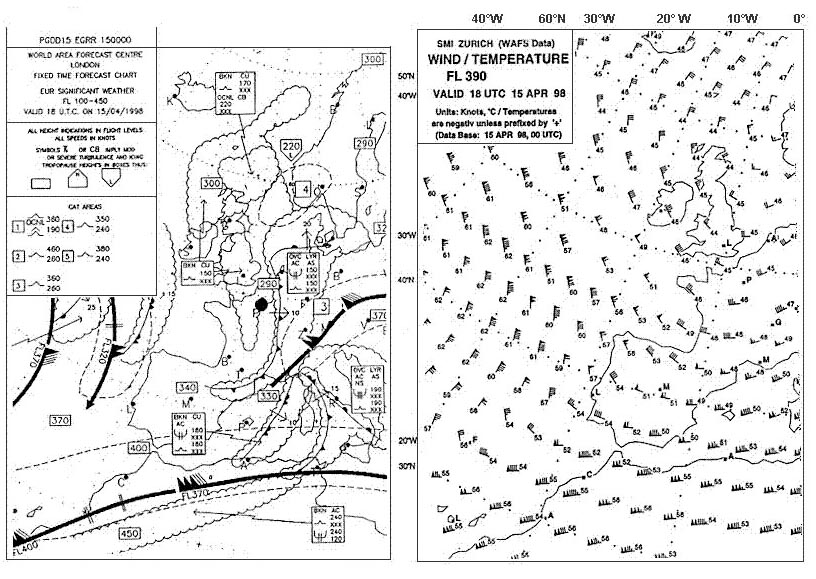
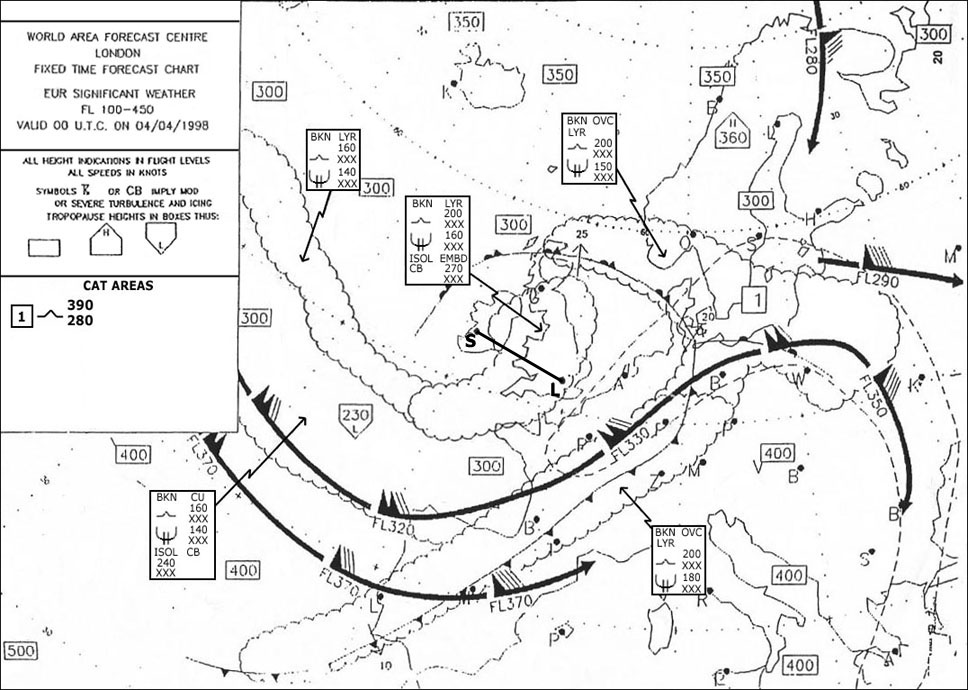
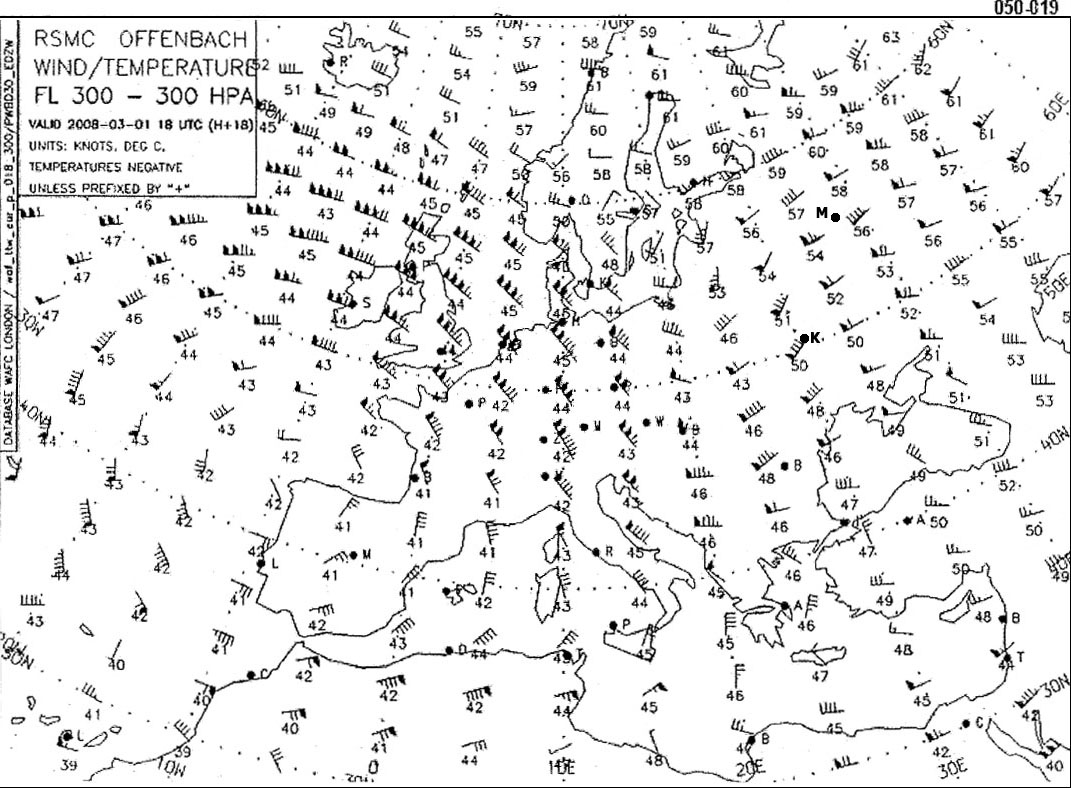
Question 150-18 : At a certain position the temperature on the 300 hpa chart is 48°caccording to the tropopause chart the tropopause is at fl 330what is the most likely temperature at fl 350 ?
54°c.
300 hpa = fl300gap between fl300 and fl330 is 3000 ftthe decrease in temperature per 1000 feet is 2°cat fl330 temperature is 48°c + 6° = 54°ctropopause is at fl330 and the temperature remains constant above the tropopause so at fl350 54°c-56,5°c. -50°c. -58°c.
Question 150-19 : Which fl corresponds with the 200 hpa pressure level ?
Fl 390.
There is a few questions in the exam that take information directly from that table below write these down on a sticky and have them on the wall beside you 1013 hpa = msl850 hpa = fl50700 hpa = fl100500 hpa = fl180300 hpa = fl300200 hpa = fl390any others you can interpolate between these and figure it outthe decrease of 1hpa27ft is only applicable at the lower levels of the troposphere as you go up and air pressure decreases the change of height per 1 hpa increases at msl 1hpa27ft at fl180 it's 50fthpa and at fl390 it's 105fthpa Fl 300. fl 50. fl 100.
Question 150-20 : What is the approximate vertical interval which is equal to a pressure change of 1 hpa at an altitude of 5500 m ?
15 m 50 ft .
Vthe decrease of 1 hpa27ft is only applicable at the lower levels of the troposphere as you go up and air pressure decreases the change of height per 1 hpa increases at msl 1 hpa27ft at fl180 it's 50 fthpa and at fl390 it's 105 fthpa fl180 = 18000 ft = approximately 5500 m8 m (27 ft). 32 m (105 ft). 64 m (210 ft).
Question 150-21 : The temperature at fl 140 is 12°c what will the temperature be at fl 110 if the icao standard lapse rate is applied ?
6°c.
The temperature lapse rates of the troposphere is mean value 065°c100 m or 2°c1000 ftin isa temperature at fl140 should be 15° 2x14 = 13°c as the current temperature at that level is 12°c you can say that at fl140 it is currently isa+1therefore at fl110 15° 2x11 = 7°c +1 from isa+1 = 6°c-18°c. -9°c. -15°c.
Question 150-22 : If atmospheric conditions exist such that the temperature deviation is isa +10°c in the lower troposphere up to 18000 ft what is the actual layer thickness between fl 60 and fl 120 ?
6240 ft.
The following rules shall be considered for altimetry calculations the value for the barometric lapse rate near mean sea level is 27 ft 8 m per 1 hpa to determine the true altitudeheight the following rule of thumb called the '4% rule' shall be used the altitudeheight changes by 4% for each 10°c temperature deviation from isa the air mass is hotter than isa density is lower and layer must be thicker than 6000 ft 4% x 1 x 6000 = 240 ft6000 + 240 = 6240 ft6000 ft. 5900 ft. 5760 ft.
Question 150-23 : How does the height of the tropopause normally vary with latitude in the northern hemisphere ?
It decreases from south to north.
491n the northern hemisphere the tropopause decreases from south to northin the southern hemisphere it decreases from north to southIt remains constant from north to south. it remains constant throughout the year. it increases from south to north.
Question 150-24 : What approximately is the average height of the tropopause over the equator ?
16 km.
49116 km is approximately the average height of the tropopause over the equator40 km. 8 km. 11 km.
Question 150-25 : In which layer is most of the atmospheric humidity concentrated ?
Troposphere.
633Tropopause. stratopause. stratosphere.
Question 150-26 : Under what condition does pressure altitude have the same value as density altitude ?
At standard temperature.
Density altitude is the altitude in the isa at which the current observed density would occur density altitude is only the same as pressure altitude in standard atmosphere conditionsdensity altitude can be calculated by adjusting the pressure altitude for non standard temperatureWhen the altimeter has no position error. at sea level when the temperature is 0°c. when the altimeter setting is 1013.2 hpa.
Question 150-27 : In the troposphere the decrease of pressure per 100 m increase in height ?
Is smaller at higher levels than at lower levels.
The decrease of 1 hpa27 ft is only applicable at the lower levels of the troposphere as you go up and air pressure decreases the change of height per 1 hpa increases at msl 1hpa27ft at fl180 it's 50fthpa and at fl390 it's 105fthpa 100 m = 328 ftat mean sea level 328 ft 27 is equal to a pressure change of 122 hpaa 39000 ft 328 ft 105 is equal to a pressure change of 31 hpathe decrease of pressure per 100 m 328 ft increase in height is smaller at higher levels than at lower levelsRemains constant at all levels. is greater at higher levels than at lower levels. is in the order of 27 hpa near msl.
Question 150-28 : In a situation with a weak pressure gradient and no thunderstorms around what will the indication of the aneroid altimeter of an aircraft parked on the ground do over a period of about ten minutes ?
Apparently nothing because any changes would be small.
Increase rapidly. show strong fluctuations. decrease rapidly.
Question 150-29 : What pressure is defined as qfe ?
The pressure at field elevation.
The pressure of the altimeter the pressure reduced to sea level using actual temperatures the pressure reduced to sea level using isa temperatures
Question 150-30 : What is the approximate composition of the dry air by volume in the troposphere ?
21% oxygen 78% nitrogen and the rest other gasses.
10% oxygen, 89% nitrogen, and the rest other gasses. 88% oxygen, 9% nitrogen, and the rest other gasses. 50% oxygen, 40% nitrogen, and the rest other gasses.
Question 150-31 : How does temperature vary with increasing altitude in the icao standard atmosphere below the tropopause ?
Decreases.
Increases at first it increases and higher up it decreases remains constant
Question 150-32 : What is the boundary layer between troposphere and stratosphere called ?
Tropopause.
Ionosphere. stratosphere. atmosphere.
Question 150-33 : An outside air temperature of 35°c is measured while cruising at fl 200 what is the temperature deviation from the isa at this level ?
10°c colder than isa.
The temperature lapse rates of the troposphere is mean value 065°c100 m or 2°c1000 ftin isa temperature at fl200 should be 15° 2x20 = 25°cas the current temperature at that level is 35°c you can say that at fl200 it is currently isa 10°c10°c warmer than isa. 5°c warmer than isa. 5°c colder than isa.
Question 150-34 : The qnh of an airport at sea level is 983 hpa and the temperature deviation from isa is 15°c below fl 100 what is the true altitude of fl 100 ?
8640 ft.
Difference between standard pressure 1013 hpa and qnh 983 hpa is 30 hpadifference between pressure altitude fl100 = 10000 ft and barometric altitude is 30 hpa x 27 ft = 810 ftbarometric altitude = 10000 810 = 9190 ftdifference between barometric altitude and true altitude is 4 ft per thousand per degree of temperature deviation 4% per 10° deviation = 4 x 15 x 919 = 550 fttrue altitude = 9190 550 = 8640 ft 10160 ft. 9740 ft. 11460 ft.
Question 150-35 : What information is required to convert a minimum safe altitude into a lowest usable flight level ?
Lowest value of qnh and the highest negative temperature deviation from isa.
Lowest value of qnh the lowest usable flight level is determined by the atmospheric pressure in the area of operation it will give the highest safety marginhighest negative temperature deviation from isa since cold air is denser than warm air when operating in temperatures that are colder than standard our true altitude is lower than the altimeter indicationif we convert a minimum safe altitude into a flight level by choosing the lowest aera qnh value and the highest negative temperature deviation from isa we will be ok at that flight level and better off wherever you go elsewhere in the regionHighest value of qnh and the highest negative temperature deviation from isa. highest value of qnh and the highest positive temperature deviation from isa. lowest value of qnh and the lowest negative temperature deviation from isa.
Question 150-36 : What is the relationship if any between qfe and qnh at an airport situated 50 ft below sea level ?
Qfe is greater than qnh.
The qfe indicates in standard atmosphere the height of the aircraft above the official airport elevation an altimeter set to qfe will therefore read zero when on the ground qnh is the setting which will give airfield elevation when parked on the airfieldon the airport in order to read the airport elevation of 50 ft on your altimeter you must set qnh if you want to read 0 ft you must set qfe you have to turn clockwise the adjustment knob qfe will be greater than qnh 513Qfe is smaller than qnh. qfe equals qnh. no clear relationship exists.
Question 150-37 : You plan a flight over a mountain range at a true altitude of 15000 ftamsl the air is on an average 15°c colder than isa the pressure at sea level is 1003 hpa what approximate indication should the altimeter setting 10132 hpa read ?
16230 ft.
The following rules shall be considered for altimetry calculations the value for the barometric lapse rate near mean sea level is 27 ft 8 m per 1 hpa to determine the true altitudeheight the following rule of thumb called the 4% rule shall be used the altitudeheight changes by 4% for each 10°c temperature deviation from isa 1013 1003 = 10 hpa10 x 27 = 270 ft15000 ft + 270 ft = 15270 ft your altimeter will over readaltitudeheight changes by 4% for each 10°c temperature deviation from isatemperature correction = 4 x 1527 x 15temperature correction = 9162 ftapproximate indication should the altimeter read 15270 + 916 = 16186 ftclose enough to the result desired iguano maybe is not an error but i thought that when its colder than isa you have to subtract the temperature correction the question states what approximate indication should the altimeter setting 10132 hpa read our altimeter must read a higher altitude than the true altitude we currently want in those conditions cold air and low qnh to be sure to overfly the mountain at actually 15000 ftamsl15690 ft. 14370 ft. 13830 ft.
Question 150-38 : During a flight at fl 100 from marseille qnh 1012 hpa to palma de mallorca qnh 1015 hpa an aircraft remains at a constant true altitude the reason for this is that ?
The air at marseille is warmer than that at palma de mallorca.
To be at the same true altitude over the 1012hpa datum marseille the air must be warmer than it is over the 1015hpa pressure datum palma de mallorca The altimeters are erroneous, and need to be tested. the air at marseille is colder than that at palma de mallorca. one of the two qnh values may be incorrect.
Question 150-39 : An aircraft lands at an airport airport elevation 1240 ft qnh 1008 hpa the altimeter is set to 1013 hpa the altimeter will indicate ?
1375 ft.
You are on the runway with a setting of 1008 hpa your altimeter indicates 1240 ftif you turn the altimeter setting adjustement knob in a clockwise direction to increase the subscale to 1013 hpa the indicated alitude will increase the needle will turn in the same direction 5141013 1008 = 5 hpa5 hpa x 27 fthpa = 135 ft1240 + 135 = 1375 ft1200 ft. 1105 ft. 1280 ft.
Question 150-40 : After landing at an aerodrome aerodrome elevation 1715 ft the altimeter indicates an altitude of 1310 ft the altimeter is set to the pressure value of 1013 hpa what is the qnh at this aerodrome ?
1028 hpa.
You are on the runway with a setting of 1013 hpa your altimeter indicates 1310 ftif you want to read aerodrome elevation you have to turn altimeter setting adjustement knob in a clockwise direction to increase the indicated alitude 5141715 1310 = 405 ft405 ft 27 fthpa = 15 hpa1013 + 15 = 1028 hpa1015 hpa. 1013 hpa. 998 hpa.
Exclusive rights reserved. Reproduction prohibited under penalty of prosecution.