A free Premium account on the FCL.055 website! Read here
Sign up to unlock all our services and 15164 corrected and explained questions.
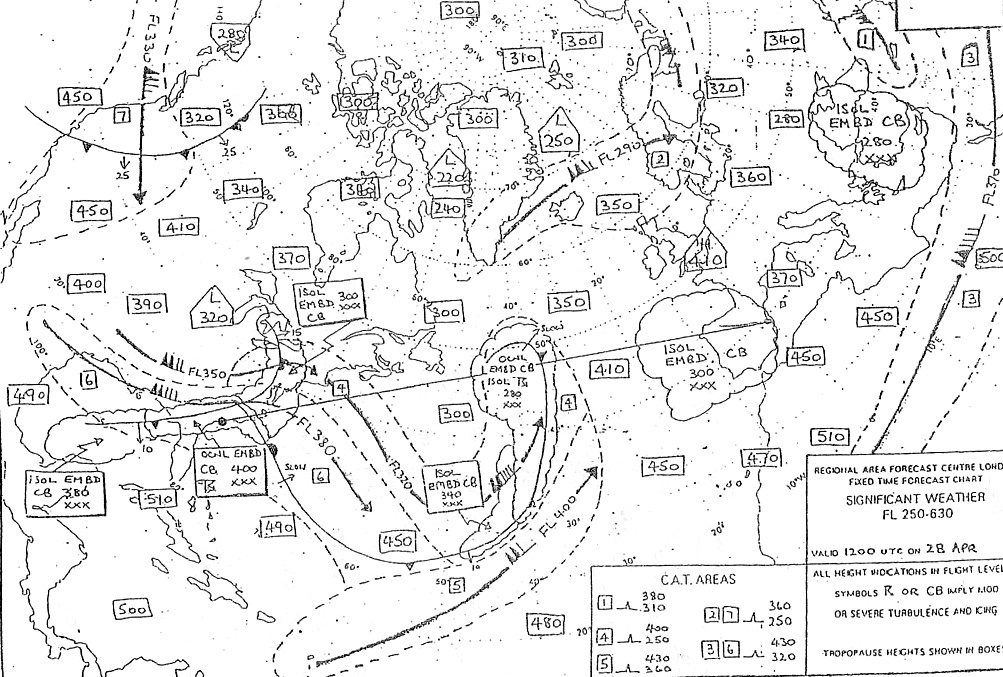
Question 159-1 : What is the icao qualifying term for the described intensity of turbulence 'conditions in which abrupt changes in aircraft attitude andor altitude occur aircraft may be out of control for short periods' ? [ Learning aircraft ]
Severe
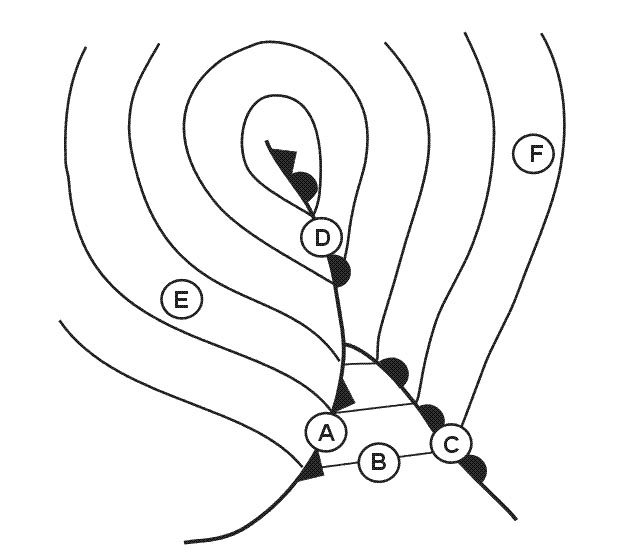
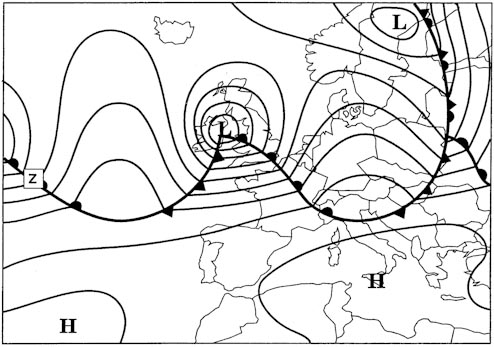
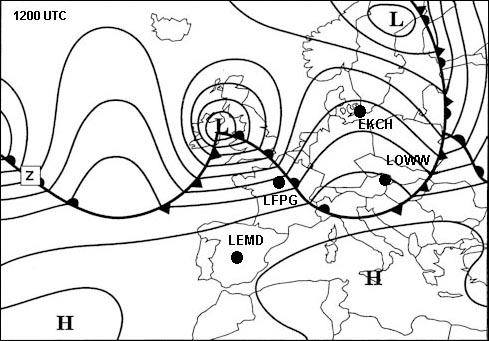
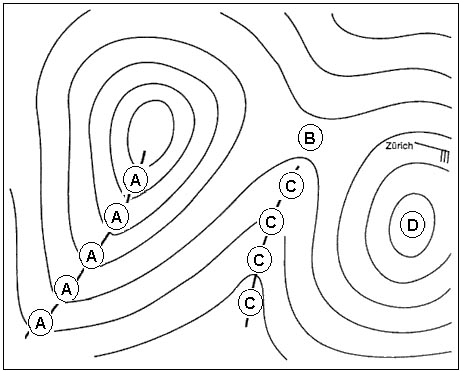
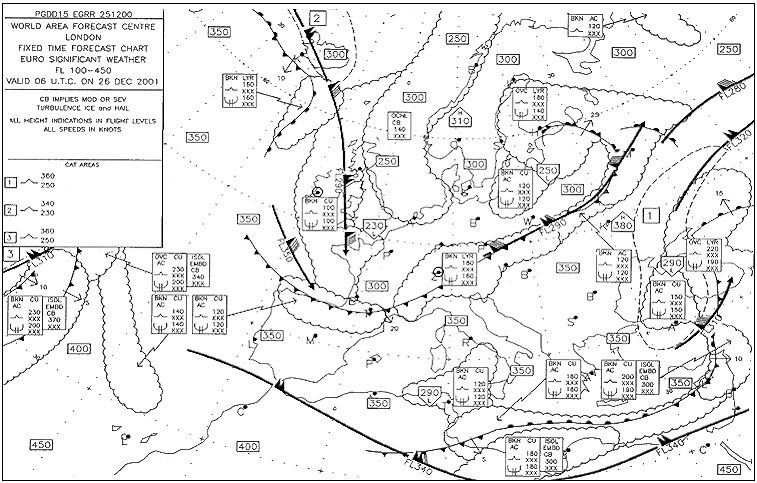
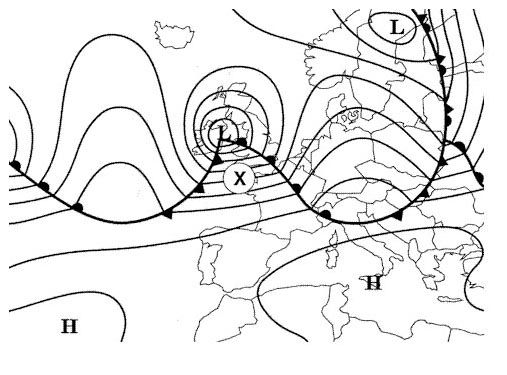
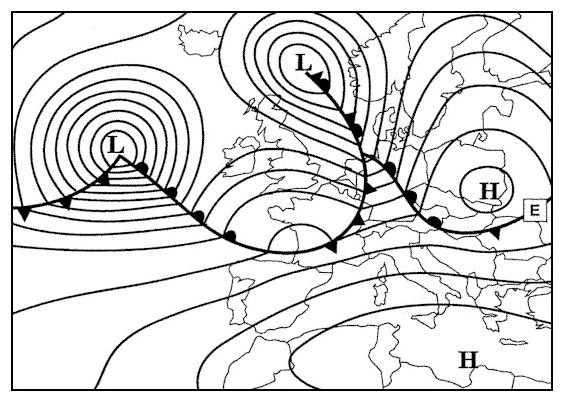
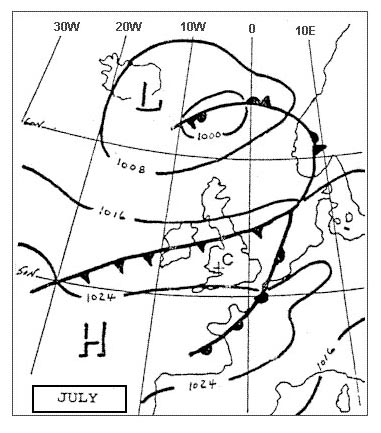
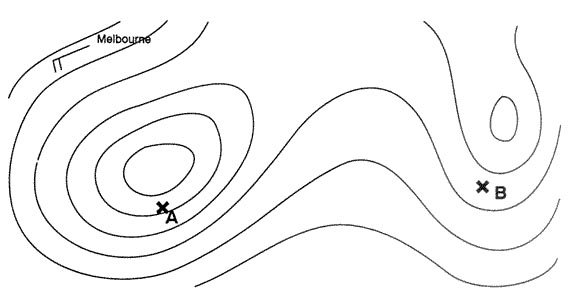
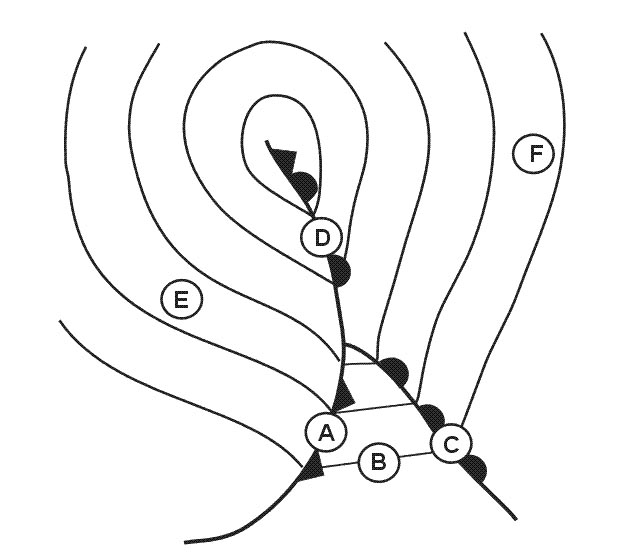
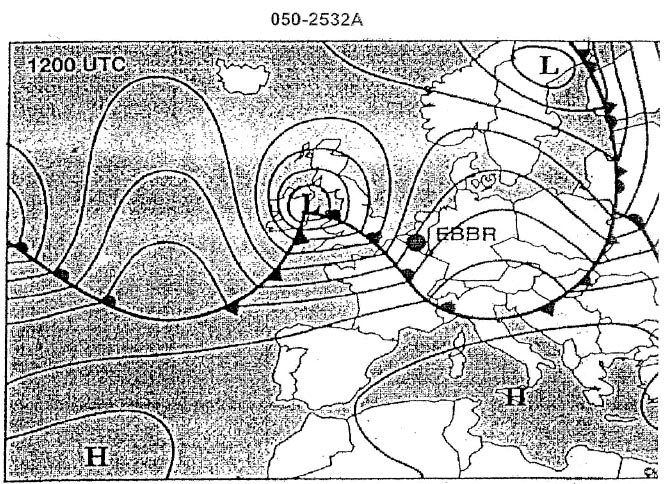
Question 159-2 : What wind direction will occur over the land at point e 388 ?
West.
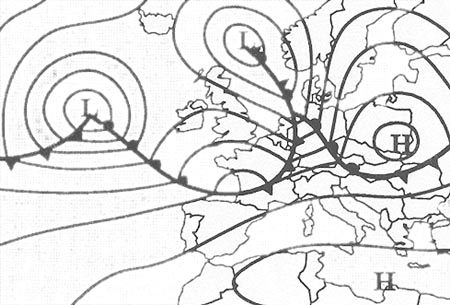
At low elevations friction will slow the air and hence the coriolis force will be less effective in its deflection of the wind 561as the elevation decreases the direction backs changes direction in an counter clockwise motion in northern hemisphereat mid latitude over land wind speed in friction layer decrease by 50% angle between wind direction and isobars changes by 30° value to be used in examinations we are in northern hemisphere from the way the fronts are positioned therefore at point e the wind is from the westNortheast. southeast. southwest.
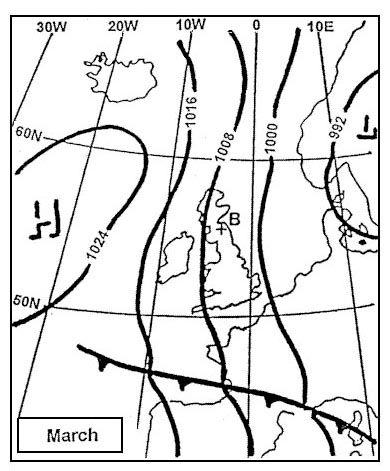
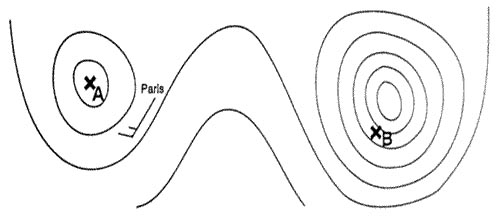
Question 159-3 : What wind direction will occur over the land at point b 389 ?
Southwest.
At low elevations friction will slow the air and hence the coriolis force will be less effective in its deflection of the wind 561as the elevation decreases the direction backs changes direction in an counter clockwise motion in northern hemisphereat mid latitude over land wind speed in friction layer decrease by 50% angle between wind direction and isobars changes by 30° value to be used in examinations we are in northern hemisphere from the way the fronts are positioned therefore at point b the wind is from the southwestEast southeast. northwest.
Question 159-4 : What kind of turbulence is caused by the friction of air flowing over the earth's surface ?
Mechanical turbulence.
Ecqb01 june 2013Convective turbulence. turbulence in downdrafts. clear air turbulence.
Question 159-5 : Which of the following values corresponds to a ne wind ?
045°.
225°. 315°. 275°.
Question 159-6 : Which of the following values corresponds to a se wind ?
135°.
045°. 225°. 315°.
Question 159-7 : Which of the following values corresponds to a nw wind ?
315°.
045°. 225°. 135°.
Question 159-8 : Which of the following values corresponds to a sw wind ?
225°.
135°. 045°. 315°.
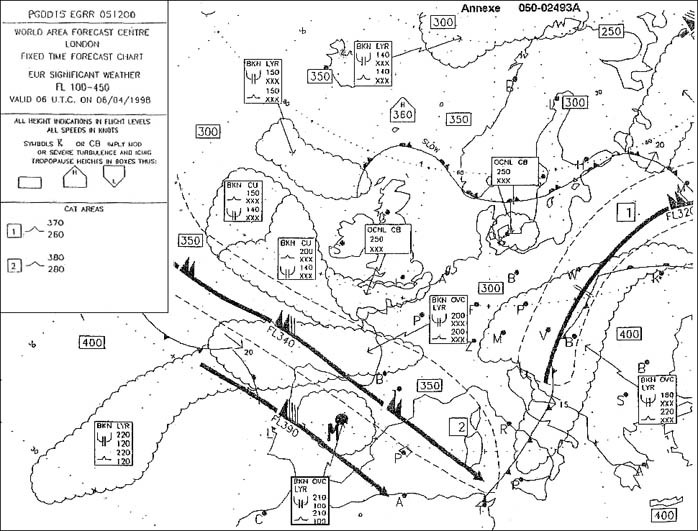
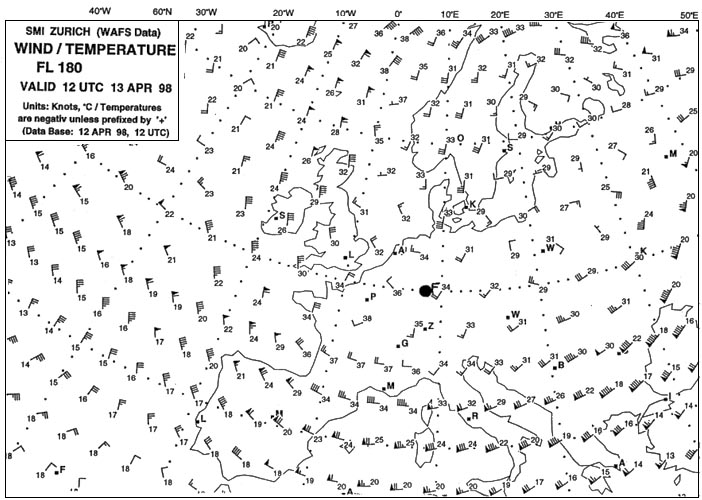
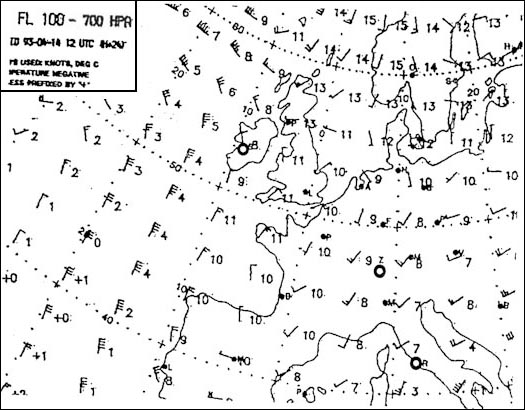
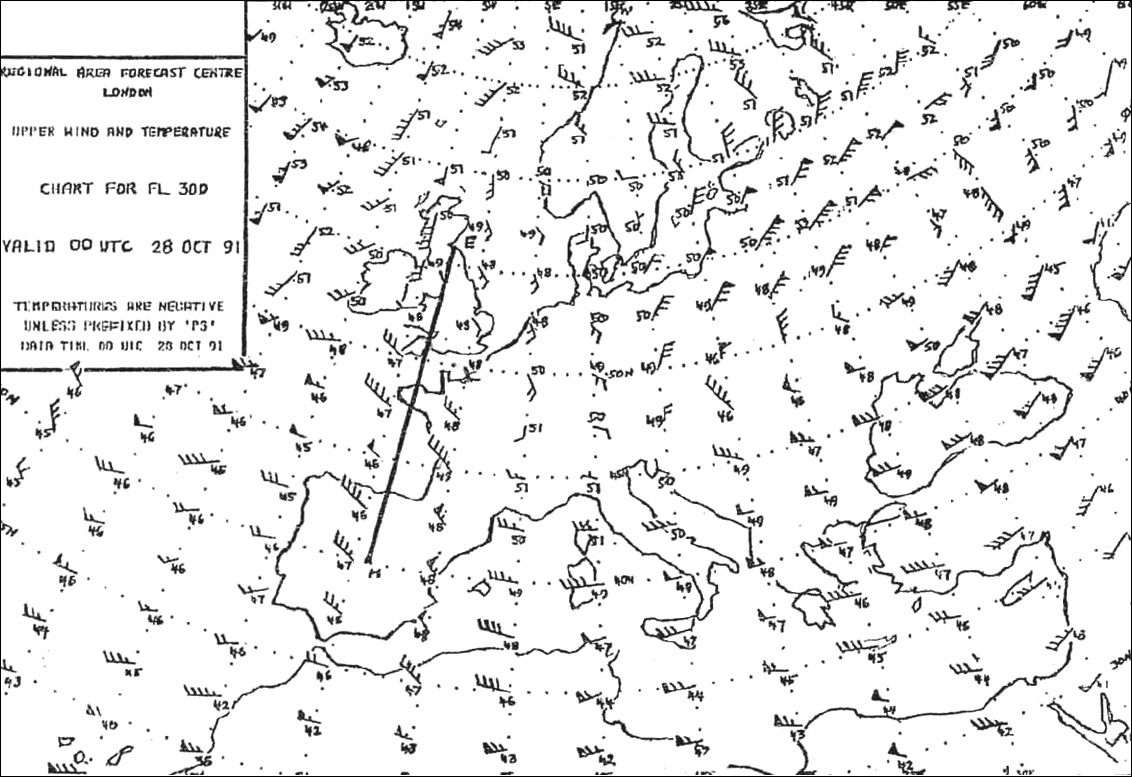
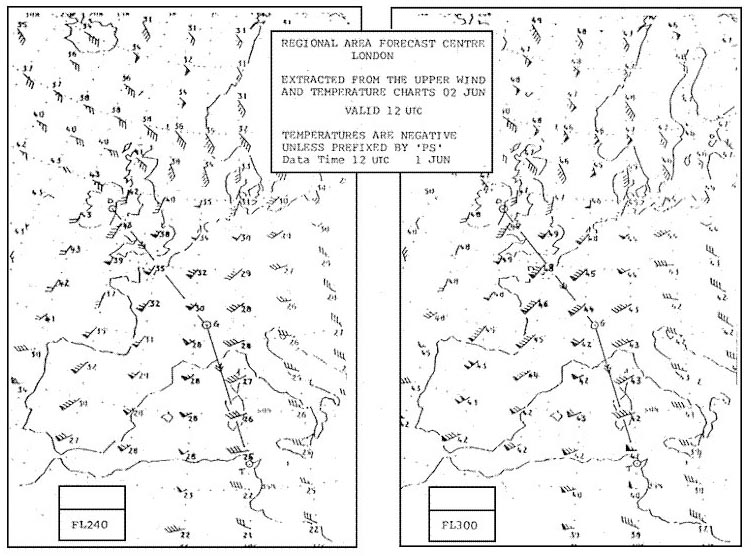
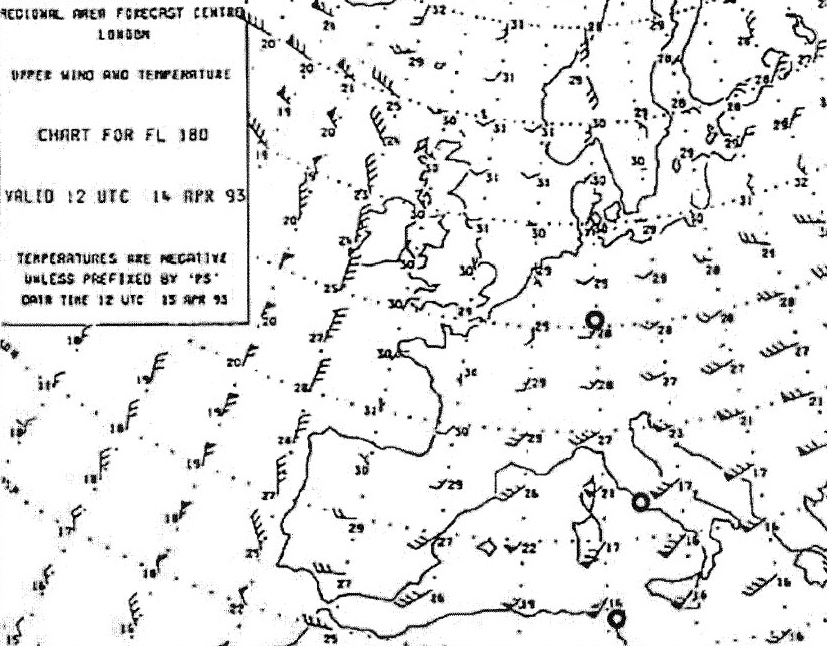
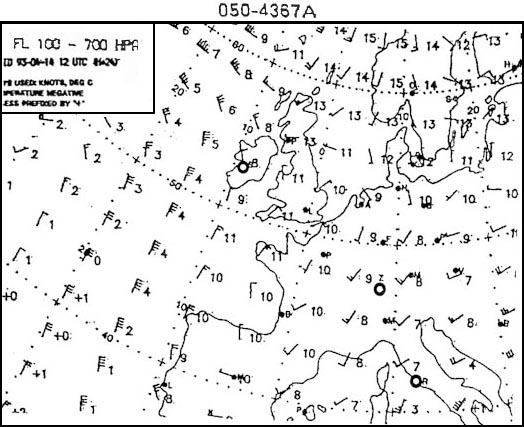
Question 159-9 : What is the average wind at fl 160 between zurich and rome 397 ?
020°50 kt.
200°/45 kt. 350°/40 kt. 050°/40 kt.
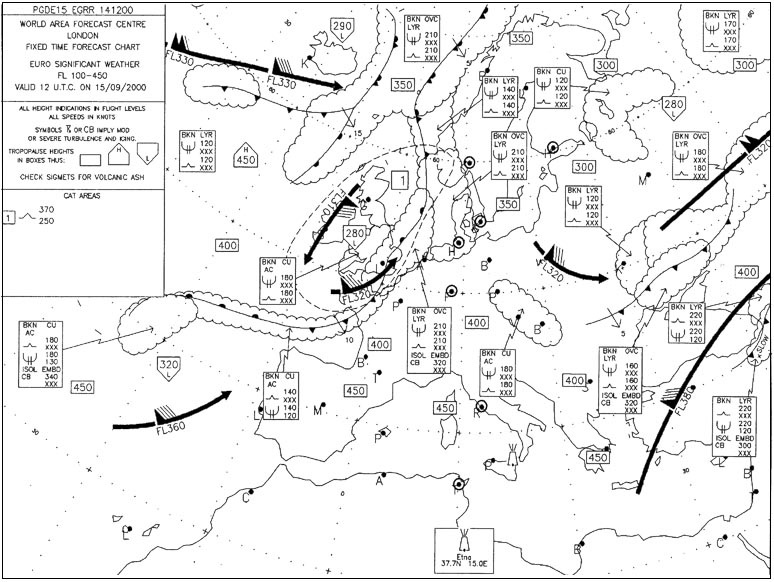
Question 159-10 : Judging by the chart what windspeeds can you expect at fl 340 above rome 398 ?
145 kt.
95 kt. 340 kt. 140 km/h.
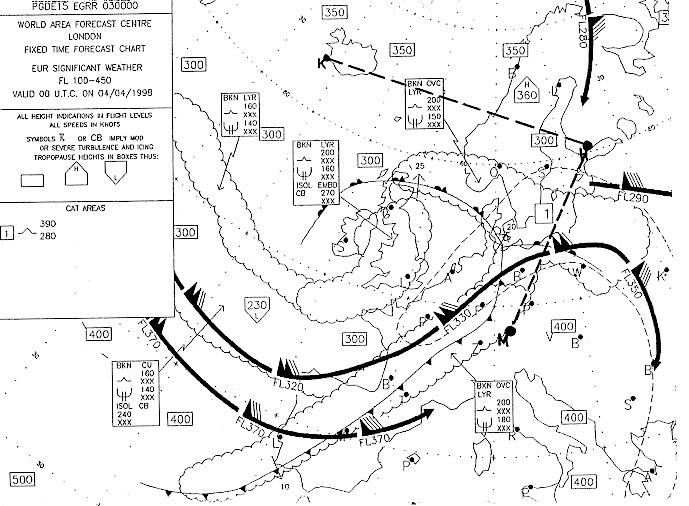
Question 159-11 : Select from the map the average wind for the route frankfurt rome at fl 170 408 ?
23040.
465at fl180 you will find an average wind from 235° and a speed of 15 + 15 + 35 + 50 + 70 5 = 37 ktclosest answer is 230°40 kt200/50. 050/40. 030/35.
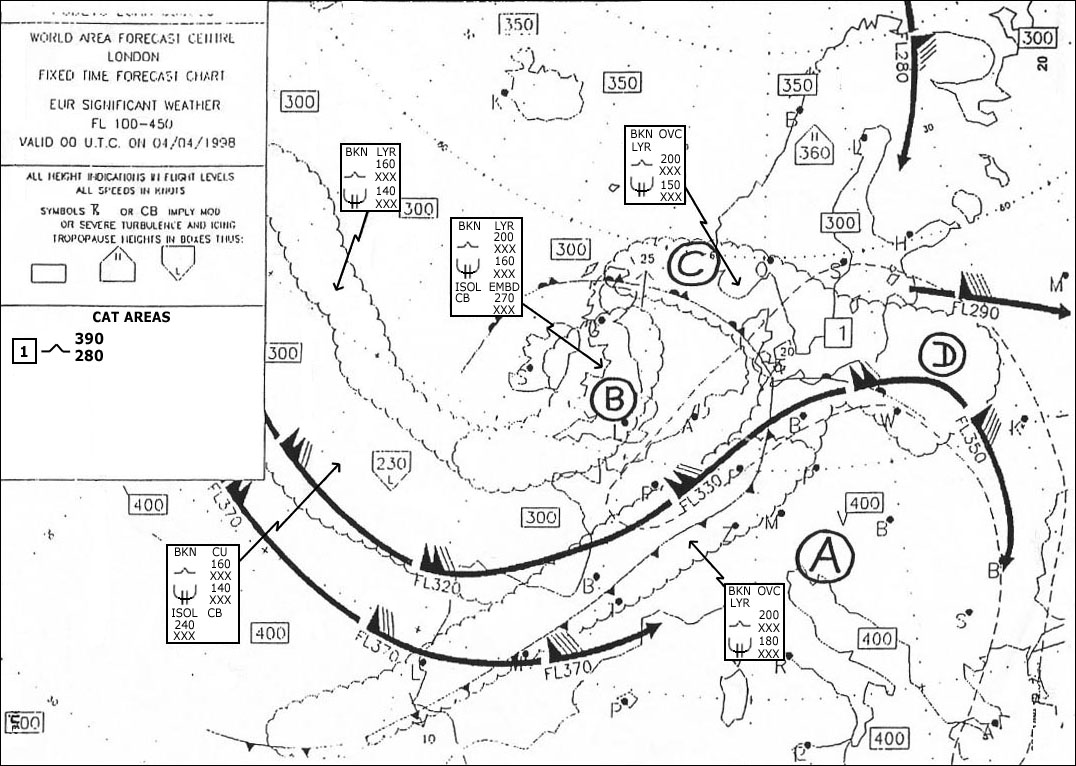
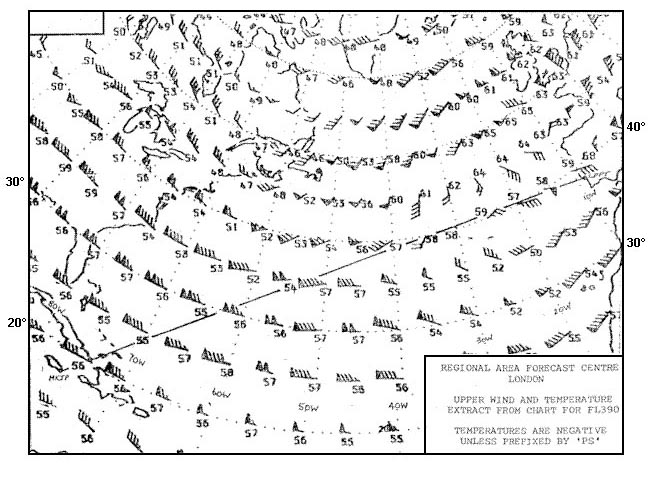
Question 159-12 : At 40°n 70°w the forecast wind is 416 ?
270°95 kt.
280°/70 kt. 320°/40 kt. 240°/90 kt.
Question 159-13 : A layer is conditionally unstable if the air ?
Is unstable for saturated air and stable for dry air.
If the environmental lapse rate elr is more than 3°c1000 ft dry adiabatic lapse rate the environment is unstableif the environmental lapse rate elr is less than 18°c1000 ft saturated adiabatic lapse rate the environment is stablebut if the environmental lapse rate elr is more than 18°c1000 ft but less than 3°c1000 ft we have conditional stability stable if air is dry unsaturated or unstable if air is saturated Is stable for saturated air and unstable for dry air. becomes stable by lifting it. is unstable for saturated air as well as for dry air.
Question 159-14 : A parcel of unsaturated air is lifted to just below the condensation level and then returned to its original level what is the final temperature of the parcel of air ?
The same as the starting temperature.
Air can hold a certain amount of water depending on it's temperature warmer air can hold more water vapour than colder airwill climbing the parcel cools and hold less water vapour when the parcel comes back at its original level it will warm and come back in his original stateHigher than the starting temperature. lower than the starting temperature. it depends upon the qfe.
Question 159-15 : What characteristic is associated with a temperature inversion ?
Stability.
Instability. clear ice. area of active storms.
Question 159-16 : Absolute instability is said to exist whenever the environmental lapse rate ?
Exceeds the dry adiabatic lapse rate.
If the environmental lapse rate elr is more than 3°c1000 ft dry adiabatic lapse rate the environment is unstableif the environmental lapse rate elr is less than 18°c1000 ft saturated adiabatic lapse rate the environment is stablebut if the environmental lapse rate elr is more than 18°c1000 ft but less than 3°c1000 ft we have conditional stability stable if air is dry unsaturated or unstable if air is saturated Is less than the dry adiabatic lapse rate is less than the saturated adiabatic lapse rate is between the dry and saturated adiabatic lapse rate
Question 159-17 : Which of the following is a possible consequence of subsidence ?
An inversion over a large area with haze mist.
500sinking air will dissipate cloud especially at lower levels and trap any pollution giving poor visibilityCb-clouds and thunderstorms over a large area. wide spread ns and as clouds and intense precipitation. clear air turbulence at higher altitudes .
Question 159-18 : What does 'dew point' mean ?
The temperature to which a mass of air must be cooled in order to reach saturation.
The temperature at which ice melts. the freezing level (danger of icing). the temperature at which the relative humidity and saturation vapour pressure are the same.
Question 159-19 : Which of the following is the definition of relative humidity ?
Ratio between the actual mixing ratio and the saturation mixing ratio x 100.
The most commonly used measure of humidity is relative humidity relative humidity can be simply defined as the amount of water in the air relative to the saturation amount the air can hold at a given temperature multiplied by 100 air with a relative humidity of 50% contains a half of the water vapor it could hold at a particular temperature 501 concept of relative humidity Ratio between air temperature and dewpoint temperature x 100 ratio between water vapour pressure and atmospheric pressure x 100 ratio between water vapour (g) and air (kg) x 100
Question 159-20 : The relative humidity of a sample air mass is 50%how is the relative humidity of this air mass influenced by changes of the amount of water vapour in it ?
It increases with increasing water vapour.
The most commonly used measure of humidity is relative humidity relative humidity can be simply defined as the amount of water in the air relative to the saturation amount the air can hold at a given temperature multiplied by 100 air with a relative humidity of 50% contains a half of the water vapor it could hold at a particular temperature 501 concept of relative humidity It is not influenced by changing water vapour. it decreases with increasing water vapour. it is only influenced by temperature.
Question 159-21 : Relative humidity ?
Changes when water vapour is added even though the temperature remains constant.
The most commonly used measure of humidity is relative humidity relative humidity can be simply defined as the amount of water in the air relative to the saturation amount the air can hold at a given temperature multiplied by 100 air with a relative humidity of 50% contains a half of the water vapor it could hold at a particular temperature 501 concept of relative humidity Is not affected when air is ascending or descending. is not affected by temperature changes of the air. does not change when water vapour is added provided the temperature of the air remains constant.
Question 159-22 : How if at all is the relative humidity of an unsaturated air mass influenced by temperature changes ?
It decreases with increasing temperature.
The most commonly used measure of humidity is relative humidity relative humidity can be simply defined as the amount of water in the air relative to the saturation amount the air can hold at a given temperature multiplied by 100 air with a relative humidity of 50% contains a half of the water vapor it could hold at a particular temperature 501 concept of relative humidity It is not influenced by temperature changes. it increases with increasing temperature. it is only influenced by the amount of water vapour.
Question 159-23 : How does relative humidity and the dewpoint in an unsaturated air mass change with varying temperature ?
When temperature increases the relative humidity decreases and the dewpoint remains constant.
Relative humidity is a percentage based on how much moisture is in the air versus how much moisture the air can holdrelative humidity will change if moisture is added to or taken from the air mass or if the temperature changesif temperature increases relative humidity decreases and if temperature decreases relative humidity increasesthe dewpoint is the temperature that the atmosphere must reach for a parcel of air to become fully saturated in an unsaturated air mass the dewpoint will remains constant if the temperature changesWhen temperature increases, the relative humidity increases, and the dewpoint decreases. when temperature decreases, the relative humidity decreases, and the dewpoint increases. when temperature decreases, the relative humidity and the dewpoint remain constant.
Question 159-24 : When a given mass of air descends what effect will it have on relative humidity ?
It decreases.
When air descends its temperature increases if temperature increases relative humidity will decrease 501It increases. it remains constant. it increases up to 100%, then remains stable.
Question 159-25 : During the late afternoon an air temperature of +12°c and a dew point of +5°c were measured what temperature change must at least occur during the night in order to induce saturation ?
It must decrease to +5°c.
If air temperature decreases by 5°c air temperature will not be saturated 12°c 5°c = 7°c so air temperature must decrease to +5°c to become saturated air temperature and dew point must be equal It must decrease to +6°c. it must decrease to +7°c. it must decrease by 5°c.
Question 159-26 : Which of the following changes of state is known as sublimation in meteorology ?
Solid direct to vapour.
Sublimation is the process in which a material changes from a frozen solid to a gas without passing through the intermediate liquid stateSolid direct to liquid. liquid direct to solid. liquid direct to vapour.
Question 159-27 : A parcel of moist but not saturated air rises due to adiabatic effects which of the following changes ?
Relative humidity.
The absolute humidity is a measure of mass of water vapour per unit volume of air grams per cubic metre and mixing ration is a measure of mass of water vapour per unit mass of air grams per kilogram these will not change as temperature changesthe relative humidity is a measure of the percentage degree of saturation and this will change as temperature changes 501Absolute humidity. mixing ratio. specific humidity.
Question 159-28 : In which of the following changes of state is latent heat released ?
Gas to liquid.
Latent heat is absorbed when going from liquid to gas solid to liquid solid to gaslatent heat is released when going from gas to liquid liquid to solid gas to solidSolid to liquid. solid to gas. liquid to gas.
Question 159-29 : How are high level condensation trails formed that are to be found occasionally behind jet aircraft ?
Through water vapour released during fuel combustion.
It is the water vapour produced when hydrocarbon fuels are burntThrough a decrease in pressure, and the associated adiabatic drop in temperature at the wing tips while flying through relatively warm but humid air. only through unburnt fuel in the exhaust gases. in conditions of low humidity, through the particles of soot contained in the exhaust gases.
Question 159-30 : In an air mass with no clouds the surface temperature is 15°c and the temperature at 1000 magl is 13°c this layer of air is ?
Stable.
Lapse rate is 2°c for 1000 m 3000 ft so 06°c for 1000 ft we have four possibilities if the environmental lapse rate elr is more than 3°c1000 ft dry adiabatic lapse rate the environment is unstableif the environmental lapse rate elr is less than 18°c1000 ft saturated adiabatic lapse rate the environment is stable if the environmental lapse rate elr is more than 18°c1000 ft but less than 3°c1000 ft we have conditional stability if air is dryor unstability if air is saturatedUnstable. a layer of heavy turbulence. conditionally unstable.
Question 159-31 : If a saturated air mass descends down a slope its temperature increases at ?
A lower rate than in dry air as evaporation absorbs heat.
Relative humidity will change if moisture is added to or taken from the air mass or if the temperature changesif temperature increases relative humidity decreases and if temperature decreases relative humidity increasesThe same rate as if the air mass were dry. a lower rate than in dry air, as condensation gives out heat. a higher rate than in dry air, as it gives up latent evaporation heat.
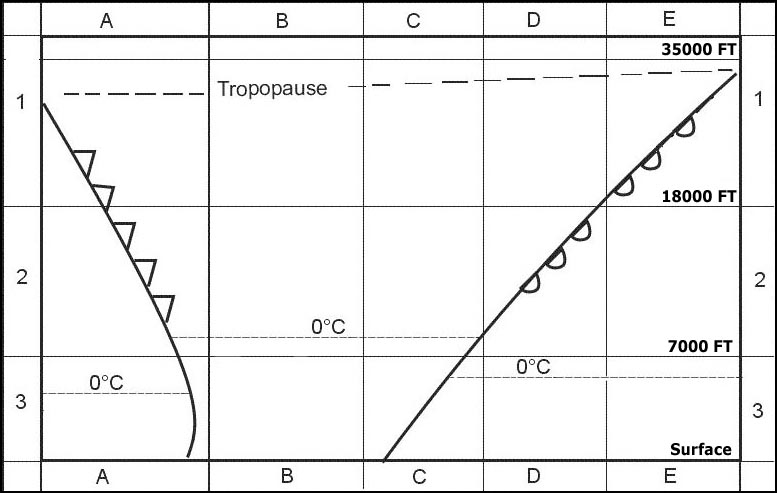
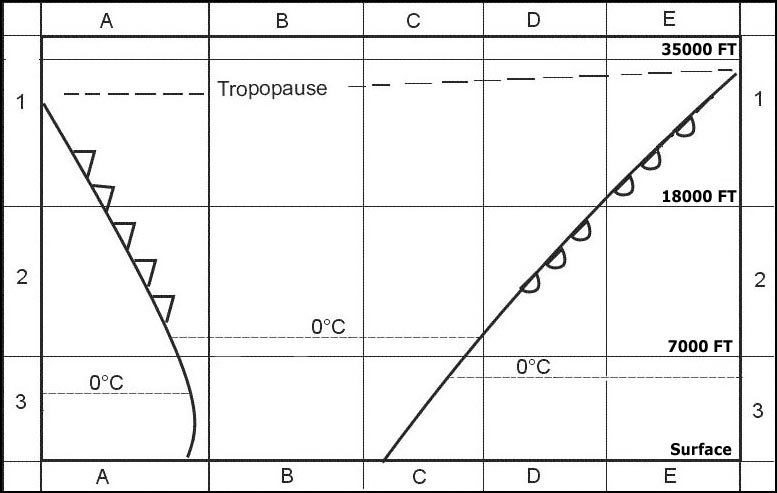
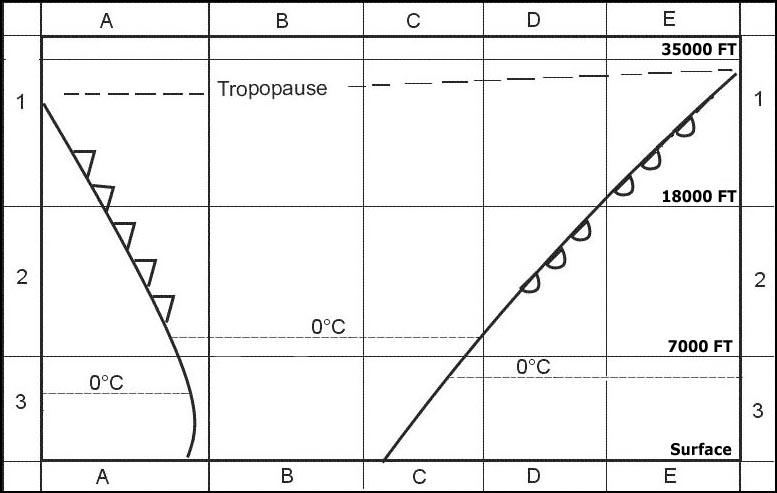
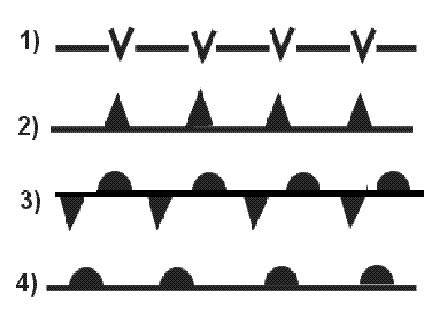
Question 159-32 : Continuous freezing rain is observed at an airfield which of the four diagrams is most likely to reflect temperatures above the airfield concerned 297 ?
Diagram 4.
There are a few basic elements that need to be in place for freezing rain to occur there must be a thick layer of warm air in the mid layers of the atmosphere there also must be a very narrow layer of below freezing temperatures at the surface 545the rain is falling into air with a temperature below 0°cDiagram 1. diagram 2. diagram 3.
Question 159-33 : An isothermal layer is a layer of air in which the temperature ?
Remains constant with height.
Increases with height. decreases with height at a constant rate. increases with height at a constant rate.
Question 159-34 : An inversion is a layer of air which is ?
Question 159-35 : The environmental lapse rate in an actual atmosphere ?
Varies with time.
Has a fixed value of 1°c/100m. has a fixed value of 0.65°c/100m. has a fixed value of 2°c/1000 ft.
Question 159-36 : The dry adiabatic lapse rate has a value of ?
1°c100 m.
The dry adiabatic lapse rate has a constant fixed value of 1°c100 m 3°c1000 ft 2°c/1000 ft. 0.65°c/100 m. 0.5°c/100 m.
Question 159-37 : The dry adiabatic lapse rate ?
Has a constant fixed value.
The dry adiabatic lapse rate has a constant fixed value of 1°c100 m 3°c1000 ft Is greater in summer than in winter. is greater during the night than during the day. has a variable value.
Question 159-38 : An air mass is called stable when ?
The vertical motion of rising air tends to become weaker and disappears.
The temperature in a given air mass decreases rapidly with height the pressure in a given area is constant the environmental lapse rate is high, with little vertical motion of air currents
Question 159-39 : Advection is ?
Horizontal motion of air.
Advection is horizontal motion of airsubsidence is vertically downwards motion of airconvection is vertically upwards motion of airVertical motion of air. the same as subsidence. the same as convection.
Question 159-40 : Subsidence is ?
Vertically downwards motion of air.
Advection is horizontal motion of airsubsidence is vertically downwards motion of airconvection is vertically upwards motion of airHorizontal motion of air. vertically upwards motion of air. the same as convection.
Exclusive rights reserved. Reproduction prohibited under penalty of prosecution.