A free Premium account on the FCL.055 website! Read here
Sign up to unlock all our services and 15164 corrected and explained questions.
Question 19-1 : Which element of a position report may be omitted when ssr mode c information is used in a safe and efficient manner ? [ Assessment Aerodrome ]
The flight level or altitude
Question 19-2 : A complete position report transmitted by radiotelephony shall contain the following elements of information in the order listed… ?
1 aircraft identification 2 position 3 time 4 flight level or altitude 5 next position and time over 6 ensuing significant point.
Icao doc 44444112 contents of voice position reports41121 the position reports required by 41111 and 41112 shall contain the following elements of information except that elements d e and f may be omitted from position reports transmitted by radiotelephony when so prescribed on the basis of regional air navigation agreements a aircraft identification b position c time d flight level or altitude including passing level and cleared level if not maintaining the cleared level e next position and time over andf ensuing significant point1) aircraft identification, 2) position, 3) flight level or altitude, 4) time, 5) next position and time over, 6) ensuing significant point. 1) aircraft identification, 2) position, 3) time, 4) true air speed, 5) flight level or altitude, 6) next position and time over. 1) aircraft identification, 2) position, 3) time, 4) flight level or altitude, 5) next position, 6) time over.
Question 19-3 : The standard vertical separation minima between two aircraft flying in the same direction above fl290 is… ?
4000 feet.
In rvsm airspace vertical separation above fl290 is 1000 ft => according to this rule aircraft travelling on the same direction will be separated by twice the vertical separation 1000 x 2 = 2000 ftin non rvsm airspace standard vertical separation above fl290 is 2000 ft => according to this rule aircraft travelling on the same direction will be separated by twice the vertical separation 2000 x 2 = 4000 ft1000 feet. 2500 feet. 2000 feet.
Question 19-4 : The 'mach number technique' may be applied by atc to aircraft along the same route in order to… ?
Maintain longitudinal separation.
The mach number technique can be used to achieve longitudinal referencemore information on this technique can be found in icao doc 4444 '5424 longitudinal separation minima with mach number technique based on time' and '5425 longitudinal separation minima with mach number technique based on distance using rnav' remember that separation is applied for safety reasons and adjusting the mach number as the aircraft`s mass reduces is pilot's responsibilityReduce the fuel burn in the cruise. adjust the mach number as the aircraft`s mass reduces. allow reduced vertical separation.
Question 19-5 : The vectoring to intercept an ils localiser course or an mls final approach track for an independent approach to parallel runways shall be such as to enable the aircraft to be established in level flight at a distance of at least how many nautical miles prior to intercepting the ils glide path or ?
20 nm.
Icao doc 44446732 requirements and procedures for independent parallel approaches67323 when vectoring to intercept the ils localizer course or mls final approach track the final vector shall enable the aircraft to intercept the ils localizer course or mls final approach track at an angle not greater than 30 degrees and to provide at least 2 km 10 nm straight and level flight prior to ils localizer course or mls final approach track intercept the vector shall also enable the aircraft to be established on the ils localizer course or mls final approach track in level flight for at least 37 km 20 nm prior to intercepting the ils glide path or specified mls elevation angle3.0 nm. 1.5 nm. 2.5 nm.
Question 19-6 : According to international agreements wind direction indications shall be adjusted for local variation and given in degrees magnetic ?
For take off and landing.
Atc wind velocity reportsatc plain language ad hoc wind directions given during final approach or just prior to or during the take off roll are likely to be given in degrees magnetic surface wind direction information which is provided to ats units by the meteorological office is referenced to degrees true north surface wind direction information obtained from the ats surface wind indicator and passed to pilots by ats units is given in degrees magneticWhen the local variation exceeds 10 degrees. for lower and upper wind forecasts when polewards of latitude 60 degrees. in a pirep on request of a meteorological watch office (mwo) or at specified points.
Question 19-7 : According to icao doc 4444 when an aircraft is radar vectored to an ils localiser course the angle between the interception course and the localiser course shall not be larger than… ?
45 degrees.
Icao doc 44448936 aircraft vectored for final approach should be given a heading or a series of headings calculated to close with the final approach track the final vector shall enable the aircraft to be established on the final approach track prior to intercepting the specified or nominal glide path of the approach procedure from below and should provide an intercept angle with the final approach track of 45 degrees or less independent parallel approaches => 30 degrees35 degrees. 40 degrees. 50 degrees.
Question 19-8 : In advisory airspace class f airspace an air traffic advisory service may be provided to… ?
Ifr flights only.
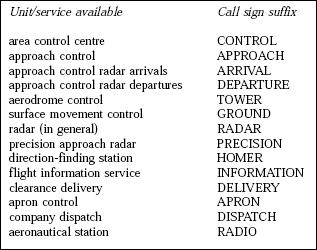
Refer to figureslearning objective 01007010302 describe the various rules and services that apply to the various classes of airspacesource icao annex 11 chapter 2 26 classification of airspaces and annex 11 appendix 4class f airspace is uncontrolled 'advisory' airspace in fact it is a bit of a 'grey area' of airspace and the uk and us amongst other countries have actually removed its usage completely changing those areas of airspace to class e or class gaccording to icao however within class f airspace both ifr and vfr flights are permitted with all participating ifr flights receiving an air traffic advisory service and all flights receiving a flight information service if requestedControlled flights only. vfr flights only. all flights.
Question 19-9 : In respect of the avoidance of collisions air traffic advisory services deliver to aircraft… ?
Advisory information.
Icao doc 4444air traffic advisory service a service provided within advisory airspace to ensure separation in so far as practical between aircraft which are operating on ifr flight plans914 air traffic advisory service91413 air traffic advisory service does not afford the degree of safety and cannot assume the same responsibilities as air traffic control service in respect of the avoidance of collisions since information regarding the disposition of traffic in the area concerned available to the unit providing air traffic advisory service may be incomplete to make this quite clear air traffic advisory service does not deliver clearances but only advisory information and it uses the word advise or suggest when a course of action is proposed to an aircraftMandatory avoidance instructions. clearances. tcas instructions.
Question 19-10 : You are flying when you receive a broadcast from ats advising of the emergency descent of an aircraft in your area what action should you take ?
Continue according to current atc clearance.
Icao doc 4444air traffic management pans atm 1514 emergency descent15143 action by the pilot of the aircraft receiving emergency descent broadcast unless specifically instructed by the ats unit to clear the area or threatened by immediate danger the pilot shall take the following actions a continue according to current clearance and maintain listening watch on the frequency in use for any further instructions from the ats unit andb watch for conflicting traffic both visually and by reference to acas if equipped note we received feedback that the answer to this question had been updated to continue according to current atc clearance so we have updated it however for authorities that have not yet updated their database the answer to this question may be continue on the present heading and maintain level Change to the previous frequency and request instructions. clear the area and stand by on the appropriate frequency. transmit on the frequency your call sign, position, track, and level.
Question 19-11 : What is the code word used in air traffic incident reports to designate 'aircraft proximity' ?
Airprox.
Icao doc 4444chapter 1 definitionsairprox the code word used in an air traffic incident report to designate aircraft proximityaircraft proximity a situation in which in the opinion of a pilot or air traffic services personnel the distance between aircraft as well as their relative positions and speed have been such that the safety of the aircraft involved may have been compromised an aircraft proximity is classified as follows risk of collision the risk classification of an aircraft proximity in which serious risk of collision has existedsafety not assured the risk classification of an aircraft proximity in which the safety of the aircraft may have been compromisedno risk of collision the risk classification of an aircraft proximity in which no risk of collision has existedrisk not determined the risk classification of an aircraft proximity in which insufficient information was available to determine the risk involved or inconclusive or conflicting evidence precluded such determinationAcprox airdist proximity
Question 19-12 : What is the meaning of the code word 'airprox' ?
Aircraft proximity.
Icao doc 4444chapter 1 definitionsairprox the code word used in an air traffic incident report to designate aircraft proximityaircraft proximity a situation in which in the opinion of a pilot or air traffic services personnel the distance between aircraft as well as their relative positions and speed have been such that the safety of the aircraft involved may have been compromised an aircraft proximity is classified as follows risk of collision the risk classification of an aircraft proximity in which serious risk of collision has existedsafety not assured the risk classification of an aircraft proximity in which the safety of the aircraft may have been compromisedno risk of collision the risk classification of an aircraft proximity in which no risk of collision has existedrisk not determined the risk classification of an aircraft proximity in which insufficient information was available to determine the risk involved or inconclusive or conflicting evidence precluded such determinationAir professional report airman pressure oxygen airborne processed oxygen
Question 19-13 : Which of the following occurrences should be reported in an air traffic incident report ?
Faulty procedures leading to an airprox.
Icao doc 4444163 air traffic incident report1631 an air traffic incident report shall be submitted normally to the air traffic services unit concerned for incidents specifically related to the provision of air traffic services involving such occurrences as aircraft proximity airprox or other serious difficulty resulting in a hazard to aircraft caused by among others faulty procedures non compliance with procedures or failure of ground facilities1632 procedures should be established for the reporting of aircraft proximity incidents and their investigation to promote the safety of aircraft the degree of risk involved in an aircraft proximity should be determined in the incident investigation and classified as risk of collision safety not assured no risk of collision or risk not determined 1633 when an accidentincident investigative authority conducts an investigation of an aircraft proximity incident the air traffic services aspects should be includednote— a model air traffic incident report form together with instructions for its completion is at appendix 4 further information regarding air traffic incidents is contained in the air traffic services planning manual doc 9426 Unruly passengers on board. rostering leading to flight crew duty time exceedances. aircraft mechanical failures.
Question 19-14 : According to icao pans atm air traffic management what is the definition for the term 'clearance limit' ?
The point to which an aircraft is granted an air traffic control clearance.
Icao doc 4444chapter 1 definitionsclearance limit the point to which an aircraft is granted an air traffic control clearanceA broadcast from an air traffic services unit that limits the use of a specific airspace. the last portion of an air traffic control clearance. the point at which the aircraft reaches the initial approach fix.
Question 19-15 : An aircraft is in the descent and has been receiving instructions from atc to make adjustments to its horizontal speed at what distance from the threshold on the final approach must the pic expect to stop receiving these instructions to control the speed ?
4 nm.
Icao doc 4444463 descending and arriving aircraft4636 only minor speed adjustments not exceeding plusminus 40 kmh 20 kt ias should be used for aircraft on intermediate and final approach4637 speed control should not be applied to aircraft after passing a point 7 km 4 nm from the threshold on final approach6 nm 5 nm 8 nm
Question 19-16 : General provisions – change from ifr to vfr – a change from ifr to vfr is only acceptable when vfr is permitted in that airspace and when ?
The change is initiated by the pic with a message containing the specific expression cancel ifr flight .
Icao doc 444448 change from ifr to vfr flight481 change from instrument flight rules ifr flight to visual flight rules vfr flight is only acceptable when a message initiated by the pilot in command containing the specific expression cancelling my ifr flight together with the changes if any to be made to the current flight plan is received by an air traffic services unit no invitation to change from ifr flight to vfr flight is to be made either directly or by inference482 no reply other than the acknowledgment ifr flight cancelled at time should normally be made by an air traffic services unit483 when an ats unit is in possession of information that instrument meteorological conditions are likely to be encountered along the route of flight a pilot changing from ifr flight to vfr flight should if practicable be so advisedAtc invites the pic to change from ifr to vfr. the pic has requested and obtained an atc clearance for the change and has filed an ats flight plan for a special vfr flight. the position of the change has been noted on the atc flight plan. the cancellation of the flight under ifr will then be made automatically by atc.
Question 19-17 : The wake turbulence category light groups aircraft types with a maximum certificated take off mass of… ?
7000 kg or less.
Icao doc 4444491 wake turbulence categories of aircraft4911 wake turbulence separation minima shall be based on a grouping of aircraft types into three categories according to the maximum certificated take off mass as follows a heavy h — all aircraft types of 136 000 kg or more b medium m — aircraft types less than 136 000 kg but more than 7000 kg andc light l — aircraft types of 7000 kg or less5700 kg or less. 8168 kg or less. 15 000 kg or less.
Question 19-18 : Area control centres issue clearances for the purpose of ?
Achieving separation between controlled flights.
Icao annex 112 provision of air traffic control servicethe parts of air traffic control service described in 231 shall be provided by the various units as follows a area control service 1 by an area control centre or2 by the unit providing approach control service in a control zone or in a control area of limited extent which is designated primarily for the provision of approach control service and where no area control centre is established334 clearances issued by air traffic control units shall provide separation a between all flights in airspace classes a and b b between ifr flights in airspace classes c d and e c between ifr flights and vfr flights in airspace class c d between ifr flights and special vfr flights e between special vfr flights when so prescribed by the appropriate ats authorityexcept that when requested by an aircraft and if so prescribed by the appropriate ats authority for the cases listed under b above in airspace classes d and e a flight may be cleared without separation being so provided in respect of a specific portion of the flight conducted in visual meteorological conditionsProviding flight information service achieving separation between ifr flights providing advisory service
Question 19-19 : On approach to landing the wind is reported 04020 kt which runways below is the approach controller most likely to clear you for landing ?
06.
The runway in use indicated the runways that are considered by the aerodrome control tower to be the most suitable for the types of aircraft expected to land or take off at the aerodromenormally an aicraft will land and take off into wind unless safety the runway configuration meteorological conditions and available instrument approach procedures etc determine that a different direction is preferablenone of the factors above mentioned is given by the question therefore we must choose the runway that provides largest headwind component 0609 27 36
Question 19-20 : You are flying above bristol and need to dump the fuel what do you need to do ?
Climb to 6000 ft and fly over bristol channel then dump the fuel.
Icao doc 44441553 fuel dumping155311 an aircraft in an emergency or other urgent situations may need to dump fuel so as to reduce to maximum landing mass in order to effect a safe landing155312 when an aircraft operating within controlled airspace needs to dump fuel the flight crew shall advise atc the atc unit should then coordinate with the flight crew the following a the route to be flown which if possible should be clear of cities and towns preferably over water and away from areas where thunderstorms have been reported or are expected b the level to be used which should be not less than 1800 m 6000 ft andc the duration of the fuel dumpingClimb to 4000 ft and dump fuel. climb to 5000 ft and fly over bristol channel, then dump the fuel. climb to 3000 ft and dump fuel.
Question 19-21 : A pilot should report runway vacated ?
When the entire aircraft has passed the relevant holding point.
Icao doc 444476 control of aerodrome traffic763 traffic on the manoeuvring area71034 when necessary or desirable eg due to low visibility conditions a landing or a taxiing aircraft may be instructed to report when a runway has been vacated the report shall be made when the entire aircraft is beyond the relevant runway holding positionWhen the aircraft is turning to exit the runway. when the entire aircraft has vacated the runway. as soon as the aircraft nose is beyond the limits of the runway.
Question 19-22 : A flight from new york jfk is preparing for taxi given the following information what should the pilots do runway 31l due to works only 11 000 ft of the runway are available but is currently only used for landings runway 31r 10 000 ft available and is used for departures with noise abatement ?
Make a request for runway 31l for safety reasons.
Delay until wind changes => no weather forecast is provided which means that we have no idea how long it will take until the wind changes it could take long offload one container of cargo so that the aircraft is able to take off from runway 31r and wait until atc changes runways from 31r to 31l => according to the question text runway 31r is too short for the calculated tom meaning that reducing the load would be required this would potential cause long delays and higher company coststhe best option would be to request a take off from runway 31l for safety reasons avoiding long delays and extra costsnote we do not have any information regarding runway 04l length and the wind conditions do not favour a take off from this r04l wind at 10° => nearly full tailwind Delay until wind changes. wait until atc changes runways from 31r to 31l. offload one container of cargo so that the aircraft is able to take off from runway 31r.
Question 19-23 : Which word should be used to indicate an aircraft of 136 000 kg ?
Heavy.
Icao doc 4444 chapter 4 491 wake turbulence categories of aircraft4911 wake turbulence separation minima shall be based on a grouping of aircraft types into three categories according to the maximum certificated take off mass as follows a heavy h — all aircraft types of 136 000 kg or more b medium m — aircraft types less than 136 000 kg but more than 7000 kg and c light l — aircraft types of 7000 kg or less492 indication of heavy wake turbulence category for aircraft in the heavy wake turbulence category the word heavy shall be included immediately after the aircraft call sign in the initial radiotelephony contact between such aircraft and ats unitsnote— wake turbulence categories are specified in the instructions for completing item 9 of the flight plan in appendix 2Light medium super heavy
Question 19-24 : A light aircraft is an aircraft which weighs a maximum of… ?
7000 kg.
Icao doc 4444 chapter 4 491 wake turbulence categories of aircraft4911 wake turbulence separation minima shall be based on a grouping of aircraft types into three categories according to the maximum certificated take off mass as follows a heavy h — all aircraft types of 136 000 kg or more b medium m — aircraft types less than 136 000 kg but more than 7000 kg and c light l — aircraft types of 7000 kg or less492 indication of heavy wake turbulence category for aircraft in the heavy wake turbulence category the word heavy shall be included immediately after the aircraft call sign in the initial radiotelephony contact between such aircraft and ats unitsnote— wake turbulence categories are specified in the instructions for completing item 9 of the flight plan in appendix 27600 kg 6800 kg 7700 kg
Question 19-25 : For independent parallel approaches when vectoring to intercept the ils localizer course the final vector shall enable the aircraft to intercept the ils localizer course at an angle not greater than degrees ?
30.
Icao doc 4444 chapter 6 67 operations on parallel or near parallel runways 6732 requirements and procedures for independent parallel approaches 67323 when vectoring to intercept the ils localizer course or mls final approach track the final vector shall enable the aircraft to intercept the ils localizer course or mls final approach track at an angle not greater than 30 degrees and to provide at least 2 km 10 nm straight and level flight prior to ils localizer course or mls final approach track intercept the vector shall also enable the aircraft to be established on the ils loalizer course or mls final approach track in level flight for at least 37 km 20 nm prior to intercepting the ils glide path or specified mls elevation angle45 20 15
Question 19-26 : Select the option which correctly states in the increasing order of seriousness the phases related to an aircraft in emergency or believed in emergency ?
Incerfa alerfa detresfa.
Icao doc 4444chapter 1 definitionsincerfa the code word used to designate an uncertainty phasealerfa the code word used to designate an alert phasedetresfa the code word used to designate a distress phasethe emergency phase are uncertainty phase incerfa => alert phase alerfa => distress phase detresfa note more info can be found on the attached figureIncerfa, alerfa, distresfa. alerfa, incerfa, detresfa. alerfa, distresfa, rescuefa.
Question 19-27 : 'milano approach bigjet 337 heavy over undap' the aircraft’s correct callsign is… ?
Bigjet 337.
Icao doc 444449 wake turbulence categories492 indication of heavy wake turbulence categoryfor aircraft in the heavy wake turbulence category the word heavy shall be included immediately after the aircraft call sign in the initial radiotelephony contact between such aircraft and ats units411 position reporting4113 radiotelephony procedures for air ground voice communication channel changeoverwhen so prescribed by the appropriate ats authority the initial call to an atc unit after a change of air ground voice communication channel shall contain the following elements a designation of the station being called b call sign and for aircraft in the heavy wake turbulence category the word heavy c level including passing and cleared levels if not maintaining the cleared level d speed if assigned by atc ande additional elements as required by the appropriate ats authoritynote even though easa's logic is not clear in this question correct call sign of the aircraft is asked therefore we believe bigjet 337 should be the correct option excluding heavyMilano approach bigjet bigjet 337 heavy
Question 19-28 : A clearance is received which items must be read back to atc 1 wind speed and direction 2 correct time 3 taxi clearance 4 runway in use 5 altimeter settings 6 ssr codes 7 level heading and speed instructions ?
3 4 5 6 and 7.
Icao doc 4444 4575 readback of clearances45751 the flight crew shall read back to the air traffic controller safety related parts of atc clearances and instructions which are transmitted by voice the following items shall always be read back a atc route clearances b clearances and instructions to enter land on take off from hold short of cross taxi and backtrack on any runway and c runway in use altimeter settings ssr codes level instructions heading and speed instructions and whether issued by the controller or contained in automatic terminal information service atis broadcasts transition levelsnote— if the level of an aircraft is reported in relation to standard pressure 10132 hpa the words flight level precede the level figures if the level of the aircraft is reported in relation to qnhqfe the figures are followed by the word metres or feet as appropriate1, 2, 3, 6 and 7. 2, 3, 4, 5 and 6. 1, 3, 4, 6 and 7.
Question 19-29 : If no information has been received what information is given to an aircraft on its first call to tower prior to taxi ?
Runway in use wind qnh and visibility below 10 km.
Icao doc 4444 7412 aerodrome and meteorological information74121 prior to taxiing for take off aircraft shall be advised of the following elements of information in the order listed with the exception of such elements which it is known the aircraft has already received a the runway to be used b the surface wind direction and speed including significant variations therefrom c the qnh altimeter setting and either on a regular basis in accordance with local arrangements or if so requested by the aircraft the qfe altimeter setting d the air temperature for the runway to be used in the case of turbine engined aircraft e the visibility representative of the direction of take off and initial climb if less than 10 km or when applicable the rvr value s for the runway to be used f the correct timenote— the meteorological information listed above is to follow the criteria used for meteorological local routine and special reports in accordance with chapter 11 114322 to 114323Runway in use, wind, qnh, visibility below 10 km, transition level and time. runway in use, qnh and visibility below 10 km. runway in use, wind, qnh and transition level.
Question 19-30 : According to icao annex 11 the lateral limits of a control zone shall extend to at least in the directions from which approaches may be made ?
5 nm from the centre of the aerodrome or aerodromes concerned.
Icao annex 11control zone a controlled airspace extending upwards from the surface of the earth to a specified upper limit210 specifications for flight information regions control areas and control zones 2105 control zones21051 the lateral limits of control zones shall encompass at least those portions of the airspace which are not within control areas containing the paths of ifr flights arriving at and departing from aerodromes to be used under instrument meteorological conditionsnote— aircraft holding in the vicinity of aerodromes are considered as arriving aircraft 21052 the lateral limits of a control zone shall extend to at least 93 km 5 nm from the centre of the aerodrome or aerodromes concerned in the directions from which approaches may be made3 nm from the centre of the aerodrome or aerodromes concerned 4 nm from the centre of the aerodrome or aerodromes concerned 10 nm from the centre of the aerodrome or aerodromes concerned
Question 19-31 : The french safety board bea published a preliminary report of a serious incident involving an airbus a330 being operated as a commercial air transport flight at sydney australia the report states 'during take off a section of engine cowling from the no 1 engine separated from the aircraft the crew ?
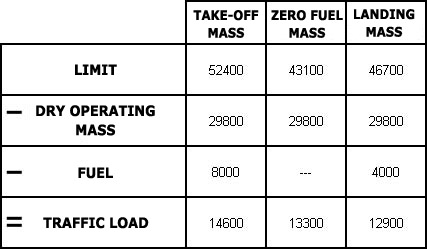
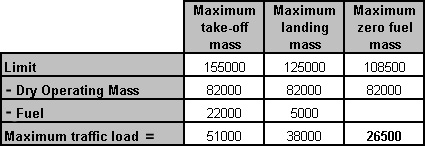
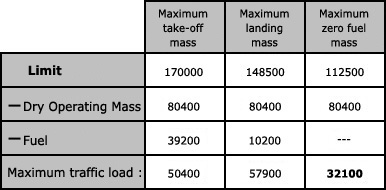
They had to reduce the aircraft's mass in order to safely land below the maximum landing mass.
Icao doc 4444 1553 fuel dumping155311 an aircraft in an emergency or other urgent situations may need to dump fuel so as to reduce to maximum landing mass in order to effect a safe landingThey made a mistake: according to normal procedures, the aircraft should have landed with all the remaining usable fuel. they had to mitigate against the risk of fire and therefore empty the fuel tanks as much as possible.? after take-off, it is a normal procedure to dump some fuel in order to reduce pollution.
Question 19-32 : According to icao doc 4444 pans atm what word s shall be included immediately after the aircraft call sign for an aircraft having an mctom of 136 000 kg or more in the initial radiotelephony contact between such aircraft and the ats unit ?
Heavy.
Icao doc 4444 49 wake turbulence categories 491 wake turbulence categories of aircraft4911 wake turbulence separation minima shall be based on a grouping of aircraft types into three categories according to the maximum certificated take off mass as follows a heavy h — all aircraft types of 136 000 kg or more b medium m — aircraft types less than 136 000 kg but more than 7000 kg and c light l — aircraft types of 7000 kg or less492 indication of heavy wake turbulence categoryfor aircraft in the heavy wake turbulence category the word heavy shall be included immediately after the aircraft call sign in the initial radiotelephony contact between such aircraft and ats unitsSuper heavy medium large
Question 19-33 : According to sera standardised european rules of the air when an ifr pilot wants to change from ifr to vfr heshe must… ?
Notify atc however if the weather conditions are imc during the flight the flight must remain under ifr.
Easa air opssera5015 instrument flight rules ifr — rules applicable to all ifr flights c change from ifr flight to vfr flight 1 an aircraft electing to change the conduct of its flight from compliance with the instrument flight rules to compliance with the visual flight rules shall notify the appropriate air traffic services unit specifically that the ifr flight is cancelled and communicate there to the changes to be made to its current flight plan 2 when an aircraft operating under the instrument flight rules is flown in or encounters visual meteorological conditions it shall not cancel its ifr flight unless it is anticipated and intended that the flight will be continued for a reasonable period of time in uninterrupted visual meteorological conditions 3 change from ifr flight to vfr flight shall only be acceptable when a message initiated by the pilot in command containing the specific expression ‘cancelling my ifr flight’ together with the changes if any to be made to the current flight plan is received by an ats unit no invitation to change from ifr flight to vfr flight shall be made by ats either directly or by inferencetherefore when you are flying ifr if you want to change it to vfr notifying atc will be enough in addition to this you must have vmc conditions not imc to be able to fly vfrNotify atc. however, if the weather conditions are vmc during the flight, the flight must remain under ifr. request an atc approval. a change from ifr to vfr does not depend on weather conditions. request an atc approval. the flight should then be performed above 3000 ft amsl.
Question 19-34 : According to icao annex 11 to whom may the task of providing services on the apron be assigned ?
An aerodrome control tower.
Icao annex 11 32 provision of air traffic control servicethe parts of air traffic control service described in 231 shall be provided by the various units as follows a area control service 1 by an area control centre or 2 by the unit providing approach control service in a control zone or in a control area of limited extent which is designated primarily for the provision of approach control service and where no area control centre is establishedb approach control service 1 by an aerodrome control tower or area control centre when it is necessary or desirable to combine under the responsibility of one unit the functions of the approach control service with those of the aerodrome control service or the area control service 2 by an approach control unit when it is necessary or desirable to establish a separate unitc aerodrome control service by an aerodrome control towernote— the task of providing specified services on the apron eg apron management service may be assigned to an aerodrome control tower or to a separate unitAn approach control unit. a flight information unit. an area control centre.
Question 19-35 : Consider the following forms of position information passed on to an aircraft by radar service which option lists the correct forms for passing such position information 1 direction using points of the compass and distance from a known position2 direction and distance from the centre line of an ats ?
1 2 and 4.
Icao doc 4444 864 position information8642 position information shall be passed to aircraft in one of the following forms a as a well known geographical position b magnetic track and distance to a significant point an en route navigation aid or an approach aid c direction using points of the compass and distance from a known position d distance to touchdown if the aircraft is on final approach or e distance and direction from the centre line of an ats route1 and 5. 2 and 4. 1, 3 and 5.
Question 19-36 : An aircraft arriving at paris cdg receives the following atis 'this is cdg information india recorded at 1431 utc approach 4e en ils 09l and approach 4e 4n ils 08r landing runway 09l and 08r transition level 70 wind 180°13 kt present weather cavok temperature 13 dew point 2 qnh 1003 ?
Correct.
Icao annex 11437 atis for arriving and departing aircraftatis messages containing both arrival and departure information shall contain the following elements of information in the order listed a name of aerodrome b arrival andor departure indicator c contract type if communication is via d atis d designator e time of observation if appropriate f type of approach es to be expected g the runway s in use status of arresting system constituting a potential hazard if any h significant runway surface conditions and if appropriate braking action i holding delay if appropriate j transition level if applicable k other essential operational information l surface wind direction in degrees magnetic and speed including significant variations and if surface wind sensors related specifically to the sections of runway s in use are available and the information is required by operators the indication of the runway and the section of the runway to which the information refers *m visibility and when applicable rvr and if visibilityrvr sensors related specifically to the sections of runway s in use are available and the information is required by operators the indication of the runway and the section of the runway to which the information refers *n present weather *o cloud below 1500 m 5000 ft or below the highest minimum sector altitude whichever is greater cumulonimbus if the sky is obscured vertical visibility when available p air temperature q dew point temperature r altimeter setting s s any available information on significant meteorological phenomena in the approach and climbout areas including wind shear and information on recent weather of operational significance t trend forecast when available andu specific atis instructions* these elements are replaced by the term 'cavok' when the conditions specified in pans atm doc 4444 chapter 11 prevailicao annex 3definitionsrunway visual range rvr the range over which the pilot of an aircraft on the centre line of a runway can see the runway surface markings or the lights delineating the runway or identifying its centre line463 runway visual range4633 the runway visual range assessed with accordance with 4631 and 4632 shall be reported in metres throughout periods when either the visibility or the runway visual range is less than 1500 mIncorrect because the type of approach is mentioned. incorrect because the snowtam is missing. incorrect because the rvrs are not mentioned.
Question 19-37 : Why is fuel dumped during an emergency after take off ?
To get below maximum landing mass mlm .
Icao doc 4444chapter 15 procedures related to emergencies communication failure and contingencies1553 fuel dumping155311 an aircraft in an emergency or other urgent situations may need to dump fuel so as to reduce to maximum landing mass in order to effect a safe landing155312 when an aircraft operating within controlled airspace needs to dump fuel the flight crew shall advise atc the atc unit should then coordinate with the flight crew the following a the route to be flown which if possible should be clear of cities and towns preferably over water and away from areas where thunderstorms have been reported or are expected b the level to be used which should be not less than 1800 m 6000 ft andc the duration of the fuel dumpingLower risk of fire during landing. to not damage the runway while landing. to have a better airplane manoeuvrability and get back to the airport quickly for landing.
Question 19-38 : Which option is correct as regards to air traffic services or air traffic control services air traffic… ?
Advisory services do not deliver clearances but only advisory information and can use the word suggest .
Icao doc 4444 914 air traffic advisory service91413 air traffic advisory service does not afford the degree of safety and cannot assume the same responsibilities as air traffic control service in respect of the avoidance of collisions since information regarding the disposition of traffic in the area concerned available to the unit providing air traffic advisory service may be incomplete to make this quite clear air traffic advisory service does not deliver clearances but only advisory information and it uses the word advise or suggest when a course of action is proposed to an aircraftAdvisory services deliver “clearances” and “advisory information” and do not use the word “suggest”.... control services deliver “advisories” and “suggestions” and do not use the word “cleared'.... control services do not deliver “clearances” but only “hearing information” and use the phrases “can i” or “do you allow me”....
Question 19-39 : According to icao doc 4444 why must the movement of all persons vehicles and towed aircrafts on the manoeuvring area be controlled by the aerodrome control tower ?
To reduce hazards between aircraft landing taxiing or taking off.
Icao doc 4444 chapter 7 71 functions of aerodrome control towers7111 aerodrome control towers shall issue information and clearances to aircraft under their control to achieve a safe orderly and expeditious flow of air traffic on and in the vicinity of an aerodrome with the object of preventing collision s between a aircraft flying within the designated area of responsibility of the control tower including the aerodrome traffic circuits b aircraft operating on the manoeuvring area c aircraft landing and taking off d aircraft and vehicles operating on the manoeuvring area e aircraft on the manoeuvring area and obstructions on that areaTo ensure that emergency vehicles are given priority. to avoid damage to aerodrome navigation aids. to provide safe vehicular access to aprons.
Question 19-40 : What conditions does sera allow aeroplanes to take off and land in a direction other than into wind ?
Wherever safety air traffic considerations or runway configurations dictate it.
Icao annex 2 325 operation on and in the vicinity of an aerodrome an aircraft operated on or in the vicinity of an aerodrome shall whether or not within an aerodrome traffic zone a observe other aerodrome traffic for the purpose of avoiding collision b conform with or avoid the pattern of traffic formed by other aircraft in operation c make all turns to the left when approaching for a landing and after taking off unless otherwise instructed d land and take off into the wind unless safety the runway configuration or air traffic considerations determine that a different direction is preferableOnly for the interest of safety. only when an air traffic controller requires it or authorizes it. whenever the pilot-in-command informs air traffic control that they intend to do so.
Exclusive rights reserved. Reproduction prohibited under penalty of prosecution.