A free Premium account on the FCL.055 website! Read here
Sign up to unlock all our services and 15164 corrected and explained questions.
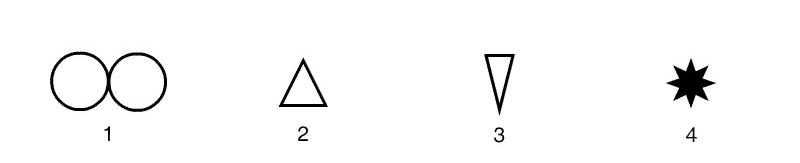
Question 193-1 : What is the meaning of aeronautical chart symbol no 16 2509 ? [ Level reports ]
Lightship
Question 193-2 : Which aeronautical chart symbol indicates an aeronautical ground light 2509 ?
15.
251216. 10. 14.
Question 193-3 : Which aeronautical chart symbol indicates a lightship 2509 ?
16.
251210. 12. 14.
Question 193-4 : Given a polar stereographic chart of the northern hemisphere whose grid is aligned with the zero meridiangrid track 344° longitude 115°00'w calculate the true course ?
229°.
Let's assume the airplane is at latitude 70°n 2059true course = 344° 115° = 229° ninorr just remember simple quote grid track = true track + west longitude or east longitudeso in this case 344 = x + 115x = 344 115x = 229099°. 279°. 049°.
Question 193-5 : A straight line is drawn on a lamberts conformal conic chart between two positions of different longitudethe angular difference between the initial true track and the final true track of the line is equal to ?
Chart convergency.
Chart convergency means the rate at which meridians drawn on a chart are converging 2060if you drawn a line between two positions of different longitude the angular difference between the initial true track and the final true track is equal to chart convergencyEarth convergency. conversion angle. difference in longitude.
Question 193-6 : If the chart scale is 1 500 000 what earth distance would be represented by 7 cm on the chart ?
35 000 m.
7 cm x 500 000 cm = 3 500 000 cm = 35 000 m or 35 km 3.5 km. 35 nm. 0.35 km.
Question 193-7 : What is the constant of the cone for a lambert conic projection whose standard parallels are at 50°n and 70°n ?
0866.
Constant of cone convergency factor the ratio between the top angle of the unfolded cone and 360° or sine of the parallel of originthe parallel of origin is about half way between the standard parallels midway between 50°n and 70°n is 60°nsin of 60° = 08660.941 0.5 0.766
Question 193-8 : On a direct mercator projection a particular chart length is measured at 30°n what earth distance will the same chart length be if measured at 60°n ?
A smaller distance.
Twice the distance. the same distance. a larger distance.
Question 193-9 : How does the scale vary in a direct mercator chart the scale ?
Increases with increasing distance from the equator.
1753on earth 1° of longitude = 60 nm at the equatorat 45°n or s 1° of longitude = 60 nm x cos45° = 425 nmif you look at a direct mercator chart the scale between each degrees of longitude remains unchanged even if you are at 30°n 45°n or 60°n the scale increases with the secant of latitudeDecreases with increasing distance from the equator. is constant. increases south of the equator and decreases north of the equator.
Question 193-10 : How does the chart convergency change with latitude in a lambert conformal projection ?
It is constant and does not change with latitude.
2052meridians are converging at a constant rate regardless of latitudeIt changes with cosine of latitude. it increases with increase of latitude. it changes with sine of latitude.
Question 193-11 : How does the convergency of any two meridians on the earth change with varying latitude ?
It changes as sine of latitude.
It changes as cosine of latitude. it increases with decrease of latitude. it is of constant value and does not change with latitude.
Question 193-12 : Grid heading is 299° grid convergency is 55° west and magnetic variation is 90° west what is the corresponding magnetic heading ?
084°.
'convergence east true track least' or 'convergence west true track best' grid convergency is 55° west 299° + 55° = 354° true track'variation east magnetic least' or 'variation west magnetic best' magnetic variation is 90° west 354° + 90° 084° magnetic heading334°. 154°. 264°.
Question 193-13 : Where on a direct mercator projection is the chart convergency correct compared to the earth convergency ?
At the equator.
A cylindrical projection based on the equator is a direct mercator projection 2044chart convergency = earth convergency at the equatorconvergency is the angle of inclination between two selected meridians measured at a given latitude and is equal to the difference between the great circle directions measured at each meridianAt the two parallels of tangency. at the poles. all over the chart.
Question 193-14 : A route a to b is drawn on a polar stereographic chart with the grid aligned with the greenwich meridian the true track of the straight line at a is 060° when passing the meridian 100°e the true track is 090°the grid track of this route on the chart is ?
350° g .
The easiest way to solve this exercice is to draw the situation 2033010°(g). 130°(g). 060°(g).
Question 193-15 : The standard parallels of a lambert chart are 26°n and 48°n and the stated scale is 1 2 500 000which statement is correct ?
The scale at 28°n is smaller than the scale at 24°n.
At 26°n and 48°n the stated scale is correct 1 cm = 2 500 000 cm on a lambert chart the scale contracts between the standard parallels and expands outside so the scale at 28°n is smaller than the scale at 24°nThe scale at 37°n is larger than the scale at 20°n. the scale at 46°n is larger than the scale at 50°n. the scale at 30°n is smaller than the scale at 37°n.
Question 193-16 : Which statement is correct about the scale of a polar stereographic projection of the northern polar area ?
The scale reaches its minimum value at the north pole.
On a polar stereographic chart meridians are straight lines originating from the pole parallels of latitude are arcs of circles centred at the polethe scale is correct at the pole elsewhere it expands as sec² 12 co latitude within 1% from latitudes 90° to 78° within 3% from latitudes 78° to 70°The scale reaches its minimum value at the equator. the scale reaches its maximum value at the 45°n. the scale reaches its maximum value at the north pole.
Question 193-17 : Which statement is correct about the scale of a lambert projection ?
The scale reaches its minimum value at the parallel of origin.
The lambert conformal projection is what most of today's aeronautical charts are based on 1776on a lamberts chart scale is correct at the standard parallels as this is where the paper touches the reduced earth and since the surface of the reduced earth is bulging out from the paper between the standard parallels it will have to be squashed in order to fit onto the paper this will then lead to a smaller scale for the area between the standard parallelsThe scale reaches its minimum value at the standard parallels. the scale reaches its maximum value at the parallel of origin. the scale reaches its maximum value at the standard parallels.
Question 193-18 : A route is flown from 80°s 100°w to 80°s 140°e at 180°ew the grid track gt and true track tt on a polar stereographic chart whose grid is aligned with the greenwich meridian are respectively ?
110° g and 290° t .
Draw the situation com encom061 598jpgthose questions are not looking your calculation skill but your facility to visualize a situation070°(g) and 250°(t). 290°(g) and 110°(t). 250°(g) and 070°(t).
Question 193-19 : A route is flown from 85°s 100°e to 85°s 140°w at 180°ew the grid track gt and true track tt on a polar stereographic chart whose grid is aligned with the greenwich meridian are respectively ?
250° g and 070° t .
Draw the situation com encom061 599jpgthose questions are not looking your calculation skill but your facility to visualize a situation070°(g) and 250°(t). 290°(g) and 110°(t). 110°(g) and 290°(t).
Question 193-20 : The positions a 30°00'n 017°30'e and b at longitude 30°00'n 023°30'e are plotted on a lambert chart with a constant of the cone of 05 a and b are connected by a straight line the true track measured at a is 0885°what is the true track measured at b ?
0915°.
Draw the situtation com encom061 601jpgif we were on a mercator chart we would have a curve blue line for the great circle track and a straight line for the rhumb line in northern hemisphere our arrival track at b will be more than our departure track at asimply calculate convergency = 6° x 05 = 3°true track at b = 885° + 3° = 915°082.5° 085.5° 094.5°
Question 193-21 : A route is flown from 85°s 100°e to 85°s 140°w at 160°e the grid track gt and true track tt on a polar stereographic chart with a grid orientated on the 180° meridian are respectively ?
070° g and 090° t .
com encom061 604jpg090°(g) and 070°(t). 250°(g) and 090°(t). 090°(g) and 250°(t).
Question 193-22 : A straight line from a 75°s 120°e to b 75°s 160°e is drawn on a polar stereographic chart when passing the meridian 155°e the true track is ?
075°.
com encom061 607ajpg com encom061 607bjpgdrawn the situation the answer becomes simple and clear095°. 105°. 255°.
Question 193-23 : On a mercator's projection the distance between 17°n 035°e and 17°n 040°e is 5 cmthe scale at 57°n is approximately ?
1 6 052 030.
On a mercator chart meridians of longitude are parallel lines 5 cm distance at 17°n = 5 cm at 57°ndistance on earth between the two points distance on earth = change of longitude x cos latitudedistance on earth = 5°x 60' x cos57°distance on earth = 164 nmso we can say that 5 cm on the chart = 164 nm on earth164 nm x 1852 = 303728 km303728 km x 1000 = 303 728 m303 728 m x 100 = 30 72 800 cm30 72 800 cm 5 cm = 6 074 560the scale at 57°n is approximately 1 6 074 5601 : 5 556 000 1 : 10 626 460 1 : 18 658 470
Question 193-24 : A straight line from a 53°s 155°e to b 53°s 170°w is drawn on a lambert conformal conical chart with standard parallels at 50°s and 56°swhen passing 175°w the true track is ?
078°.
Draw the situtation com encom061 616ajpg com encom061 616bjpgwe can go for calculation change of longitude = 35°convergency = change longitude x sin latitudeconvergency = 35° x sin 53° = 28°departure track at a is 090° + 28° = 118°track on arrival at b = 090° 28° = 062°at half way between a and b track is 090°175°w is on the last part of the flight so our true track will be less than 090° and more than 062° special thanks to aluque for the correction 102°. 282°. 258°.
Question 193-25 : Route a b is drawn on a polar stereographic chart with the grid aligned with the greenwich meridian the true track of the straight line at a 75°s 010°w is 080° what is the grid track when passing the meridian of 050°e ?
070° g .
At 'a' true track is 080°convergency = change of longitude datum and 'a' meridianconvergency = 000° 010°w = 10°convergency direction is from grid north to true north at 'a' meridian convergency direction is 10°westconvergency west = true track bestgrid track = true track convergency = 080° 10°w = 070°when passing the meridian of 050°e since the grid track is constant along the whole track the grid track remains 070°110°(g). 090°(g). 330°(g).
Question 193-26 : Route a b is drawn on a polar stereographic chart with the grid aligned with the greenwich meridianthe true track of the straight line at a 75°n 010°w is 080°what is the grid track when passing the meridian 050°e ?
090° g .
com encom061 621jpgat 'a' true track is 080°convergency = change of longitude datum and 'a' meridianconvergency = 000° 010°w = 10°convergency direction is from grid north to true north at 'a' meridian convergency direction is 10°eastconvergency east = true track leastgrid track = true track + convergency = 080° + 10°e = 090°when passing the meridian of 050°e since the grid track is constant along the whole track the grid track remains 090°110°(g). 070°(g). 150°(g).
Question 193-27 : A straight line from a 53°n 155°w to b 53°n 170°e is drawn on a lambert conformal conical chart with standard parallels at 50°n and 56°nwhen passing the meridian 175°e the true track is ?
260°.
Change of longitude between a and b is 155°w to 170°e by the oppposite greenwich meridian = 35°rhumb line track from a to b is 270°truedifference between great circle track and rhumb line track at a specified position is called conversion anglethe value of conversion angle can be calculated as half the value of convergency and convergency = difference of longitude x sin mean latitude the great circle track at a is 270° + conversion angleconversion angle = 05 x 35° x sin 53° = 14°departure track great circle is 270° + 14 ° = 284°from a to the meridian 175°e the great circle track decreases by convergency 284° difference of longitude x sin mean latitude difference of longitude = 155°w to 175°e = 30°284° 30° x sin53° = 284° 24° = 260°257.5°. 100°. 102.5°.
Question 193-28 : A route is flown from 80°s 100°w to 80°s 140°e at 160°w the grid track gt and true track tt on a polar stereographic chart with a grid orientated on the 180° meridian are respectively ?
290° g and 270° t .
com encom061 636jpg270°(g) and 290°(t). 110°(g) and 270°(t). 270°(g) and 110°(t).
Question 193-29 : Given position ndb 55°10'n 012°55'e dead rekoning position 54°53'n 009°58'e ndb on the rmi reads 090°magnetic variation = 10°wthe position line has to be plotted on a lamberts conformal chart with standard parallels at 40°n and 48°n calculate the direction t of the bearing to be plotted from the ndb ?
262°.
The rmi indicates the ndb direction we have to applie variation and convergency bearing is measured at the aricraft since it is a ndb variation is applied at the aircraft 090° 10° 'variation west magnetic best' convergency = difference of longitude x sin mean latitude between us and the ndb difference of longitude is 012°55' 009°58' = 2°57' = 295°mean latitude is 40+48 2 = 44°nconvergency = 295° x sin 44° = 2°080° + 2° = 082°the direction of the bearing to be plotted from the ndb is 082° + 180° = 262°272°. 258°. 265°.
Question 193-30 : An aircraft is at position 53°n 006°w and has a landmark at position 52°47'n 004°45'w with a relative bearing of 060°given compass heading = 051°variation = 16°wdeviation = 2°ewhat is the true bearing of the position line to be plotted from the landmark to the aircraft on a lambert chart with ?
278°.
com encom061 639ajpgtrue track is 037°relative bearing of the landmark 037° + 060° = 097°standard parallels of the chart are 37°n and 65°n the parallel of origin is 37+65 2 = 51°nconvergency = change of longitude x sin parallel of originconvergency = 006° 475° x sin51°convergency = 125° x 0777 = 1°true track at the aircraft position is 097° the true track at the landmark is more than 97° com encom061 639bjpgthus you must add the 1° of convergency 097° + 1° + 180° bearing from the landmark = 278°277°. 276°. 250°.
Question 193-31 : A vor is situated at position 74°n 094°w local variation is 50°wa polar stereographic chart supplied with a greenwich grid is used for navigationto proceed along magnetic radial 238° inbound an aircraft has to follow a grid track of ?
103°.
com encom061 640jpgwithout calculation answer 103° appears to be the correct oneby calculation magnetic track 238° 180° = 058°true track 058° variation 50°w = 008°convert magnetic track to grid track using grivation sum of convergency and magnetic variationsum of convergency= 94°emagnetic variation= 50°w94°e 50°w = 44°e058° + 44° e = 102°283°. 013°. 193°.
Question 193-32 : Thule vor is located at 76°32'n 68°15'w a polar stereographic chart with the grid aligned with the greenwich meridian is to be used the local variation is 75°w which grid track must be maintained to track radial 210 m inbound ?
023° g.
Schaverius use formula for grid navigation grid heading = true heading + west longitude or east longitudethe radial inbound r210 outbound is a magnetic heading of 030° 210 180 subtract variation to find true 030 75 = 315° truenow apply the formula grid = 315 + 68°15' = 2325°grid285°(g) 203°(g) 323°(g)
Question 193-33 : Route a b is drawn on a southern polar stereographic chart whose grid is aligned with the greenwich meridian the true track of the straight line at a is 120° when passing the meridian of 100°e the true track is 090° the grid track of this route on the chart is ?
190° g .
com encom061 643pngwhen passing the meridian of 100°e the true track is 090°since the grid is aligned with the greenwich meridian 100° + 090° = 190° grid350°(g). 120°(g). 030°(g).
Question 193-34 : The constant of the cone in a lambert chart is 08666500 the angle between the north direction of the meridian in position a 65°00'n 018°00'w and the meridian of position b 75°00'n 023°00'w on the chart is ?
43°.
Change of longitude = 023° 018° = 005°constant of the cone is 08666500convergency = change of longitude x constant of the coneconvergency = 005° x 08666500 = 43°5.0° 5.8° 10.0°
Question 193-35 : Given lambert conformal conical projection scale 1 1 234 000 standard parallels 36°n and 60°na 53°n 010°w b 53°n 020°w the distance on the map between position a and position b measured along the rhumb line ?
Is less than 5419 cm.
At the exam only lambert conformal charts mathematically produced with two standard parallels will be considereddistance on earth = 10° x 60 x cos 53° = 361 nm361 nm x 1852 km = 66873 km = 66873000 cmscale = chart lenghtearth distancescale = chart lenght66873000 cm = 11234000chart lenght = 66873000 1234000 = 5419 cmon a lambert conformal conic projection scale indicated on the chart will be correct at the standard parallels scale within the standard parallels differs by less than 1% from the scale stated on the chartthe parallel of origin is close to the mean latitude between the standard parallels and the scale will increase away from the parallel of origin if the scale increase to reach the scale stated on the chart it means that at the parallel of origin the scale is less than the scale stated on the chart thus the distance on the map between position a and position b measured along the rhumb line is less than 5419 cmIs 56.66 cm. is more than 57.13 cm. is between 54.19 cm and 57.13 cm.
Question 193-36 : Two places are situated on the same parallel in the southern hemisphere the great circle rhumb line and the straight line between these places are drawn on a polar stereographic projectionwhich statement is correct ?
The great circle is situated between the parallel and the straight line because the concave side of the great circle is always pointed towards the pole.
1777The correct sequence from north to south is: great circle, straight line, rhumb line. the rhumb line is situated between the great circle and the straight line because the shortest distance between to places on earth is the great circle. the great circle is situated between the parallel and the straight line, because the concave side of the great circle is always pointed towards the equator.
Question 193-37 : From rakovnik 50° 059' n 013° 415' e to frankfurt ffm 50° 059' n 008° 383' e the true track of departure along the straight line is 2720°the constant of the cone of this lambert conformal projection is ?
079.
Chart convergency = difference of longitude x constant of conedifference of longitude = rakovnik 013° 415' e and frankfurt 008° 383' e = 005° 32'the rhumb line track between rakovnik and frankfurt is 270° both are located 50° 059' n difference between great circle track and rhumb line track at a specified position is called conversion angle 272° 270° = 2°conversion angle = 12 x difference of longitude x sin mean latitudeconversion angle = 12 x convergency2° = 12 x convergencyconvergency = 4°chart convergency = difference of longitude x constant of cone4° = 005° 32' x constant of coneconstant of cone = 4° 005°053 = 079 0.77 0.4 0.2
Question 193-38 : An aeronautical chart is conformal when ?
At any point the scale over a short distance in the direction of the parallel is equal to the scale in the direction of the meridian and the meridians are perpendicular to the parallels.
Question 193-39 : Which statement is true about the parallel of origin of a conformal chart ?
The parallel of origin is the parallel at which the scale reaches its minimum value.
The lambert conformal is what most of today's aeronautical charts are based on 1776the parallel of origin is midway between the two standard parallels where the scale will be smallestThe parallel of origin is the parallel at which the scale reaches its maximum value. the parallel of origin is the only parallel at which the chart is conformal. the parallel of origin together with the standard parallel(s), are the only parallels at which the chart is conformal.
Question 193-40 : A lambert conformal conic chart whose two standard parallels 54°n and 59°n is used for navigationstraight line from a 53°n 165°e to b 58°n 154°e is drawn on the chartthe true course of the straight line track drawn on this chart at a is 301°the true course of the straight line track drawn on this ?
292°.
Constant of cone convergency factor the ratio between the top angle of the unfolded cone and 360° or sine of the parallel of originmean latitude = 54+59 2 = 565°constant of cone = sin565° = 0834now 165 154 = 11° difference of longitude between a and b 11° x 0834 = 9°301° 9° = 292°'minus' 9 since we are heading west312°. 290°. 310°.
Exclusive rights reserved. Reproduction prohibited under penalty of prosecution.