A free Premium account on the FCL.055 website! Read here
Sign up to unlock all our services and 15164 corrected and explained questions.
Question 9-1 : A pilot wants to know under what conditions anti collision lights shall be switched on heshe will find this information on… ? [ Level reports ]
Icao annex 2 rules of the air and the standardised european rules of the air sera
Question 9-2 : You have landed at your planned destination aerodrome and are required to submit an arrival report to the appropriate air traffic services unit the report needs to include which of the following information 1 aircraft information 2 type of aircraft and operator 3 departure aerodrome or operating ?
1 3 5 and 6.
Icao annex 2 335 closing a flight plan 3355 arrival reports made by aircraft shall contain the following elements of information a aircraft identification b departure aerodrome c destination aerodrome only in the case of a diversionary landing d arrival aerodrome e time of arrival note— whenever an arrival report is required failure to comply with these provisions may cause serious disruption in the air traffic services and incur great expense in carrying out unnecessary search and rescue operations1, 2, 3 and 4. 2, 3, 4 and 7. 2, 4, 5 and 6.
Question 9-3 : A landing and take off shall be made into the wind except when ?
The runway configuration does not allow it.
Icao annex 2 325 operation on and in the vicinity of an aerodromean aircraft operated on or in the vicinity of an aerodrome shall whether or not within an aerodrome traffic zone a observe other aerodrome traffic for the purpose of avoiding collision b conform with or avoid the pattern of traffic formed by other aircraft in operation c make all turns to the left when approaching for a landing and after taking off unless otherwise instructed d land and take off into the wind unless safety the runway configuration or air traffic considerations determine that a different direction is preferablePerforming a training flight with an instructor. piloting a light aircraft. visibility is cavok.
Question 9-4 : According to the standardised european rules of the air what shall be the distance from clouds when an aircraft flies under vfr in the following conditions airspace class g aircraft altitude 3500 ft amsl terrain elevation 2800 ft amsl ?
Clear of clouds and with the surface in sight.
Refer to figure to fly under vfr the visual meteorological conditions vmc must exist this is defined by altitude or flight level flight visibility the forward visibility from the flight deck of an aeroplane in flight and distance horizontally and vertically from cloud for the relevant classes of airspacethe attached figure details the clearance to clouds to be maitained at the different altitudein this case the aircraft's altitude is less than 1000 ft agl thus the clerance to be maintained is clear of cloud and in sight of the ground ccisg1500 m horizontally and 1000 m vertically. 1000 m horizontally and 300 m vertically. 1500 m horizontally and 300 m vertically.
Question 9-5 : Which is the correct ifr cruising level for the track being flown according to sera standardised european rules of the air ?
Track 000° and fl130.
710tracks are specified as being either 'eastbound' or 'westbound' eastbound tracks are 000°m 179°m inclusive and westbound 180°m 359°m inclusiveaccording to the semi circular rules vfr and ifr aircraft are allocated different levels to fly at ifr flights use whole 1000's of feet when flying magnetic tracks between 180° and 359° => select an even flight level when flying magnetic tracks between 0° and 179° => select an odd flight levelvfr flights use the intermediate 500 ftin this case the aircraft is flying ifrtherefore it shall use whole 1000's of ft => we can rule out two of the options 000° fl135 and 359° fl135 now we must select track between 180° and 359° even flight level or a track between 0° and 179° odd flight level correct option 000° fl130Track 359° and fl135. track 359° and fl130. track 000° and fl135.
Question 9-6 : According to sera standardised european rules of the air in normal flight what lights shall be displayed for an aircraft in flight at night ?
Anti collision lights and navigation lights.
Sera3215 lights to be displayed by aircraft a at night all aircraft in flight shall display 1 anti collision lights intended to attract attention to the aircraft and 2 except for balloons navigation lights intended to indicate the relative path of the aircraft to an observer other lights shall not be displayed if they are likely to be mistaken for these lightsAnti-collision lights, strobe lights, and flashing lights. position lights only. position lights and strobe lights.
Question 9-7 : If during a vfr flight a communication failure is experienced the pilot shall… ?
Set transponder code 7600 and land at the nearest suitable airport.
Communication failureif a failure occurs whilst the aircraft is flying in vmc regardless of flight rules vfr or ifr the steps to follow include 1 the aircraft is to continue to be flown in vmc 2 transponder equipped aircraft will operate the transponder on mode a code 7600 3 landed at the nearest suitable aerodrome 4 report its arrival by the most expeditious means to the appropriate atcuSet transponder code 7600 and follow the light and pyrotechnic signals. land at the nearest suitable airport. inform atc and continue according to the flight plan.
Question 9-8 : An ifr rated pilot is performing a flight between two european aerodromes 100 nm apart the weather conditions are vmc during the flight according to sera standardized european rules of the air under which rules can the flight be performed ?
Vfr or ifr.
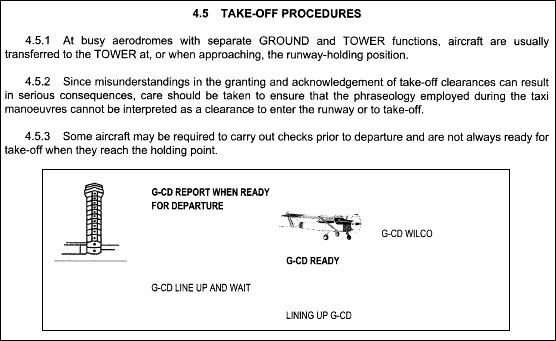
Refer to figure sera5005 visual flight rules a except when operating as a special vfr flight vfr flights shall be conducted so that the aircraft is flown in conditions of visibility and distance from clouds equal to or greater than those specified in table s5 1 attached figure sera5015 instrument flight rules ifr — rules applicable to all ifr flights c change from ifr flight to vfr flight 1 2 when an aircraft operating under the instrument flight rules is flown in or encounters visual meteorological conditions it shall not cancel its ifr flight unless it is anticipated and intended that the flight will be continued for a reasonable period of time in uninterrupted visual meteorological conditions 3 Vfr only. special vfr only. ifr only.
Question 9-9 : An aircraft in the cruise is flying ifr in uncontrolled airspace it shall fly… ?
At appropriate flight level.
Icao annex 2 53 rules applicable to ifr flights outside controlled airspace 531 cruising levelsan ifr flight operating in level cruising flight outside of controlled airspace shall be flown at a cruising level appropriate to its track as specified in a the tables of cruising levels in appendix 3 except when otherwise specified by the appropriate ats authority for flight at or below 900 m 3000 ft above mean sea level or b a modified table of cruising levels when so prescribed in accordance with appendix 3 for flight above fl410sera3110 the cruising levels at which a flight or a portion of a flight is to be conducted shall be in terms of a flight levels for flights at or above the lowest usable flight level or where applicable above the transition altitude b altitudes for flights below the lowest usable flight level or where applicable at or below the transition altitudethis question does not specifically mention that the ifr flight is above the transition altitude but given the usual cruising heights of ifr aircraft and the other available options 'a flight level' is the only possible answerAn altitude, if above the transition level. a height above ground. an altitude, in all cases.
Question 9-10 : What is the minimum ceiling for a special vfr clearance to be issued ?
600 ft.
Sera5010 standard european rules of the air special vfr in control zonesspecial vfr flights may be authorised to operate within a control zone subject to an atc clearance except when permitted by the competent authority for helicopters in special cases such as but not limited to police medical search and rescue operations and fire fighting flights the following additional conditions shall be applied a such special vfr flights may be conducted during day only unless otherwise permitted by the competent authority b by the pilot 1 clear of cloud and with the surface in sight 2 the flight visibility is not less than 1500 m or for helicopters not less than 800 m 3 fly at a speed of 140 kts ias or less to give adequate opportunity to observe other traffic and any obstacles in time to avoid a collision and c an air traffic control unit shall not issue a special vfr clearance to aircraft to take off or land at an aerodrome within a control zone or enter the aerodrome traffic zone or aerodrome traffic circuit when the reported meteorological conditions at that aerodrome are below the following minima 1 the ground visibility is less than 1500 m or for helicopters less than 800 m 2 the ceiling is less than 180 m 600 ft 1500 ft 500 ft 1000 ft
Question 9-11 : An aircraft with an italian registration departs from the usa and heads to france what is the corrective action to be taken when the aircraft is over us airspace and a communication failure persists ?
The aircraft shall follow the rules according to sera and follow the rules according to the us airspace.
Icao annex 2 chapter 2 applicability of the rules of the air21 territorial application of the rules of the air 211 the rules of the air shall apply to aircraft bearing the nationality and registration marks of a contracting state wherever they may be to the extent that they do not conflict with the rules published by the state having jurisdiction over the territory overflownwhen an aircraft is flying within the airspace of the state of registration the rules of the air of that state are applicable indeed for an italian registered aeroplane the italian rules apply wherever the aeroplane is flown providing there is no confliction with local rules where an italian registered aircraft is flying over a foreign state the rules of the air of that state apply do not confuse rules with law the application of the rules can be summarized thus italian registered aircraft over italy italian rules apply italian registered aircraft over usa italian and usa rules apply usa have priority italian registered aircraft over the high seas icao rules apply without exceptionThe aircraft shall follow the rules from the state of registry since it’s registered in italy. the aircraft shall follow the rules according to the france airspace since that's the destination. the aircraft shall follow the rules regarding operations over high seas.
Question 9-12 : A pilot is flying in an italian registered aircraft over the central mediterranean sea within tripoli fir libya approximately 100 nm from the nearest landwhich of the following sources should the pilot refer to to ensure their compliance with the applicable rules of the air 1 standardised european ?
1 3 and 5.
Icao annex 2 applicability of the rules of the air the icao rules of the air apply to aircraft bearing the nationality and registration marks of an icao contracting state wherever they may be providing they do not conflict with the rules published by the state having jurisdiction of the territory overflownto sum up national rules of the air shall always prevail over icao's rules of the air in other words icaos rules of the air are implemented in easas sera which is applicable in europeby way of example if an aircraft registered in switzerland flies over the airspace of switzerland the swiss rules will apply if the same aircraft flies across the border and enters austrian airspace both austrian and swiss rules will start to apply but austrian rules will take precedence naturally if these two sets of rules are standardized in the spirit of annex 2 the situation is less complicated once the same aircraft flies into the airspace of high seas icao rules shall apply without questionnote we received feedback that the items given in this question in the official exam conducted by the polish authority were ordered differently the order is as follows 1 standardised european rules of the air sera 2 rules of the air published by libya3 rules of the air for the high seas4 rules of the air published by italy5 icao annex 2therefore the correct answer would be 1 2 and 52, 3 and 4. 1, 2 and 4. 1, 3 and 4.
Question 9-13 : You are on an ifr flight in airspace where radar is not used in the provision of air traffic control you are experiencing a complete radio failure and were unable to report your position at the last compulsory reporting point you shall maintain the last assigned speed and level or minimum flight ?
20 minutes.
Icao annex 2 rules of the air 3652 communication failure if a communication failure precludes compliance with 3651 the aircraft shall comply with the voice communication failure procedures of annex 10 volume ii and with such of the following procedures as are appropriate the aircraft shall attempt to establish communications with the appropriate air traffic control unit using all other available means in addition the aircraft when forming part of the aerodrome traffic at a controlled aerodrome shall keep a watch for such instructions as may be issued by visual signals36521 if in visual meteorological conditions the aircraft shall a continue to fly in visual meteorological conditions land at the nearest suitable aerodrome and report its arrival by the most expeditious means to the appropriate air traffic services unit b if considered advisable complete an ifr flight in accordance with 3652236522 if in instrument meteorological conditions or when the pilot of an ifr flight considers it inadvisable to complete the flight in accordance with 36521 a the aircraft shall a unless otherwise prescribed on the basis of regional air navigation agreement in airspace where radar is not used in the provision of air traffic control maintain the last assigned speed and level or minimum flight altitude if higher for a period of 20 minutes following the aircraft's failure to report its position over a compulsory reporting point and thereafter adjust level and speed in accordance with the filed flight plan b in airspace where radar is used in the provision of air traffic control maintain the last assigned speed and level or minimum flight altitude if higher for a period of 7 minutes following 1 the time the last assigned level or minimum flight altitude is reached or2 the time the transponder is set to code 7600 or3 the aircraft's failure to report its position over a compulsory reporting point whichever is later and thereafter adjust level and speed in accordance with the filed flight plan c when being radar vectored or having been directed by atc to proceed offset using area navigation rnav without a specified limit rejoin the current flight plan route no later than the next significant point taking into consideration the applicable minimum flight altitude d proceed according to the current flight plan route to the appropriate designated navigation aid or fix serving the destination aerodrome and when required to ensure compliance with e below hold over this aid or fix until commencement of descent e commence descent from the navigation aid or fix specified ind at or as close as possible to the expected approach time last received and acknowledged or if no expected approach time has been received and acknowledged at or as close as possible to the estimated time of arrival resulting from the current flight plan f complete a normal instrument approach procedure as specified for the designated navigation aid or fix andg land if possible within 30 minutes after the estimated time of arrival specified in e or the last acknowledged expected approach time whichever is laternote 1— the provision of air traffic control service to other flights operating in the airspace concerned will be based on the premise that an aircraft experiencing communication failure will comply with the rules in 3652225 minutes 15 minutes 30 minutes
Question 9-14 : A flight in controlled airspace is being subjected to unlawful interference with a hostage situation according to sera the pilot shall attempt to notify atc of ?
Any significant circumstances associated with the interference.
Learning objective 01005030121 state what information an aircraft being subjected to unlawful interference shall give to the appropriate ats unitsera1105 unlawful interference aa an aircraft which is being subjected to unlawful interference shall endeavour to set the transponder to code 7500 and notify the appropriate ats unit of any significant circumstances associated therewith and any deviation from the current flight plan necessitated by the circumstances in order to enable the ats unit to give priority to the aircraft and to minimise conflict with other aircraft ab if an aircraft is subjected to unlawful interference the pilot in command shall attempt to land as soon as practicable at the nearest suitable aerodrome or at a dedicated aerodrome assigned by the competent authority unless considerations aboard the aircraft dictate otherwise b when an occurrence of unlawful interference with an aircraft takes place or is suspected air traffic services units shall attend promptly to requests by the aircraft information pertinent to the safe conduct of the flight shall continue to be transmitted and necessary action shall be taken to expedite the conduct of all phases of the flight especially the safe landing of the aircraft c when an occurrence of unlawful interference with an aircraft takes place or is suspected ats units shall in accordance with locally agreed procedures immediately inform the appropriate authority designated by the state and exchange necessary information with the aircraft operator or its designated representativeThe position of the aircraft and the time in utc when the interference started. the type of aircraft being flown. the flight number, the flight time remaining, and any information about the type(s) of weapon being used.
Question 9-15 : You are the pilot in command of a commercial air transport flight operating within the european union which of the following reasons may allow you to depart from the provisions of the standardised european rules of the air sera ?
Safety of the flight.
Learning objective 01005020104 identify under what circumstances departure from the rules of the air may be allowed source sera2010 responsibilitiessera2010 responsibilities a responsibility of the pilot in commandthe pilot in command of an aircraft shall whether manipulating the controls or not be responsible for the operation of the aircraft in accordance with this regulation except that the pilot in command may depart from these rules in circumstances that render such departure absolutely necessary in the interests of safety b pre flight actionbefore beginning a flight the pilot in command of an aircraft shall become familiar with all available information appropriate to the intended operation pre flight action for flights away from the vicinity of an aerodrome and for all ifr flights shall include a careful study of available current weather reports and forecasts taking into consideration fuel requirements and an alternative course of action if the flight cannot be completed as plannedEnvironment protection. passenger comfort. fuel efficiency.
Question 9-16 : According to sera standardised european rules of the air which of the following lights should be displayed in the cruise at night1 anti collision light s 2 lights in passenger cabin 3 two convenient lights on the landing gear 4 navigation lights ?
1 and 4.
Learning objective 01005030102 describe the lights including their angles to be displayed by aircraft source sera3215 lights to be displayed by aircraft icao annex 2 chapter 3 323 icao annex 6 part i chapter 6 610 and appendix 1 and icao annex 6 part iii chapter 4 442sera3215 a except as provided by e at night all aircraft in flight shall display 1 anti collision lights intended to attract attention to the aircraft and 2 except for balloons navigation lights intended to indicate the relative path of the aircraft to an observer other lights shall not be displayed if they are likely to be mistaken for these lights b except as provided by e at night 1 all aircraft moving on the movement area of an aerodrome shall display navigation lights intended to indicate the relative path of the aircraft to an observer and other lights shall not be displayed if they are likely to be mistaken for these lights 2 unless stationary and otherwise adequately illuminated all aircraft on the movement area of an aerodrome shall display lights intended to indicate the extremities of their structure as far as practicable 3 all aircraft taxiing or being towed on the movement area of an aerodrome shall display lights intended to attract attention to the aircraft and 4 all aircraft on the movement area of an aerodrome whose engines are running shall display lights which indicate that fact c except as provided by e all aircraft in flight and fitted with anti collision lights to meet the requirement of a 1 shall display such lights also during day d except as provided by e all aircraft 1 taxiing or being towed on the movement area of an aerodrome and fitted with anti collision lights to meet the requirement of b 3 or 2 on the movement area of an aerodrome and fitted with lights to meet the requirement of b 4 shall display such lights also during day e a pilot shall be permitted to switch off or reduce the intensity of any flashing lights fitted to meet the requirements of a b c and d if they do or are likely to 1 adversely affect the satisfactory performance of duties or 2 subject an outside observer to harmful dazzle2 and 3 1 and 3 2 and 4
Question 9-17 : A civil aircraft has been intercepted according to sera the correct actions to be carried out by the pilot in command of the civil aircraft are… ?
Follow the intercepting aircraft and squawk 7700.
Icao annex 2 appendix 2 interception of civil aircraft 2 action by intercepted aircraft21 an aircraft which is intercepted by another aircraft shall immediately a follow the instructions given by the intercepting aircraft interpreting and responding to visual signals in accordance with the specifications in appendix 1 b notify if possible the appropriate air traffic services unit c attempt to establish radiocommunication with the intercepting aircraft or with the appropriate intercept control unit by making a general call on the emergency frequency 1215 mhz giving the identity of the intercepted aircraft and the nature of the flight and if no contact has been established and if practicable repeating this call on the emergency frequency 243 mhz d if equipped with ssr transponder select mode a code 7700 unless otherwise instructed by the appropriate air traffic services unit e if equipped with ads b or ads c select the appropriate emergency functionality if available unless otherwise instructed by the appropriate air traffic services unitSquawk 7500, lower the landing gear (if lifted), and show stedy landing lights. rock the aircraft and contact the intercepting aircraft on 486 mhz. contact atc and squawk 7600.
Question 9-18 : For an ifr flight in vmc in airspace class d submission of a flight plan is… ?
Mandatory.
Sera4001 submission of a flight plan b a flight plan shall be submitted prior to operating 1 any flight or portion thereof to be provided with air traffic control servicenote class d is provided with air traffic control serviceRecommended. not required. optional.
Question 9-19 : According to icao annex 12 air to ground signals if survivors see an aircraft rocking its wings during the hours of… ?
Daylight this means that ground signals have been understood.
Icao annex 12 appendix search and rescue signals 3 air to ground signals31 the following signals by aircraft mean that the ground signals have been understood a during the hours of daylight — by rocking the aircraft’s wings b during the hours of darkness — flashing on and off twice the aircraft’s landing lights or if not so equipped by switching on and off twice its navigation lights32 lack of the above signal indicates that the ground signal is not understoodDarkness, this means that ground signals have not been understood. darkness, this means that ground signals have been understood. daylight, this means that ground signals have not been understood.
Question 9-20 : The objective of standardised european rules of the air sera regulation eu no 9232012 is to establish the 1 and operational provisions regarding services and procedures in air navigation sera shall apply to aircraft engaged in general air traffic the competent authorities of 2 aerodrome ?
1 common rules of the air 2 eu member states air navigation service providers.
Commission implementing regulation eu no 9232012 of 26 september 2012 article 1 subject matter and scope1 the objective of this regulation is to establish the common rules of the air and operational provisions regarding services and procedures in air navigation that shall be applicable to general air traffic within the scope of regulation ec no 55120042 this regulation shall apply in particular to airspace users and aircraft engaged in general air traffic a operating into within or out of the union b bearing the nationality and registration marks of a member state of the union and operating in any airspace to the extent that they do not conflict with the rules published by the country having jurisdiction over the territory overflown3 this regulation shall also apply to the competent authorities of the member states air navigation service providers and the relevant ground personnel engaged in aircraft operations(1) rules of the air that shall apply within the eu; (2) icao contracting states, certification authorities (1) common rules of the air; (2) icao contracting states, search and rescue service providers (1) rules of the air that shall apply within the eu; (2) eu member states, military aviation authorities
Question 9-21 : The pilot in command of a commercial air transport multi pilot aircraft is challenged by the co pilot and the cabin crew member according to sera standardised european rules of the air with regards to the disposition of the aircraft the pic… ?
Has the final authority.
Icao annex 2 chapter 2 applicability of the rules of the air24 the pilot in command of an aircraft shall have final authority as to the disposition of the aircraft while in commandMust ensure that consensus is reached between him/her, the co-pilot, and the cabin crew member. is required to support the position of the co-pilot. must ask the operational command centre what decision to make.
Question 9-22 : According to sera what must the pic do if an atc clearance cannot be complied with ?
Inform atc that the clearance is not satisfactory.
Sera8015 air traffic control clearances b operation subject to clearance 2 the pilot in command of an aircraft shall inform atc if an air traffic control clearance is not satisfactory in such cases atc will issue an amended clearance if practicableDisregard the clearance and proceed in accordance with the flight plan. perform a standard holding pattern at the current flight level. perform a change of flight rules.
Question 9-23 : In case of a change to a flight plan submitted for an ifr flight or a vfr flight operated as a controlled flight what action must be taken ?
Report the change as soon as practicable to the appropriate ats unit.
Icao annex 2 33 flight plans 334 changes to a flight plansubject to the provisions of 3622 all changes to a flight plan submitted for an ifr flight or a vfr flight operated as a controlled flight shall be reported as soon as practicable to the appropriate air traffic services unit for other vfr flights significant changes to a flight plan shall be reported as soon as practicable to the appropriate air traffic services unitnote 1— information submitted prior to departure regarding fuel endurance or total number of persons carried on board if incorrect at time of departure constitutes a significant change to the flight plan and as such must be reported note 2— procedures for submission of changes to repetitive flight plans are contained in the pans atm doc 4444Report the change to the relevant aerodrome authorities as soon as possible after landing. inform atc only if it involves a change of flight rules. inform the briefing office at the aerodrome of arrival.
Question 9-24 : When is an aircraft likely to be intercepted ?
When deviating from the route without evidencewithout a valid reason.
Interception of civil aircraft should be avoided and should be undertaken only as a last resort if undertaken the interception should be limited to determining the identity of the aircraft unless it is necessary to return the aircraft to its planned track direct it beyond the boundaries of national airspace guide it away from a prohibited restricted or danger area or instruct it to effect a landing at a designated aerodromea civil aircraft is most likely to be intercepted if it has lost communication with atc or strays into airspace without appropriate diplomatic or other clearance and without contact with the appropriate controlling authorityWhen the time to the next point has changed for 3 minutes. when changing flight plan in flight (airborne). when deviating tas for 3%.
Question 9-25 : According to sera unless subjecting outside observers to harmful dazzle the following lights shall be displayed at night by all aircraft in flight in the cruise 1 anti collision lights intended to attract attention to the aircraft2 lights in all relevant passenger and accessible cargo compartments3 ?
1 and 3.
Easa air opssera3215 lights to be displayed by aircraft a except as provided by e at night all aircraft in flight shall display 1 anti collision lights intended to attract attention to the aircraft and2 except for balloons navigation lights intended to indicate the relative path of the aircraft to an observer other lights shall not be displayed if they are likely to be mistaken for these lights b except as provided by e at night 1 all aircraft moving on the movement area of an aerodrome shall display navigation lights intended to indicate the relative path of the aircraft to an observer and other lights shall not be displayed if they are likely to be mistaken for these lights 2 unless stationary and otherwise adequately illuminated all aircraft on the movement area of an aerodrome shall display lights intended to indicate the extremities of their structure as far as practicable 3 all aircraft taxiing or being towed on the movement area of an aerodrome shall display lights intended to attract attention to the aircraft and4 all aircraft on the movement area of an aerodrome whose engines are running shall display lights which indicate that fact e a pilot shall be permitted to switch off or reduce the intensity of any flashing lights fitted to meet the requirements of a b c and d if they do or are likely to 1 adversely affect the satisfactory performance of duties or2 subject an outside observer to harmful dazzle2 and 3. 2 and 4. 1, 3, and 4.
Question 9-26 : You are cruising in uncontrolled airspace at 2600 ft is this allowed ?
Yes if the competent authority defines the transition altitude as 3000 ft or higher.
Cruising levels for either all or part of a flight are expressed either as flight levels or altitudesin very general terms aircraft flying at low levels use altitude based on the local area pressure or qnh as the altimeter's datum setting this provides elevation above mean sea level and is used primarily to remain clear of the surface but is also used for separation in controlled airspacethe transition altitude is the altitude at which aircraft switch from using atmospheric pressure qnh to a standard pressure setting when transitioning from the terminal area to en route flight in this case if the competent authority defines the transition altitude as 3000 ft or higher then cruising at 2600 ft would be allowed as it falls below the transition altitude if the pilot is flying above the transition altitude she must fly flight levelsNo, he/she should fly at fl20 or fl30. no, under 3000 ft ifr is not allowed. yes, provided that the transition altitude is lower than 3000 ft.
Question 9-27 : Before an ifr departure the pic is only required to study the current weather is this statement accurate ?
No forecast weather also needs to be studied.
Before beginning a flight the pic of an aircraft shall become familiar with all available information appropriate to the intended operation pre flight action for flights away from the vicinity of an aerodrome and for all ifr flights shall include a careful study of available current weather reports and forecasts taking into consideration fuel requirements and an alternative course of action if flight cannot be completed as plannedNo, the operator has the responsibility to deliver this together with pilot checks. yes, a forecast study should be made during the flight. yes, the weather will change.
Question 9-28 : Aircraft 'a' is the only aircraft to be flying in the traffic pattern and has clearance to land on rwy 35l when turning onto final approach the pilot observes an unexpected aircraft on final aircraft 'b' close to aircraft 'a' and flying towards the same runway at a lower altitude the aircraft are ?
Give way to aircraft 'b' and inform atc about the traffic.
This one is quite simple it is obvious that something is wrong here and that the other aircraft potentially has a problem or is perhaps in breach of clearance etc but that does not matter aircraft 'a' must do the same thing anywaythe only safe option here is to give way to aircraft 'b' especially as it is lower on the approach than 'a' and therefore would have right of way clearances notwithstanding and to inform atc it is very much possible that 'b' has lost comms or is in an emergency situation and therefore no longer requires a clearance to land and that standard rules of the air therefore apply and any competent pilot would give way to the aircraft anyway as there is no communication from it so we cannot know its situation or intentionssera3210 c4i when two or more heavier than air aircraft are approaching an aerodrome or an operating site for the purpose of landing aircraft at the higher level shall give way to aircraft at the lower level but the latter shall not take advantage of this rule to cut in front of another which is in the final stages of an approach to land or to overtake that aircraft nevertheless power driven heavier than air aircraft shall give way to sailplanesAccelerate to overtake aircraft 'b' and land on rwy 35l. descend to a lower altitude than aircraft 'b' and inform atc. continue to land on rwy 35l, in accordance with the clearance.
Question 9-29 : A pilot visits a psychiatrist who prescribes him an antidepressant drug containing psychoactive substances the pilot hasn’t notified their ame of this according to sera the standardised european rules of the air the pilot ?
Must not fly because these substances impair human performance.
Learning objective 01005020107 explain when the use of psychoactive substances taking into consideration their effects by flight crew members is prohibited source sera2020 problematic use of psychoactive substancessera2020 problematic use of psychoactive substances regulation eu no 9232012 no person whose function is critical to the safety of aviation safety sensitive personnel shall undertake that function while under the influence of any psychoactive substance by reason of which human performance is impaired no such person shall engage in any kind of problematic use of substancesMay fly, because their ame is unaware of the substances. must not fly, because their ame has assessed them as unfit. may fly, because the psychiatrist has prescribed them the substances.
Question 9-30 : Which of the following isare mandatory tasks that the pilot must do before an ifr flight a check weather and chartsb establish best cost index fuel c check the correct amount of fueld check the airspaces that will be crossed ?
A c and d .
Commission implementing regulation eu no 9232012 sera2010 responsibilities a responsibility of the pilot in command the pilot in command of an aircraft shall whether manipulating the controls or not be responsible for the operation of the aircraft in accordance with this regulation except that the pilot in command may depart from these rules in circumstances that render such departure absolutely necessary in the interests of safety b pre flight action before beginning a flight the pilot in command of an aircraft shall become familiar with all available information appropriate to the intended operation pre flight action for flights away from the vicinity of an aerodrome and for all ifr flights shall include a careful study of available current weather reports and forecasts taking into consideration fuel requirements and an alternative course of action if the flight cannot be completed as plannednote if time permits the pic might decide to do all of these however it is a must to study available current weather reports and forecastsA) only. a) and c). a), b), c) and d).
Question 9-31 : You are appointed as the pilot in command of an aircraft departing from airport a state 1 and bound for destination airport b state 2 who has the final authority as to the disposition of the aircraft ?
You while in command.
Icao annex 2 chapter 2 applicability of the rules of the air24 authority of pilot in command of an aircraft the pilot in command of an aircraft shall have final authority as to the disposition of the aircraft while in commandThe operator, provided that you operate the aircraft in accordance with the specifications laid out within the operations manual. you, while manipulating the controls, and your co-pilot pilot while he/she is manipulating the controls. the departure atc of state 1 while inside that departure fir, the relevant en-route atc unit while en route, and the destination atc while inside the destination fir.
Question 9-32 : Submission of a flight plan is required for any ?
Ifr flight in advisory airspace.
Icao annex 2 33 flight plans3312 a flight plan shall be submitted prior to operating a any flight or portion thereof to be provided with air traffic control service b any ifr flight within advisory airspace c any flight within or into designated areas or along designated routes when so required by the appropriate ats authority to facilitate the provision of flight information alerting and search and rescue services d any flight within or into designated areas or along designated routes when so required by the appropriate ats authority to facilitate coordination with appropriate military units or with air traffic services units in adjacent states in order to avoid the possible need for interception for the purpose of identification e any flight across international bordersFlight by day. flight in class g airspace. domestic flight.
Question 9-33 : An aircraft is operating a commercial flight from italy to libya whose rules of the air should be followed 1 italy 2 libya 3 icao rules of the air 4 the state being overflown ?
3 and 4.
Icao annex 2 applicability of the rules of the airthe icao rules of the air apply to aircraft bearing the nationality and registration marks of an icao contracting state wherever they may be providing they do not conflict with the rules published by the state having jurisdiction of the territory overflownwhen an aircraft is flying within the airspace of the state of registration the rules of the air of that state are applicabletherefore icao rules of the air will be applicable and also the rules of the air of states which are overflown1 and 2. 2 and 3. 1 and 3.
Question 9-34 : Based on the regulations established on icao annex 2 and sera is it permissible to conduct ifr flights at an altitude of 2600 ft agl ?
Yes if the state itself makes own regulations which may not be the same as icao annex 2 & sera.
Icao annex 2 51 rules applicable to all ifr flights512 minimum levels except when necessary for take off or landing or except when specifically authorized by the appropriate authority an ifr flight shall be flown at a level which is not below the minimum flight altitude established by the state whose territory is overflown or where no such minimum flight altitude has been established a over high terrain or in mountainous areas at a level which is at least 600 m 2000 ft above the highest obstacle located within 8 km of the estimated position of the aircraft b elsewhere than as specified in a at a level which is at least 300 m 1000 ft above the highest obstacle located within 8 km of the estimated position of the aircraftaccording to icao annex 2 the state is responsible to establish the minimum ifr level for its territory if such level is not established the limitations of a and b applyNo, ifr flight in uncontrolled airspace is prohibited. no, ifr is allowed only above 3000 ft agl. yes, since the flight levels are used from 3000 m and above.
Question 9-35 : In addition to general aviation aircraft which other types of aircraft fall under the scope of eu regulation 9232012 ?
Aircraft bearing the nationality and registration marks of a member state of the union.
Commission implementing regulation eu no 9232012 of 26 september 2012 article 1 subject matter and scope1 the objective of this regulation is to establish the common rules of the air and operational provisions regarding services and procedures in air navigation that shall be applicable to general air traffic within the scope of regulation ec no 55120042 this regulation shall apply in particular to airspace users and aircraft engaged in general air traffic a operating into within or out of the union b bearing the nationality and registration marks of a member state of the union and operating in any airspace to the extent that they do not conflict with the rules published by the country having jurisdiction over the territory overflown3 this regulation shall also apply to the competent authorities of the member states air navigation service providers and the relevant ground personnel engaged in aircraft operationsAny aircraft registered with an icao member state or based in their engine manufacturer state. aircraft bearing the nationality and registration marks of a member state of icao. aircraft operating air traffic operations are limited to the airspace of the union.
Question 9-36 : According to sera any controlled flight must report to the appropriate air traffic services unit the 1 of passing each designated 2 reporting point 3 ?
1 time and level 2 compulsory 3 as soon as possible.
Commission implementing regulation eu no 9232012 sera8025 position reports a unless exempted by the competent authority or by the appropriate air traffic services unit under conditions specified by that authority a controlled flight shall report to the appropriate air traffic services unit as soon as possible the time and level of passing each designated compulsory reporting point together with any other required information position reports shall similarly be made in relation to additional points when requested by the appropriate air traffic services unit in the absence of designated reporting points position reports shall be made at intervals prescribed by the competent authority or specified by the appropriate air traffic services unit 1 controlled flights providing position information to the appropriate air traffic services unit via data link communications shall only provide voice position reports when requested(1) tas and level; (2) non-compulsory; (3) 3 minutes before reaching the point (1) heading and tas; (2) compulsory; (3) 3 minutes before reaching the point (1) heading and time; (2) non-compulsory; (3) as soon as possible
Question 9-37 : An aircraft departs from the united states of america usa to its destination in france during its cruise in imc conditions above the atlantic ocean and still overflying usa territory radio communication failure is experienced the radio communication failure procedure outlined in the usa's aip is ?
According to icao annex 2 and part sera the aircraft must follow the usa procedure.
Icao annex 2 21 territorial application of the rules of the air211 the rules of the air shall apply to aircraft bearing the nationality and registration marks of a contracting state wherever they may be to the extent that they do not conflict with the rules published by the state having jurisdiction over the territory overflowncommission implementing regulation eu no 9232012 sera article 1 subject matter and scope2 this regulation shall apply in particular to airspace users and aircraft engaged in general air traffic a operating into within or out of the union b bearing the nationality and registration marks of a member state of the union and operating in any airspace to the extent that they do not conflict with the rules published by the country having jurisdiction over the territory overflownthe rules published by the country having jurisdiction over the terrotiry overflown have priority over the rules published in icao annex 2According to icao annex 2, the aircraft must follow the french procedure because its destination is in france. according to part-sera, the aircraft must follow the european rules, which comply with the usa rules of the air. according to the italian rules of the air, the aircraft must follow the italian procedure because it is registered in italy.
Question 9-38 : What is the correct statement about right of way ?
Power driven heavier than air aircraft shall give way to airships gliders and balloons.
Icao annex 2 32 avoidance of collisions 322 right of way3223 converging when two aircraft are converging at approximately the same level the aircraft that has the other on its right shall give way except as follows a power driven heavier than air aircraft shall give way to airships gliders and balloons b airships shall give way to gliders and balloons c gliders shall give way to balloons d power driven aircraft shall give way to aircraft which are seen to be towing other aircraft or objects oder of priority ballons gliders airships towing aircraft power driven heavier than air aircraftGliders do not give way to balloons. gliders shall give way to airships and balloons. all aircraft shall give way to aircraft which are seen to be towing other aircraft.
Question 9-39 : With a minimum airspeed of 160 knots for your aircraft what procedures should be followed if maintaining vmc becomes impossible ?
Inform the atc you are leaving their airspace to maintain vmc.
Easa air ops sera8020 adherence to flight plan d weather deterioration below the vmc when it becomes evident that flight in vmc in accordance with its current flight plan will not be practicable a vfr flight operated as a controlled flight shall 1 request an amended clearance enabling the aircraft to continue in vmc to destination or to an alternative aerodrome or to leave the airspace within which an atc clearance is required or 2 if no clearance in accordance with a can be obtained continue to operate in vmc and notify the appropriate atc unit of the action being taken either to leave the airspace concerned or to land at the nearest suitable aerodrome or 3 if operated within a control zone request authorisation to operate as a special vfr flight or 4 request clearance to operate in accordance with the instrument flight rulesnote in order to request special vfr the aircraft should be within a ctrRequest an ifr clearance. request special vfr. continue flying, trusting your instruments only.
Question 9-40 : An aircraft is registered in morocco and operated in tunisia during a flight from egypt to germany should the aircraft follow european regulations ?
Yes only in airspace where ats is provided by an eu state.
Chapter 2 applicability of the rules of the air 21 territorial application of the rules of the air211 the rules of the air shall apply to aircraft bearing the nationality and registration marks of a contracting state wherever they may be to the extent that they do not conflict with the rules published by the state having jurisdiction over the territory overflownan aircraft registered in morocco flying from egypt to germany should follow icao annex 2 rules of the air unless they differ with the national rules of the states being overflown if there are differences the rules of the state being overflown have priority over icao rules consequently when flying over european territory european rules have priority over icao annex 2 rules and should be followed by the aircraftif an aircraft is registered in a european state it should follow the european rules of the air sera at all times unless they differ with the national rules of the states being overflownif an aircraft is not registered in a european state it should follow the european rules of the air sera when flying above european airspacenote the answer ‘yes only when above european airspace’ is replaced by the answer ‘yes only in airspace where ats is provided by an eu state' based on recent exam feedback please provide any further exam feedback available in the comments thank you in advanceNo, it should follow the state of registry regulations. no, it should follow the state of operator regulations. yes, always.
Exclusive rights reserved. Reproduction prohibited under penalty of prosecution.